
11 min read
15 Best AI Assistants For Digital Marketing in 2026


AI assistants for digital marketing use artificial intelligence to improve how marketing strategies come together. They cover a range of AI-powered tools designed to automate tasks, analyze data, and personalize customer interactions. What makes them matter is how they streamline marketing processes and deliver more targeted experiences to customers. With AI assistants in place, businesses can gain useful insights, optimize campaigns, and drive better results from their digital marketing efforts.

Understanding AI Assistants
AI assistants in digital marketing are tools that use artificial intelligence to automate and optimize marketing tasks. They come in a few forms: chatbots, virtual assistants, and predictive analytics tools. Chatbots engage with customers in real time, answering queries and offering help. Virtual assistants handle scheduling, data analysis, and content creation. Predictive analytics tools use AI to forecast trends and support data-driven decisions. Put together, these assistants streamline marketing work and improve the customer experience, which leads to better results for businesses online.
Also Read: Sell Services with WordPress
Benefits of AI Assistants in Digital Marketing
AI Assistants offer numerous benefits in digital marketing, including:
- Enhanced Efficiency: AI automates repetitive tasks, freeing up marketers’ time for more strategic activities.
- Personalised Customer Interactions: AI-powered chatbots can engage with customers in real time, providing personalised responses and recommendations.
- Data Analysis: AI can analyse large volumes of data quickly and accurately, providing insights that inform marketing strategies and decisions.
- Predictive Analytics: AI algorithms can forecast trends and customer behaviour, enabling marketers to anticipate needs and tailor their approach accordingly.
- Improved Lead Generation and Conversion: AI-driven tools can identify and prioritise leads, increasing the effectiveness of marketing campaigns.
- 24/7 Availability: AI assistants can operate round-the-clock, providing support and assistance to customers at any time.
- Cost Savings: By automating tasks and improving efficiency, AI can help businesses reduce operational costs and maximise ROI.
- Scalability: AI solutions can scale with the growth of a business, adapting to increasing volumes of data and customer interactions.
- Competitive Advantage: Businesses that adopt AI assistants gain a competitive edge by delivering more personalised, efficient, and data-driven marketing experiences.
- Enhanced Customer Experience: By providing timely and relevant assistance, AI assistants contribute to a seamless and satisfying customer journey.
Also Read: What’s New In WooCommerce 3.2
How AI Assistants Work in Digital Marketing
- Data Collection: AI assistants gather data from various sources such as customer interactions, website visits, and social media engagements.
- Analysis: Using machine learning algorithms, AI processes and analyses the collected data to identify patterns, trends, and insights.
- Personalisation: Based on the analysis, AI assistants create personalised recommendations, content, or responses tailored to individual user preferences and behaviour.
- Automation: AI automates routine marketing tasks such as sending personalised emails, scheduling social media posts, or managing ad campaigns.
- Optimisation: Continuously learning from data and user interactions, AI assistants optimise marketing strategies and campaigns in real time to maximise performance and ROI.
Top AI Assistants for Digital Marketing
Here are 15 top AI assistants for digital marketing:
1. ContentShake AI
ContentShake AI is an AI-powered content generation platform built to help users create high-quality, engaging content quickly. Using advanced natural language processing (NLP) algorithms, ContentShake AI can generate content ideas, outlines, and even full-length articles across various topics and industries. It helps businesses and content creators speed up their content process, stay productive, and keep a consistent publishing schedule that drives audience engagement and supports marketing goals.
2. AI Social Content Generator
AI Social Content Generator is a powerful tool designed to help marketers generate engaging social media content. Using advanced artificial intelligence algorithms, this platform analyses trending topics, audience preferences, and brand guidelines to create compelling posts, captions, and visuals. By automating the content creation process, AI Social Content Generator saves time and resources while keeping social media marketing efforts consistent and relevant.
3. Instant Video Creator
Instant Video Creator is an AI-powered tool designed to streamline the process of creating engaging video content. It offers a range of features such as automated video editing, customizable templates, and intelligent scene selection. With Instant Video Creator, users can quickly generate professional-looking videos for their marketing campaigns, social media channels, and more.
4. Google Assistant
Google Assistant is a virtual assistant developed by Google that is available on various devices and platforms, including smartphones, smart speakers, and smart displays. It uses artificial intelligence and natural language processing to give users personalised assistance, answer questions, perform tasks, and control smart home devices. Google Assistant is integrated into Google’s ecosystem, allowing seamless access to services like Google Search, Google Maps, Gmail, and more, making it a versatile tool for digital marketing tasks and everyday productivity.
5. MarketingBlocks
MarketingBlocks is an AI assistant designed to streamline and optimise various aspects of digital marketing campaigns. With its intuitive interface and powerful algorithms, MarketingBlocks helps marketers create, manage, and analyse marketing initiatives across multiple channels. It offers features such as automated campaign scheduling, audience segmentation, A/B testing, and performance tracking. With MarketingBlocks, marketers can boost efficiency, maximise ROI, and run more targeted, effective campaigns.
6. ChatGPT

ChatGPT is an AI-powered chatbot platform that lets businesses automate customer interactions and support services. Using advanced natural language processing (NLP) algorithms, ChatGPT can engage users in real-time conversations, answer queries, provide assistance, and even simulate human-like interactions. With customizable chatbot templates and integration options, ChatGPT helps businesses improve customer engagement, cut response times, and scale their support operations smoothly. It also offers analytics and reporting features to track performance and refine chatbot effectiveness over time.
7. SEO Writing Assistant
SEO Writing Assistant is a tool developed by SEMrush that helps users optimise their content for search engines. It provides real-time recommendations based on SEO best practices, such as keyword usage, readability, tone of voice, and originality. Users can integrate the tool with their content creation workflow to ensure their articles, blog posts, and other written content are optimised for maximum visibility and impact on search engine results pages (SERPs).
8. Superhuman
Superhuman is an AI-powered email assistant that helps users manage their email communication more efficiently. With features such as advanced search capabilities, automated workflows, and personalised insights, Superhuman streamlines email workflows and improves productivity. Its intelligent algorithms prioritise important emails, suggest actions, and surface useful insights to optimise email management. Using AI, Superhuman helps users reach inbox zero and focus on high-impact tasks, making it a valuable tool for professionals and businesses alike.
9. Motion
Motion is an AI assistant designed to streamline content creation workflows by providing real-time feedback on writing style, tone, and clarity. It offers suggestions for improving readability and engagement, helping users craft compelling content. With its intuitive interface and advanced language processing capabilities, Motion helps writers create high-quality content efficiently.
10. Otter.ai
Otter.ai is an AI-powered transcription and note-taking tool that automatically generates accurate transcripts from audio recordings. It uses advanced speech recognition technology to transcribe conversations, interviews, meetings, and other spoken content into text. Otter.ai also offers features like keyword tagging, search functionality, and collaboration tools, making it ideal for professionals, students, and teams who need to capture, organise, and share spoken information effectively.
11. Beautiful.ai
Beautiful.ai is a cloud-based presentation software that uses AI to help users create visually stunning, professionally designed presentations quickly and easily. With its intuitive interface and smart design suggestions, Beautiful.ai streamlines the presentation creation process, letting users focus on content rather than formatting. The platform offers a variety of templates, themes, and layouts tailored for different presentation needs, from business pitches to educational lectures. Beautiful.ai also provides real-time collaboration features, making it ideal for teams working on presentations together.
12. Hootsuite
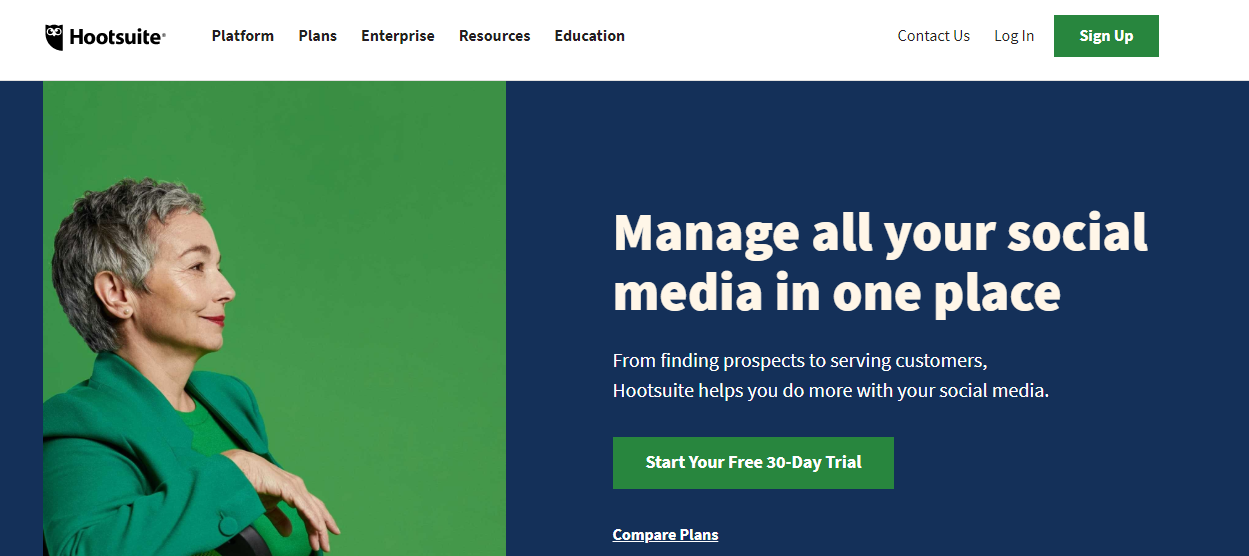
Hootsuite is a popular social media management platform with AI-driven features that streamline and strengthen digital marketing efforts. It lets users schedule posts, monitor social media activity, and analyse performance across multiple platforms from a single dashboard. Hootsuite’s AI capabilities include content scheduling optimisation, automated post suggestions, sentiment analysis, and social listening tools. These features help businesses better understand their audience, improve engagement, and run more effective social media marketing campaigns.
13. Grammarly

Grammarly is a popular AI-powered writing assistant that helps users improve their writing by offering suggestions for grammar, punctuation, style, tone, and clarity. It can be integrated into various platforms such as web browsers, Microsoft Office, and mobile devices, providing real-time feedback and improving the overall quality of written content. With its advanced algorithms and thorough writing analysis, Grammarly has become a valuable tool for professionals, students, and writers who want to sharpen their communication and produce polished, error-free content.
14. Canva
Canva is a versatile design platform that lets users create visually appealing graphics, presentations, social media posts, and more, without much design experience. With its intuitive drag-and-drop interface and a vast library of templates, images, and fonts, Canva helps users bring their creative ideas to life with little effort. From professional designers to amateurs, Canva serves a wide range of users, offering tools for designing logos, posters, infographics, and other visual content. With its collaborative features and seamless integration across devices, Canva has become a go-to solution for individuals and businesses looking to elevate their visual storytelling.
15. CoSchedule
CoSchedule is a comprehensive marketing management platform designed to help businesses streamline their marketing workflows and boost productivity. With CoSchedule, users can plan, organise, and execute their marketing campaigns from a single dashboard. The platform offers a range of features, including editorial calendar management, social media scheduling, task assignment, and performance analytics. Users can collaborate with team members, track project progress, and keep all marketing activities aligned with their overall objectives. CoSchedule’s intuitive interface and robust functionality make it a valuable tool for marketers who want to optimise their workflow and drive better results.
16. Albert AI

Albert AI is an autonomous marketing platform that uses AI and machine learning to optimise digital marketing campaigns across channels such as email, social media, and paid advertising. It analyses data to spot trends, predict outcomes, and make data-driven decisions that maximise ROI.
Also Read: We’re Proud to Be Sponsoring WordCamp Kanpur
Implementing AI Assistants in Your Digital Marketing Strategy
Assessing your marketing needs and goals:
- Begin by conducting a comprehensive analysis of your current marketing processes and identifying areas that could benefit from automation, optimisation, or sharper insights.
- Determine your marketing objectives and priorities. Whether it’s improving customer engagement, increasing lead generation, optimising content creation, or strengthening data analysis, knowing your goals will guide your AI assistant selection.
Choosing the right AI assistant for your business:
- Research the various AI assistants available in the market and assess their capabilities, features, and pricing structures.
- Consider factors such as the specific tasks you want the AI assistant to handle, the level of customisation and scalability required, and the ease of integration with your existing marketing tools and platforms.
- Look for AI assistants that offer advanced functionalities such as natural language processing (NLP), predictive analytics, and machine learning algorithms, depending on your specific needs.
Integrating AI assistants with your existing marketing tools and platforms:
- Prioritise seamless integration between the AI assistant and your current marketing software and platforms to ensure smooth data exchange and workflow automation.
- Consult with your IT or technical team to evaluate compatibility and address any potential integration challenges.
- Provide adequate training and support to your marketing team to familiarise them with the AI assistant’s features and functionalities.
- Establish clear communication channels and feedback mechanisms to gather insights from your team members and continuously optimise the AI assistant’s performance.
By following these steps, you can put AI assistants to work in your digital marketing strategy, using their capabilities to improve efficiency, personalise customer interactions, and drive better results across your campaigns.
Also Read: How Do Publish My Draft Pages In WordPress
Future Trends in AI Assistants for Digital Marketing
- Enhanced personalisation: AI assistants will keep evolving to deliver more personalised and contextually relevant interactions with customers. By drawing on advanced machine learning algorithms and real-time data analysis, AI assistants will tailor content, recommendations, and responses to individual preferences and behaviour patterns.
- Voice search optimisation: With the growing popularity of voice-enabled devices and virtual assistants like Amazon Alexa and Google Assistant, AI assistants for digital marketing will increasingly focus on voice search optimisation. Marketers will need to adapt their strategies to optimise content and keywords for voice search queries, driving more organic traffic and engagement.
- Augmented reality (AR) integration: AI assistants will play a crucial role in bringing augmented reality experiences into digital marketing campaigns. With AR technologies, AI assistants can provide immersive product demonstrations, virtual try-on experiences, and interactive content, boosting customer engagement and conversion rates.
- Predictive analytics for marketing automation: AI-powered predictive analytics tools will let marketers anticipate customer behaviour and preferences more accurately. By analysing historical data and patterns, AI assistants can automate marketing campaigns, personalised recommendations, and content delivery, improving conversion rates and revenue generation.
- Cross-channel integration: AI assistants will support seamless integration across multiple marketing channels, allowing marketers to orchestrate cohesive omnichannel experiences. By unifying data from various touchpoints, AI assistants can deliver consistent messaging, personalised offers, and targeted promotions across websites, social media, email, and other channels, maximising engagement and ROI.
- Ethical AI and data privacy: As AI assistants become more common in digital marketing, there will be a growing emphasis on ethical AI practices and data privacy regulations. Marketers will need to prioritise transparency, consent, and security in their AI-driven initiatives to build trust with consumers and comply with evolving regulatory requirements.
These trends show why staying informed and adaptable matters as marketing becomes more AI-driven.

Summary
AI assistants offer real benefits and play a central role in digital marketing strategies. They improve efficiency, personalize customer interactions, surface valuable insights, and lift the overall customer experience. Businesses that adopt these technologies stay competitive and keep pace with what consumers expect in the digital age. As AI keeps advancing, its place in digital marketing will only grow, shaping the future of marketing practices. Used well, AI assistants help businesses drive growth, increase engagement, and get more from their marketing efforts.
Interesting Read:
5 WordPress Plugins That Help In Doubling Your Website Traffic
Related reading