
5 min read
Finished Work Is The Perfect Invitation. It Just Never Leaves.


A hobbyist community’s viral coefficient runs on finished work escaping the platform. Someone completes a genuinely good project, a woodworking piece, a photograph, a finished model, and it gets shared somewhere the next hobbyist happens to be looking, and that person, seeing work in exactly the niche they care about, follows it back to where it was made. The finished piece is the invitation. The next hobbyist finding it is the conversion. Both are strong, and both usually go unrealized for the same reason.
If you’ve read the piece on the viral coefficient for communities, this is the hobbyist version, where the invitation is inherently high-quality and almost always trapped.
In this pieceWhy finished work is the ideal invitation
Why the best work never leaves
Why a searcher converts so precisely
A real public portfolio, not a mockup
The fix: a permanent, findable home for the work
The pushback: “we’re not trying to build an audience”
Where this lives inside BuddyNext
Turning it into something you actually check
Why finished work is the ideal invitation
A finished hobby project is an unusually good invitation because it’s self-explanatory and self-recommending at once. Nobody needs the community’s internal jargon to look at a beautiful finished piece and feel something, and the piece implicitly says “this is the kind of thing that happens here” without a word of marketing. That combination, universally understandable and genuinely impressive, is exactly what makes an invitation convert, and hobby work produces it naturally.
Most niches have to manufacture something worth sharing. Hobby communities produce it as the ordinary output of what members already do. The invitation half of K should be near-effortless here, because the invitations, the finished pieces, are being created constantly. The only question is whether any of them ever leave the room.

Why the best work never leaves
The invitation half collapses because the finished work lives only in a scrolling feed that buries it within a day. A member posts their best project, it gets reactions from the same people who see everything, and it scrolls away, permanently, replaced by the next post. A month later it’s effectively gone, even though it was some of the best work the community produced all year, and it invited exactly nobody outside the walls because it never had a durable, findable form.
This is the trap the growth loop piece on hobbyist communities describes, seen as a coefficient. A community producing genuinely shareable work every week can have a K near zero, because a feed-only structure gives that work no permanent, public, searchable form to invite anyone from. The invitations were created. They just decayed before they could reach anyone.
Why a searcher converts so precisely
The conversion half of a hobbyist community’s K is unusually high-quality, because the person who arrives is exactly the right person. Someone who searches for a specific technique, a specific kind of finished piece, and lands on real work in that exact niche is pre-qualified in a way no broad advertising audience is. They weren’t interrupted, they were looking, and they found precisely the thing they were looking for, made by someone in a community built around it.
That precision is what makes even a small number of these invitations worth so much. A finished piece sitting at a permanent, searchable address doesn’t convert a broad audience at a low rate, it converts a narrow, perfectly-matched audience at a high one, the exact hobbyists most likely to become real, contributing members rather than passive lurkers.
A real public portfolio, not a mockup
Here’s what a permanent, findable home for the work actually looks like, reachable without an account.
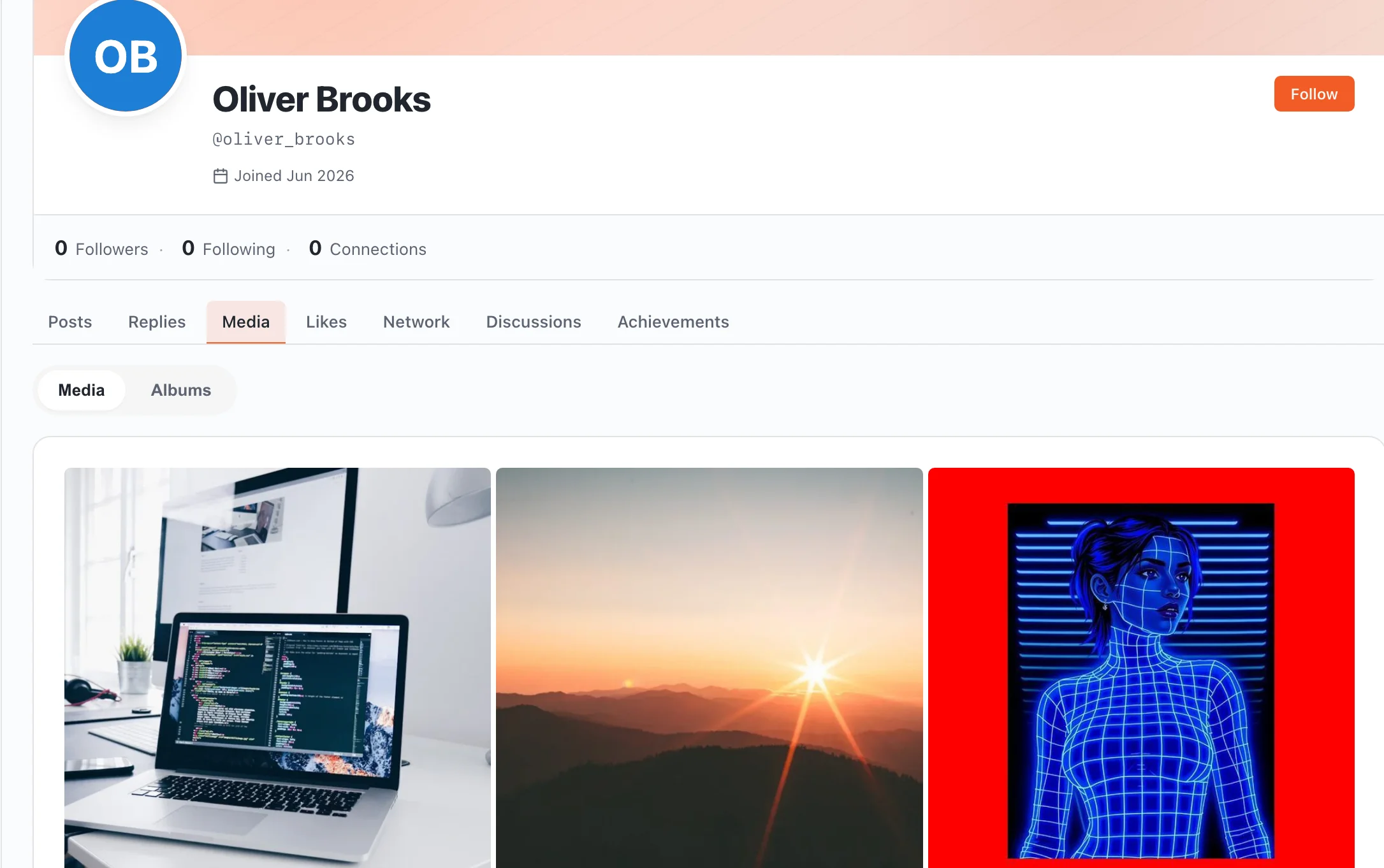
A real, permanent, public portfolio of finished work, reachable without an account, not a feed post that scrolls away tomorrow. Every piece here is an invitation with a permanent address, findable by the next person who searches for exactly this kind of work, indefinitely. That’s the invitation half built to last instead of decay, and the conversion half is unusually strong because anyone who lands here searched their way to precisely the niche this work belongs to.
The fix: a permanent, findable home for the work
The highest-return move on a hobbyist community’s coefficient is giving finished work a permanent, public, searchable home, a real portfolio rather than a scrolling feed. This changes nothing about how much good work gets made, that’s already happening, but it stops the invitations from decaying before they can reach anyone, which is the entire reason the coefficient sat near zero.
A permanent, indexable home means a piece created today is still inviting people a year from now, still converting the next searcher who finds it. That’s the difference between an invitation that works for a day and one that works indefinitely, and because the work is already being produced, building the durable home is nearly all upside.
The pushback: “we’re not trying to build an audience”
Fair, and nobody’s suggesting a hobby community needs to chase influencer-style reach. The point isn’t audience size. It’s that a permanent, public home for good work costs nothing extra to provide and quietly generates invitations a private feed structurally cannot, whether or not growth was ever the stated goal.
You don’t need every member chasing an audience. You need the option to exist, opt-in, for the members who’d like their best work to be findable, while everyone else keeps posting exactly as they already do. Even a modest number of members choosing a permanent, public portfolio is enough to move a coefficient that was otherwise stuck at zero.
Where this lives inside BuddyNext
If you’re running the community on BuddyNext, public member profiles give every member a permanent, indexable home for their work, reachable without an account, which is exactly the durable invitation surface the coefficient needs. For communities built around visual work specifically, pairing it with MediaVerse adds the gallery-first presentation a finished piece deserves, so the invitation looks as good as the work behind it.
Turning it into something you actually check
Weekly: of this week’s best work, how many pieces have a permanent, public, findable home versus living only in a feed that’s already buried them. That ratio is the invitation half of your hobbyist community’s K. And watch for new members who mention finding a specific piece through search, that’s the coefficient converting in a way no internal engagement number will ever show you.
The best work already exists, produced constantly, exactly the kind of thing that invites and converts the next hobbyist. The only question is whether it disappears tomorrow with the rest of the feed, or keeps quietly inviting the next person who cares about the exact same strange, particular thing.
Related reading