
6 min read
A Tiny Market Is Not A Death Sentence For A Hobby Community

A hobbyist community inverts the usual market-sizing anxiety. Where most founders worry their total market is too small, a hobbyist founder often has a genuinely tiny TAM, only a few thousand people on earth care about their specific strange, particular thing, and treats it as a fatal problem. It isn’t. A hobbyist community’s obtainable market is unusually high as a share of its serviceable one, because the few people who care about a niche hobby care intensely, which means a small TAM can still support a dense, thriving, high-capture community.
If you’ve read the piece on TAM, SAM, and SOM for communities, this is the hobbyist-specific version, where a tiny TAM is not the death sentence it looks like.
In this pieceThe small-TAM panic
TAM: the few thousand who genuinely care
SAM: almost the whole TAM, oddly
SOM: an unusually high share
Why intensity beats size
A real niche community, not a mass one
Where this lives inside BuddyNext
The test, if you want one
The small-TAM panic
A hobbyist founder runs the numbers, realizes only a few thousand people on earth genuinely care about their exact niche, and panics. Every piece of startup market-sizing advice they’ve absorbed says a small TAM is bad, a hard ceiling, a reason not to bother. So they either abandon the specific thing they love for a broader, blander topic, or they never start at all, killed by a number that was never actually the problem.
The panic is misplaced because hobbyist communities don’t work like mass-market products. A product with a tiny TAM struggles because it needs scale to be viable. A community with a tiny TAM can thrive, because a community’s value comes from density and intensity, not raw size, and a niche hobby delivers both in a way a broad topic never does. The small TAM isn’t the ceiling it looks like. It’s just a different, and often better, shape of market.

TAM: the few thousand who genuinely care
A hobbyist community’s total addressable market is genuinely small and genuinely knowable: the specific, limited population who care about this particular niche. Unlike the vague, enormous TAMs of fitness or general topics, a hobby TAM is often countable, the people worldwide who do this specific strange thing, and that number can be small enough to feel alarming.
But the smallness comes with a quality most large TAMs lack: everyone in it actually cares. There’s no diffuse, barely-interested majority diluting the number. The hobby TAM is small precisely because it’s filtered down to genuine enthusiasts, which makes it a far higher-quality market than its size suggests. A small TAM of intense enthusiasts beats a huge TAM of the barely-interested for a community, every time.
SAM: almost the whole TAM, oddly
Here’s where hobbyist communities break the usual pattern. For most niches, the serviceable market is a small slice of the TAM, cut down by language, format, geography, and focus. For a hobbyist community, the SAM is often nearly the whole TAM, because the enthusiasts are already gathered online, already looking for exactly this, and already reachable through the places they congregate. The gap between TAM and SAM, usually large, is often small in a niche hobby.
This is the migration opportunity the piece on bootstrapping a hobbyist community describes. The people are already somewhere, a subreddit, a forum, a Discord, which means your serviceable market is nearly your whole addressable market, findable and reachable in a way a broad topic’s scattered audience never is. A small TAM that’s almost entirely serviceable is a much better position than a huge TAM that’s mostly unreachable.
SOM: an unusually high share
The obtainable market is where the hobbyist advantage fully pays off. Because the enthusiasts care intensely and are already gathered, a hobbyist community can capture an unusually high share of its serviceable market, far higher than a mass community ever captures of its diffuse SAM. When the few thousand people who care all know this is the place for their specific thing, you can obtain a real, large fraction of them, not the rounding-error share a broad community wins.
This is why the small TAM is fine. A community that captures, say, a meaningful chunk of a few-thousand-person TAM has a dense, thriving, genuinely significant community, because it captured a real share of everyone who cares. The absolute number is small; the capture rate is high; and for a community, the capture rate and the density it produces matter more than the absolute size ever will.
Why intensity beats size
The whole hobbyist case comes down to this: for a community, intensity beats size. A thousand people who care intensely about a niche produce more real engagement, more shareable work, more genuine word-of-mouth, and more durable community than a hundred thousand people mildly interested in a broad topic. The niche community’s members show up, contribute, and bring in the next enthusiast, because the thing genuinely matters to them.
A broad community with a huge TAM is usually fighting for shallow engagement from people who barely care. A niche community with a tiny TAM gets deep engagement from people who deeply care. The second is a far better foundation for an actual community, which is why the small-TAM panic gets it exactly backwards, the small, intense market is the advantage, not the limitation.
A real niche community, not a mass one
Here’s what a captured niche market actually looks like, reachable without an account.
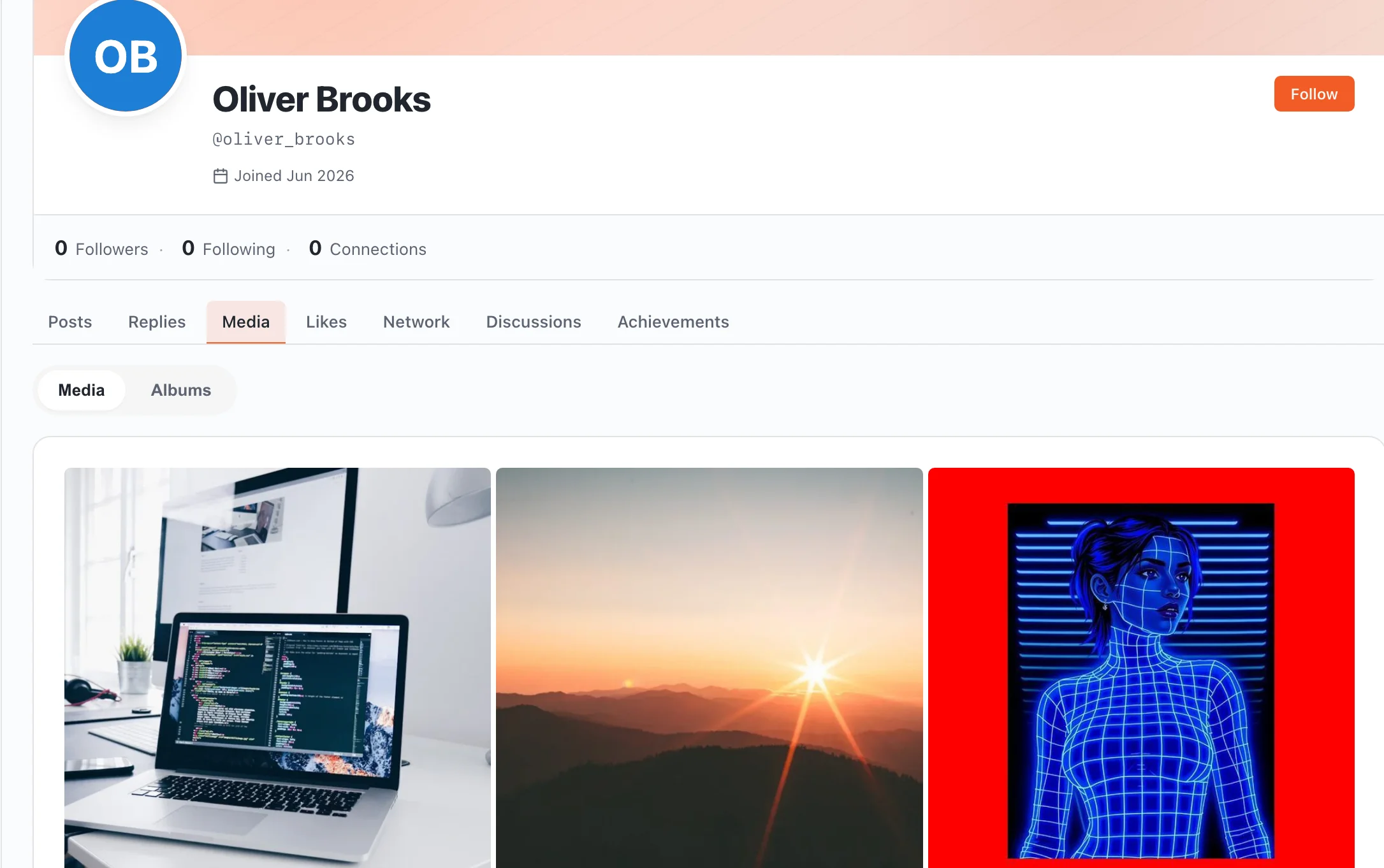
Real, finished, high-quality work from a real member. This is what an intense niche produces, output that only comes from people who genuinely care about the specific thing. A community of enthusiasts like this, even if the total number of people who care is small, generates real work, real engagement, and real gravity for the next enthusiast who searches for exactly this. The small TAM produced this; a huge, diffuse market rarely would.
Where this lives inside BuddyNext
If you’re running the community on BuddyNext, public member profiles and portfolios give an intense niche the permanent, findable home that captures a high share of a small TAM, the people who care can find the place and see it’s real. For visual hobbies specifically, pairing it with MediaVerse presents the finished work in a way that reflects the intensity behind it. The small TAM is fixed by the niche; what the platform gives you is the ability to actually capture most of it.
The test, if you want one
Three numbers. The genuinely small, countable population who care about your specific niche, your TAM. The share of them you can actually reach, which for a niche hobby is often most of them, your SAM. And the share you’ll realistically capture, which for an intense niche can be unusually high, your SOM. If a small TAM made you hesitate, that’s the mistake, a small, intense, capturable market is a community advantage, not a limit.
Build the niche community you actually care about, and measure it by the share of the enthusiasts you capture and the depth of their engagement, not by the smallness of the total number. A dense community that owns most of a small market beats a thin one lost in a large one, and for a hobby, the small market was always the better one to own.
Related reading