
4 min read
A Quiet Hobbyist Community Isn’t a Failing One


Hobbyist communities are where founders panic over the 90-9-1 rule the hardest, and where they should probably relax about it the most. A small forum for people who restore old bicycles, or tie flies, or collect a specific kind of vintage synthesizer, will almost always show the same ratio: a handful of people posting constantly, a few more chiming in when something catches their eye, and a much larger group reading every thread and posting nothing, ever.
Read that as failure and you’ll spend real effort trying to fix a ratio that was never broken.
This split is usually healthy here, not broken
A hobby, almost by definition, is something most people practice for themselves, quietly, without needing an audience. Someone who reads every restoration thread in your bicycle forum and never posts a single one of their own projects isn’t a failed member. They’re a member using the community exactly as intended: as a reference library, built by the 1%, read by everyone. That’s not a lesser form of participation. It’s the majority form, in a hobby space, and it always was.
The mistake is importing a metric from a different kind of community, one where posting actually correlates with satisfaction, and applying it here, where satisfaction and posting frequency are only loosely connected at best.
How a hobbyist community actually dies
It’s almost never death by too many silent readers. It’s death by a founder deciding the silent readers are the problem, launching a campaign to convert them, “introduce yourself” threads, participation streaks, a leaderboard nobody in this niche ever wanted, and in the process making the space feel less like a hobby and more like a chore with social pressure attached. The 1%, who joined for the hobby and stayed for the depth of conversation, notice the shift first, and they’re also the first to quietly stop posting once the vibe changes.
The actual risk to a hobbyist community is almost always underinvestment in the 1%, not overinvestment in the wrong metric aimed at the 90%. If the handful of people producing the real content lose interest, there’s nothing left to read, and the 90% who were perfectly happy lurking have nothing left to lurk on.
A real body of work, not a demo
Here’s what the 1%’s output actually looks like when it’s allowed to just be itself.
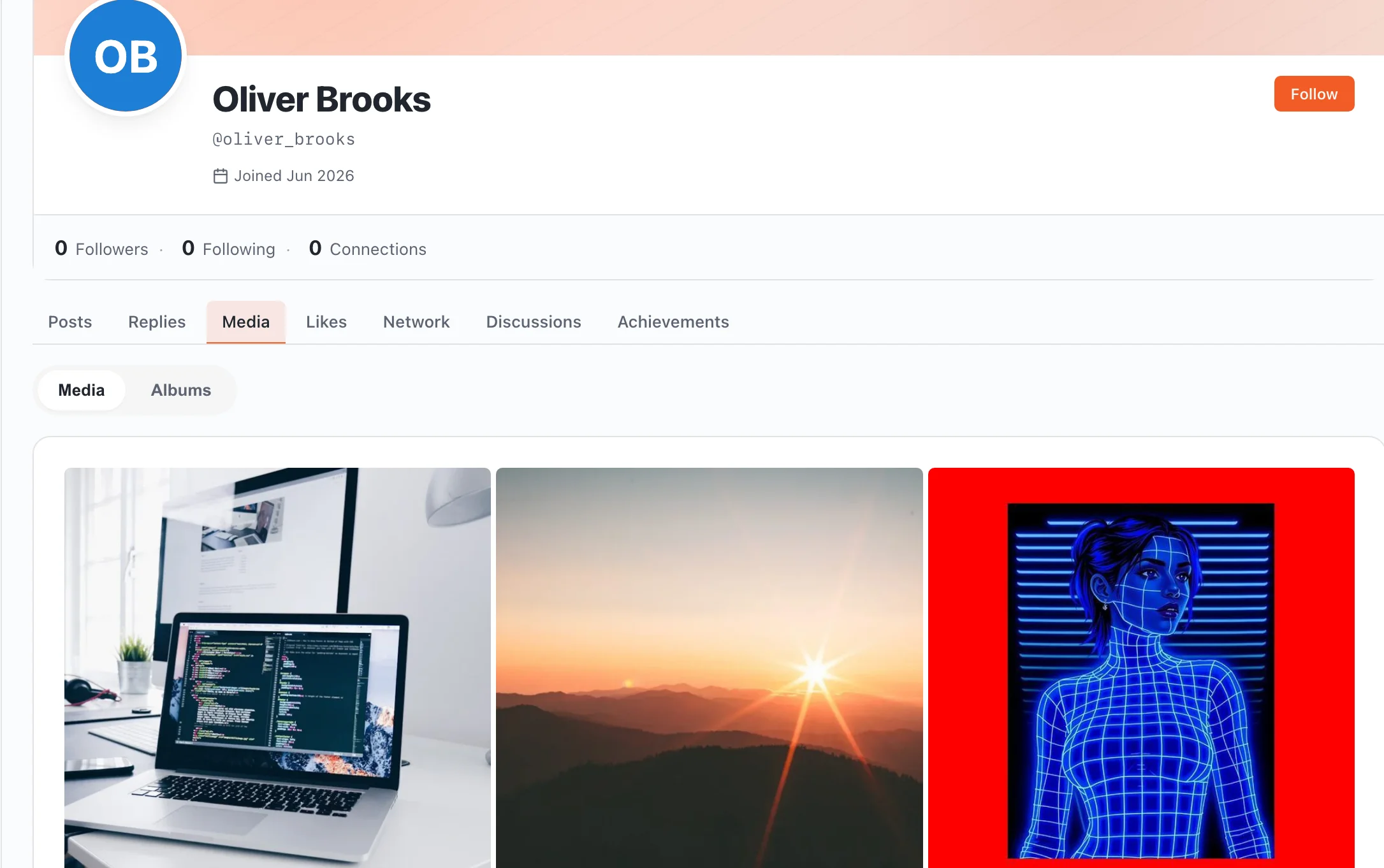
This is a real, public member portfolio, reachable without logging in. Nobody built this for a demo. It’s the accumulated output of someone who was going to make this work whether or not a community existed to hold it, and the community’s entire job, in a case like this, is to stay out of the way and give that work a place to live where the other ninety percent can find it.
The one case where the ratio genuinely does need to change
There’s an honest exception worth naming, covered from a different angle in the piece on market sizing for hobbyist communities: if your hobby space is quietly a two-sided marketplace, makers selling to buyers, sellers trading with collectors, then the ratio of active creators to passive browsers isn’t just a health metric, it’s your actual supply-to-demand balance. A restoration forum where three people sell finished bikes needs enough of the ninety percent to be genuine potential buyers, or the 1%’s output has nowhere to go.
Even there, the fix isn’t converting lurkers into posters. It’s making sure the transaction, browsing to buying, is easy without requiring a post at all. The ratio can stay exactly as lopsided as it naturally is; what needs to change is whether the ninety percent can act on what they’re reading, not whether they talk about it.
The early warning looks the same as everywhere else
Even in a healthy, quiet hobbyist space, watch for the same signal that matters in every version of this ratio: a member of your 1% posting less than they used to, without complaint. In a small niche community, losing even one or two of the people actually producing content is a much bigger hit than the same loss would be in a larger, noisier space, simply because there are so few of them to begin with. A quiet exit here can hollow out the whole reference library the 90% were relying on.
The fix is the same small, unglamorous habit as everywhere else in this piece: notice, say something specific and real, and do it before the silence becomes a departure.
What to actually do instead
Stop trying to convert the 90% in a hobbyist space. Spend that energy instead on making it slightly easier for the 1% to keep producing: better upload tools, a portfolio page that does justice to real work, a direct thank-you when something they made genuinely helped someone else. None of that requires the silent majority to change a single thing about how they use the community.
If you want one honest health check for a hobbyist community, it isn’t posts per member. It’s whether the same small group of contributors is still around a year later, still making things, still getting read. Protect that, and the ninety percent will keep showing up on their own, the same quiet way they always have.
Looking for a block-native alternative to WP Job Manager? Explore WP Career Board, featuring automatic Google Jobs JSON-LD schema injection and visual Kanban applicant tracking.
Read Article → Explore WP Career Board →Related reading