
4 min read
Your Brand Community’s First Reply Is The Real Activation Event


A new member joins your brand community, fills out a profile, maybe reacts to a pinned post, and then never comes back. On every dashboard that matters, they still count as a member. What they actually are is a completed signup form that never turned into a person showing up, and the moment that would have made the difference already came and went, unnoticed.
If you’ve read the piece on the AARRR funnel or the 90-9-1 rule for brand communities, this is the stage that decides who even gets a chance to become part of that 9% or 1%. A member who never activates never gets the option.
In this pieceWhy a completed profile isn’t activation
What the real first action looks like for a brand community
A real reply, not a mockup
Why this isn’t the same as engagement rate
What breaks activation specifically for brand communities
Where this lives inside BuddyNext
Turning it into something you actually check
Why a completed profile isn’t activation
Most brand community onboarding flows are designed around profile completion: add a photo, write a bio, pick your interests. All of it is easy, all of it is solitary, and none of it involves another human being. A member can finish every field in that flow and still never have a single genuine interaction with anyone.
That matters because profile completion is trivially easy to optimize and tells you almost nothing. A progress bar that fills up to 100% feels like a win on the admin side while doing nothing to answer the only question that actually predicts whether this person sticks around: did they talk to somebody, or did they just fill out a form about themselves.
What the real first action looks like for a brand community
For a brand community specifically, the action worth tracking isn’t a reaction, a like costs nothing and means almost as little as the signup itself. It’s a reply. A comment on someone else’s post, a question asked in a thread, anything that requires the new member to actually engage with another person rather than just consume or perform a profile.
The reason this specific bar matters is that it’s the same behavior the relationship marketing piece describes as the whole point of running a brand community at all: real, human, two-way exchanges instead of one-way broadcasting. A member’s first reply is the first moment they’ve actually participated in that exchange rather than just watched it happen.

A real reply, not a mockup
Here’s what that moment actually looks like, reachable without an account.
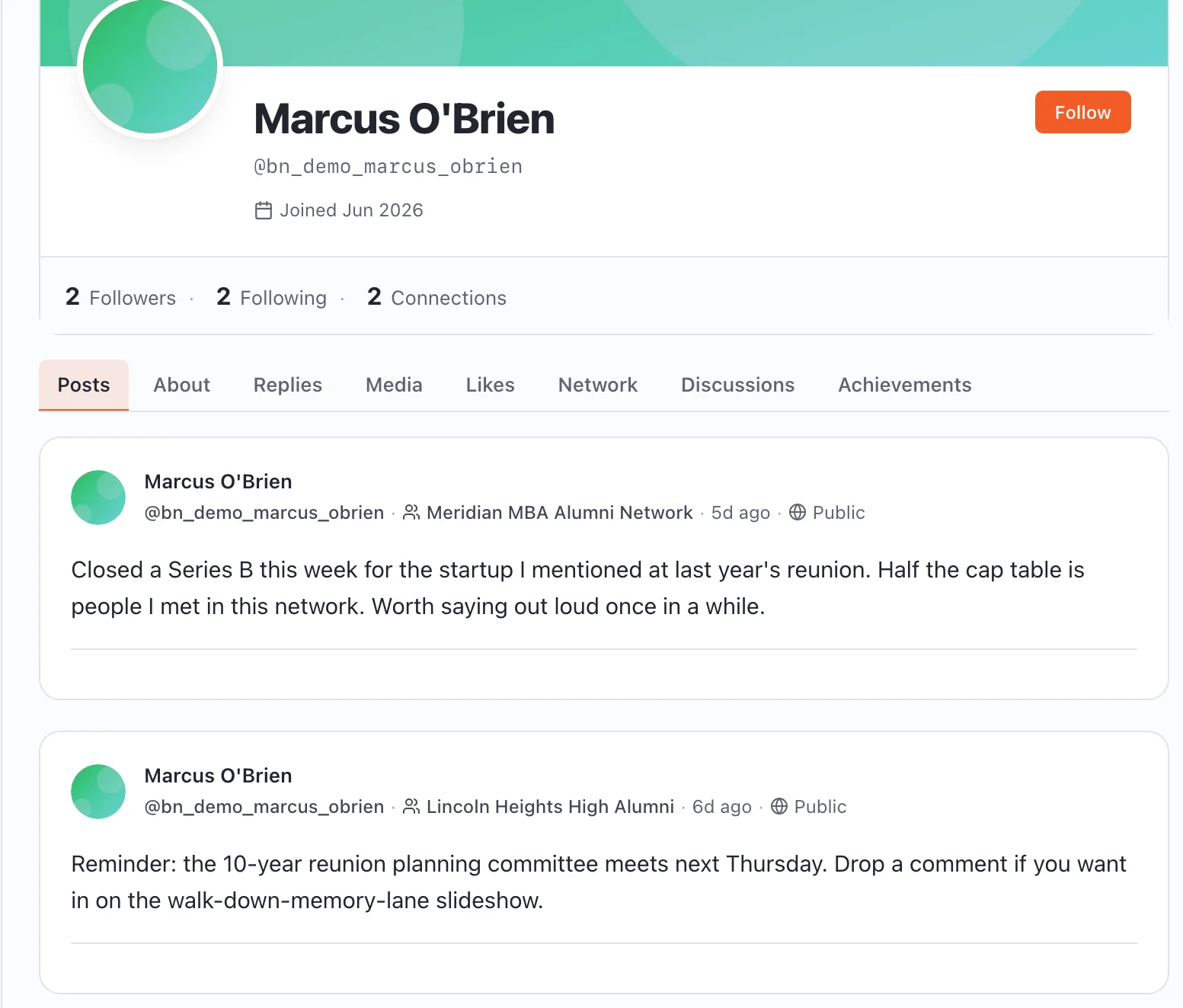
Every post on this profile started as somebody’s first reply to somebody else. Nobody arrives at a history like this without crossing that first, small, unglamorous threshold, an unprompted response to another human being who wasn’t expecting it. That’s the entire mechanism this piece is about, and it happened once, early, before any of the rest of it existed.
Why this isn’t the same as engagement rate
Engagement rate is a real, useful number, but it’s an average across your entire membership, weighted toward the people who were already active. It can look perfectly healthy while telling you nothing about whether this week’s new members are activating at all, because a handful of long-time members replying to everything can carry the average on their own.
Activation Rate is deliberately narrower: only new members, only a fixed early window, only one specific action. It’s less flattering than an overall engagement number and considerably more useful, because it isolates the exact moment a brand community either gains a participant or quietly doesn’t.
What breaks activation specifically for brand communities
The first failure is a feed with nothing to reply to that isn’t the brand’s own content. If the only posts a new member sees are announcements from the company account, there’s no genuine peer conversation to join in the first place, and no reason for their first action to be anything but scrolling past.
The second is a support-first culture that trains members to open private tickets instead of public threads. Every question that goes straight to a private inbox is a missed activation moment, a real exchange that could have happened in public, in front of the exact new member who needed to see that other people show up here too.
Where this lives inside BuddyNext
If you’re running the community on BuddyNext, the free Community OS for WordPress, threaded comments and reactions make replying low-friction from a new member’s very first session, and the built-in onboarding wizard can be pointed at a specific space designed for exactly this kind of first exchange rather than dropping someone into a generic firehose feed.
Turning it into something you actually check
Weekly: of everyone who joined this week, what percentage posted a genuine reply, not a reaction, within 48 hours. If that number is meaningfully lower than your signup-to-profile-completion number, you’ve just found the actual gap, the one between people who technically joined and people who ever actually showed up.
Related reading