
5 min read
Your Brand Community’s 1% Are Doing Unpaid Work

Every brand community I’ve looked at closely has the same small group holding it up. A handful of members answer questions before your team gets to them. They write the reviews that read like they mean it, because they do. They welcome the newcomer who posted a confused first question at 11pm. None of that is in their job description, because they don’t have one. They’re the 1% in the 90-9-1 split, and in a brand community specifically, they’re doing unpaid labor your support team would otherwise be paying for.
That’s worth saying plainly, because it’s easy to talk about “superfans” in a warm, appreciative tone while treating them, in practice, exactly like free headcount.
What the 1% are actually worth here
Run the math once and it stops being abstract. If ten members answer thirty support-style questions a month that would otherwise land in your inbox, and each of those would have cost your team fifteen minutes to handle, that’s roughly seven and a half hours a month of support work happening for free, done by people who are, from the brand’s perspective, volunteers. Multiply that across a year and you’re looking at a meaningful chunk of a support role, quietly absorbed by ten people who joined because they liked the product.
The 9% add a second layer worth naming separately: the occasional reviewer, the person who shows up for a launch thread and then goes quiet for two months. They’re not carrying the daily weight the 1% carry, but they’re your most efficient source of social proof, because their praise costs them nothing to give and reads as more credible than anything your team could write, precisely because they don’t do it every day.
The specific way brands burn this group out
It rarely looks like burnout from the outside. It looks like a member who used to answer every thread in a category quietly answering fewer of them, then none, then leaving the community without ever posting a complaint. What actually happened, most of the time, is that the brand kept extracting the labor and never once acknowledged where it came from: no reply from a real employee, no public thanks, sometimes not even a name check when their answer got turned into an official FAQ entry.
The other common failure is subtler. A brand notices its 1% are valuable and responds by adding structure, a formal ambassador program, tiers, requirements, quotas. Sometimes that works. Just as often it converts something a person did because they wanted to into something they’re now expected to, and the moment volunteering starts to feel like an unpaid job with performance expectations, the people doing it best are the first to quietly step back.
A real panel, not staged
Here’s what protecting that group actually looks like in practice, on a real, public profile.
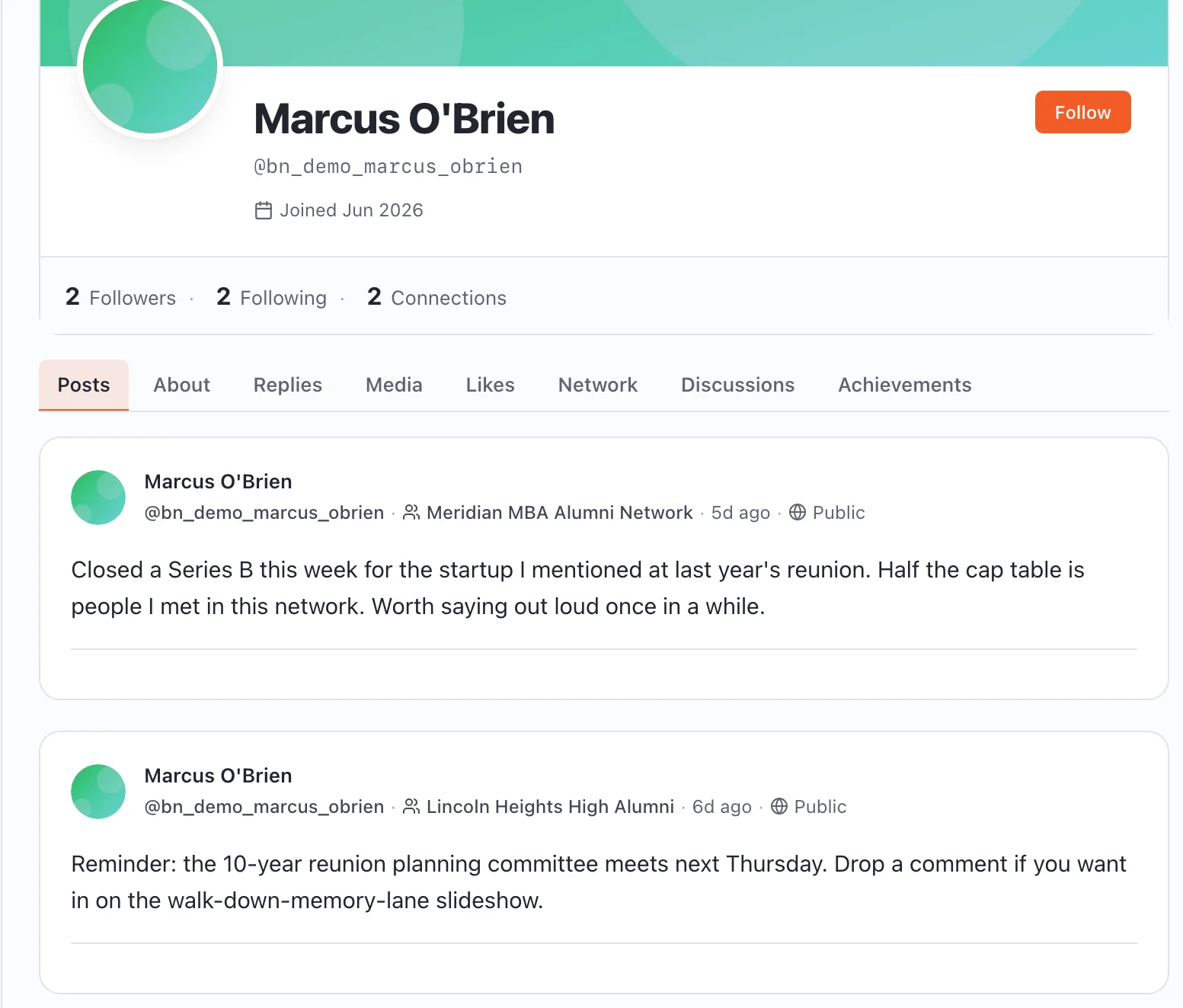
This is a real member profile, reachable without logging in, showing a real history of posts. That visible history is the point. A public profile with a real post history is itself a form of recognition; it lets a newcomer see, unprompted, that this person has been showing up and contributing for a while, which does quietly for free what a formal “top contributor” badge tries to do more clumsily.
Why this isn’t the same thing as an ambassador program
It’s tempting to formalize the 1% the moment you notice their value, turn them into an official ambassador tier with perks and expectations attached. Sometimes that’s the right move for a brand with the budget and structure to run it well. But it’s worth being honest that a formal program and an organic 1% are different animals, not two names for the same thing.
An ambassador program selects people and asks something of them in exchange for a benefit. The organic 1% selected themselves, for reasons that had nothing to do with a benefit you offered. The moment you fold them into a formal structure, some of them thrive under the recognition and structure, and some of them, the ones who were doing this purely because they loved the product, quietly feel like something they did for free now has strings on it. Know which of your 1% actually want the formal recognition before you assume all of them do.
The 1%’s answers are also your quietest acquisition channel
There’s a second, less obvious value the 1% create that rarely shows up in any internal report: a genuinely good answer they post to a real question doesn’t just help the person who asked. If it’s public and indexable, it keeps helping every future stranger who searches the exact same question a year later, long after the original thread went quiet. That’s the same underlying mechanism covered in the piece on a brand community’s viral coefficient: a public answer reaching the next customer through search, with no invitation required at all.
Which means the single most valuable thing you can do for that channel isn’t a new feature. It’s making sure your 1%’s best answers stay public and stay findable, rather than getting buried under a login wall or lost three pages deep in an unsearchable thread. Protecting the people is half the job. Protecting what they already wrote is the other half.
What to do instead, starting this week
Skip the tier system for now. Find the three to five people currently doing the most unpaid work in your brand community and have a real person from your team say something specific to each of them, not “thanks for being awesome,” but a reference to an actual thing they did and the actual difference it made. That single act, repeated consistently rather than as a one-time gesture, does more to retain a 1% than any points system.
Then watch for the early signs of the quiet exit: someone whose posting frequency is dropping without complaint. That silence is the tell, not a support ticket. Reach out before the drop becomes a departure, because by the time a member of your 1% actually leaves, you’ve usually lost weeks of unpaid support work you never priced into your budget, and a piece of social proof you can’t easily replace with a paid campaign.
Related reading