
5 min read
Superfans and the Trust That Only Goes One Way


You trust a stranger on the internet more than you trust an ad, and the stranger has never met you. That is not a flaw in your judgment. It is a specific, well-documented kind of trust, and it runs one direction only.
Psychologists call it a parasocial relationship: the bond an audience member forms with a creator, host, or community they follow closely, built entirely from the audience side. The creator does not know this particular person exists. The audience member knows the creator’s opinions, their voice, sometimes their kid’s name. It feels like knowing someone. It is not, quite.
The recommendation that isn’t an ad
This is why a product mention from someone you have followed for a year lands completely differently than the same claim in a billboard. The billboard is trying to convince you. The person you follow already convinced you of a hundred smaller things first, none of which were sales pitches, and the recommendation arrives with all of that credit attached.
It is tempting to read this as a trick. It is not. The trust is real. It was earned the same way ordinary trust gets earned anywhere: by being consistent, by actually responding when someone says something back, by being visibly the same person in the comments as in the polished post. Relationship marketing over automation already made the case that this kind of attention cannot be faked at scale. This piece is about what happens when it works anyway, for people you never individually attended to at all.
Most of the trust is one-way, and that’s normal
Here is the part that trips people up. At any real audience size, the overwhelming majority of that trust is parasocial by definition. You cannot have a two-way relationship with ten thousand people. Most of your most loyal readers, students, or members will never get a personal reply from you, not because you failed them, but because the math doesn’t allow it.
That is not a lesser form of trust waiting to become real. It is a different, complete thing with its own rules. A member who has read every post you’ve written for a year, never commented once, and would still take your word over a stranger’s is not almost a friend. They are something else entirely, and the mistake is measuring that bond against the two-way kind and finding it thin.
Where the sale actually happens
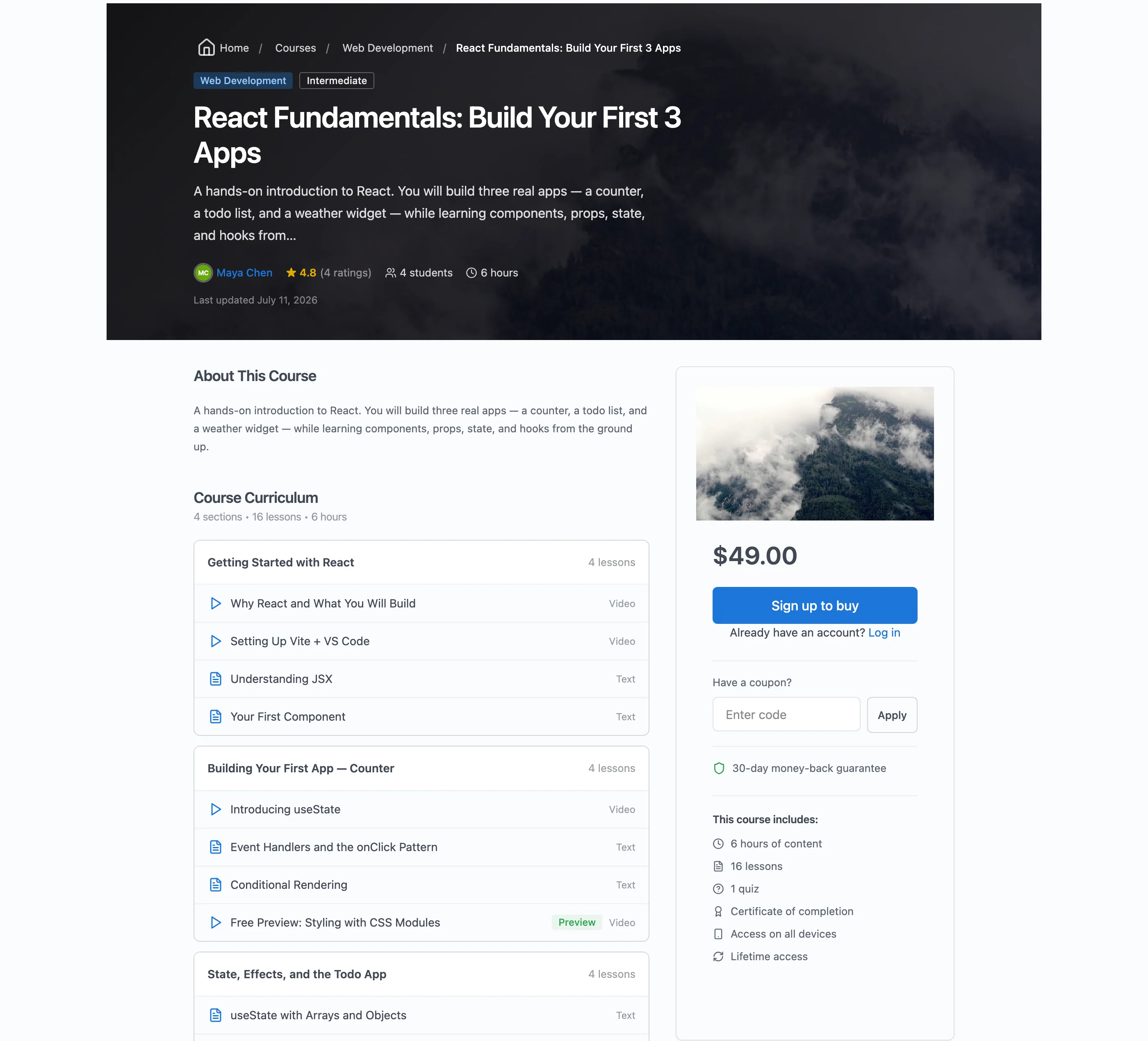
For a course creator, this shows up as a specific, almost frustrating pattern. The sales page rarely does the convincing. It confirms a decision that was already made somewhere upstream, in a newsletter, a free video, a comment thread, a Q&A answer that helped before any money changed hands. The price and the curriculum on the page above are real. What they are actually selling is the trust built before a visitor ever landed there, and the page’s job is just not to get in the way of it.
This is why two creators can post the same course outline at the same price and get wildly different conversion rates. The page is nearly identical. The parasocial account behind it is not.
Spending it without noticing
Trust like this behaves like a balance you can draw down, and the dangerous part is that it doesn’t announce when it’s low. A friendship tells you something is wrong; someone stops returning calls, gets short with you, brings up the imbalance directly. A parasocial audience does none of that. They just quietly stop opening the newsletter, stop clicking through, stop mentioning you to anyone else. The first sign of depletion is usually a metric moving in the wrong direction, weeks after the actual damage was done.

Every ask that reads as promotional spends a little of this down, and an audience built on parasocial trust can absorb some of that without resentment; that is part of the deal they implicitly signed up for. What it can’t absorb is a pattern where every appearance is an ask. Sit with that for a minute: the same behavior that feels harmless once a month reads as a betrayal at a rate of once a week, and nothing in your dashboard tells you which rate you’re actually on until the audience has already left.
The community itself can hold the trust, not just you
Everything so far has assumed a single face at the center of the parasocial bond, a creator or founder. That’s the common case, but it isn’t the only one. A member can trust a community as an entity, independent of any one person in it, the same way someone trusts a well-run publication more than any single byline in it.
This version is quieter and easier to miss. A newcomer reading a Space’s pinned rules, its history of actually-answered questions, its visible pattern of moderators who show up and follow their own guidelines, is forming exactly the same kind of one-directional trust described above, except the object of it is a group rather than a person. Nobody there knows this newcomer exists yet. They already trust the place.
The practical upshot is that this trust is buildable even without a single charismatic founder carrying it alone, and it’s more durable for that reason; a community-held version of parasocial trust doesn’t collapse the day one moderator burns out or moves on, the way a single-creator version can.
Some of them cross over, and most won’t
Kevin Kelly’s true fan is not a bigger parasocial follower. A true fan is someone who has crossed from the one-way version into wanting the real thing: a reply, a mention, a seat at whatever table exists. Most of a parasocial audience never makes that crossing, and treating that as a failure rate to fix misunderstands what the parasocial bond was for in the first place. It was never meant to convert into friendship at scale. It was meant to be trustworthy on its own terms, for people who will only ever experience one side of it.
The actual job is not turning ten thousand followers into ten thousand friends. It is being someone worth that one-way trust for the nine thousand who will always stay one-way, while staying genuinely reachable for the handful who show up wanting more.
Nobody earns the second kind of trust by accident, and nobody keeps the first kind by forgetting it was ever a form of trust at all.
Related reading