
4 min read
One Discussion Thread Doesn’t Scale Past Dunbar’s Number

A single course discussion thread works fine for the first cohort. Twenty students, one instructor, everybody’s question is visible to everybody else, and that visibility is genuinely part of the value, seeing someone else ask the thing you were embarrassed to ask is half of what makes a course community feel alive.
Run that same course for a year and it stops working, and it’s worth being precise about why, because the obvious explanation, “the course got less popular”, is usually wrong.
One thread, past a few hundred students
Add up five cohorts of forty students each into one running discussion thread and you’re past 150 fast, and past 150, a student’s question stops feeling like it’s going to a classroom and starts feeling like it’s going into a void. Nobody knows who’s still active, who already finished the course six months ago, or whether anyone’s going to see the question at all. Participation doesn’t decline gradually. It falls off a cliff right around the point where the thread stops feeling like a knowable group.
Cohort Spaces are the natural fix
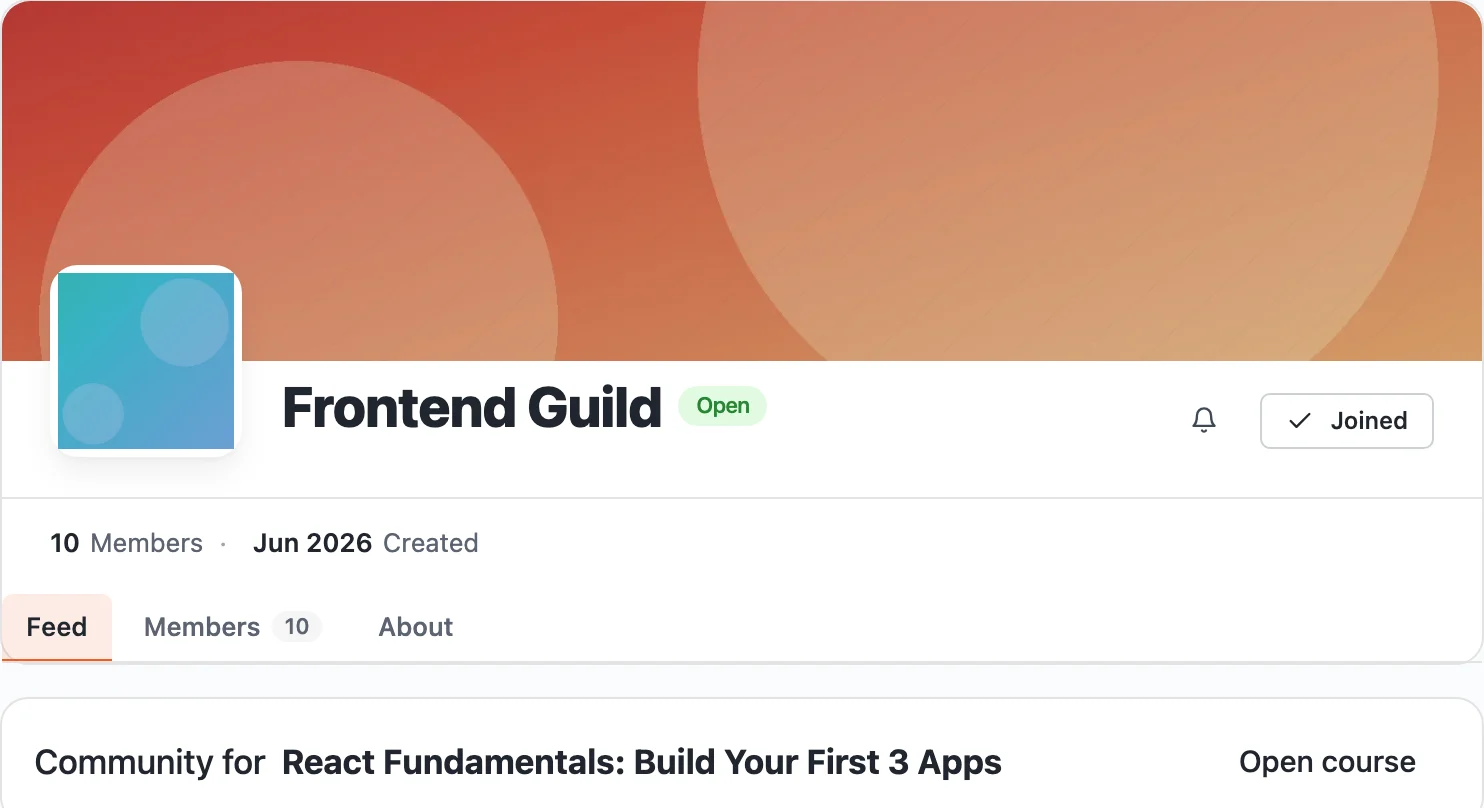
The fix that actually matches how course communities work is a Space per cohort, not one Space per course. Everyone who started together stays together, the same 20 to 40 people who are all at roughly the same point in the material, asking questions relevant to where they actually are, not questions a student six cohorts ahead already answered and forgot about.
This does something for retention that a single mega-thread never manages: a student’s classmates are still recognizable names months into the course, because there are only ever as many of them as Dunbar’s numbers say a person can actually track. That’s the difference between “I’m taking a course” and “I’m part of a cohort,” and it shows up directly in completion rates.
What happens when a cohort graduates
Cohort Spaces solve the during-the-course problem cleanly, but they raise a question the mega-thread never had to answer: what happens to the room once everyone’s finished? Archiving it outright throws away a group that, in a lot of courses, still has real value to each other, alumni who took the same cohort together often want to stay in touch about how they’re applying what they learned.
The better move is usually to leave the cohort Space open but let it go quieter on its own, while adding a smaller, optional alumni Space that pulls in graduates from multiple cohorts who want continued contact. That alumni Space will naturally run smaller and slower than any single cohort’s active-course Space did, and that’s fine, it’s serving a different, lower-frequency need, not competing with the energy of an active cohort.
What doesn’t work is merging every graduated cohort back into one giant “alumni” bucket by default. That just recreates the original mega-thread problem one step later, with the added twist that the people in it no longer share a current reason to talk daily. Let alumni opt in rather than defaulting everyone back into a crowd.
Cohort-based vs. evergreen changes the math
Not every course is structured in cohorts, and the fix looks different depending on which kind you’re running. A cohort-based, live-taught course gets a natural Space boundary for free, a new intake, a new Space, done. An evergreen self-paced course doesn’t have that built-in seam, since students start on their own schedule, so the more honest split is often by rough progress stage, a Space for people in the first third of the material, another for people further along, rather than by enrollment date, since enrollment date stops correlating with anything meaningful once people move through the content at their own pace.
Either way, the underlying test is the same one from the pillar piece: can a student in that Space plausibly recognize the other regulars there? If yes, the discussion still feels like a classroom. If no, it’s already a void, whatever the enrollment numbers say.
This is the same mechanism that shows up when a course’s Activation stage stalls, a student’s first real action lands better in a room of forty than a crowd of four hundred.
The instructor can’t scale past Dunbar’s number either
There’s a version of this problem that hits the instructor before it hits any student: an instructor answering questions across five simultaneous cohorts is trying to hold five separate groups of names, contexts, and prior conversations in mind at once, which is exactly the cognitive load Dunbar’s research says doesn’t scale, applied to a teacher instead of a peer group.
Cohort Spaces protect the instructor from this as much as they protect the students. Answering inside one cohort’s Space means the context is already loaded, this group, this point in the material, this set of prior questions, instead of the instructor having to reconstruct which cohort is asking before they can answer well. A tired, context-switching instructor gives worse answers, and cohort-scoped Spaces are a direct fix for that, not just a student-experience nicety.
Related reading