
8 min read
10+ Best Cloudways Alternatives For Web Hosting In 2026

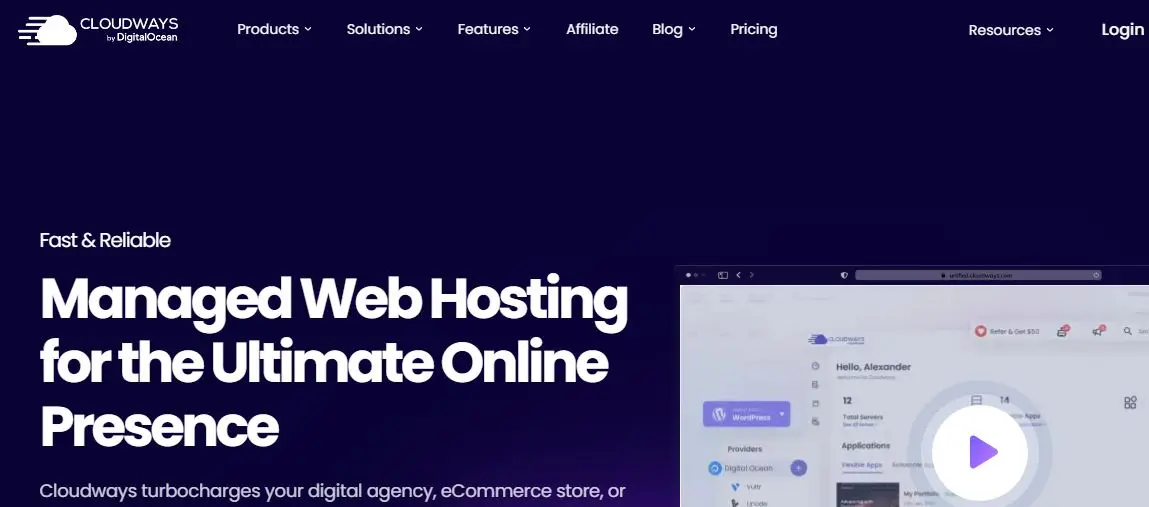
Cloudways carved out a niche by letting users deploy WordPress sites on cloud infrastructure providers like DigitalOcean, AWS, and Google Cloud through a simplified management panel. But since its acquisition by Akamai, pricing changes and platform shifts have pushed many users to reconsider. Whether you find Cloudways too expensive, too complex for your needs, or you simply want to explore what else the hosting market offers, this guide covers the best Cloudways alternatives for WordPress hosting in 2026.
Why Look Beyond Cloudways?
Cloudways works well for users who want managed cloud hosting without the full complexity of configuring servers directly. However, several common frustrations drive users to explore alternatives:
- Rising costs: Post-acquisition pricing increases have made Cloudways less competitive, especially for users running multiple small sites.
- Complexity overkill: Users who just want reliable WordPress hosting may not need the cloud provider selection layer that Cloudways adds.
- Email hosting gaps: Cloudways does not include email hosting, requiring a separate service and additional monthly costs.
- Support quality concerns: Some users report slower response times and less specialized WordPress expertise compared to dedicated WordPress hosts.
10+ Best Cloudways Alternatives
1. Nexcess
Nexcess runs managed WordPress hosting on notably reliable cloud infrastructure. Their solutions are built as a larger platform, so if a site grows or adds a WooCommerce store later, the environment scales without switching providers or rebuilding the stack.
Strengths: Managed WordPress hosting starting at $9/month, automatic updates and security hardening included. Nexcess offers PCI-DSS compliance-ready infrastructure, cloud resources that scale with traffic, and 24/7 support from a WordPress-focused team.
Ideal for: WordPress site owners who want hosting handled for them, and anyone who expects to add WooCommerce later and wants that step to be simple. Nexcess offers agency hosting solutions and a partner program as well, if you’re running multiple sites.
Consideration: Nexcess is built around managed hosting by default, so it assumes most users would rather not run server operations day to day. Self-hosted options are there if you want, but hands-on infrastructure work isn’t the default workflow.
2. Kinsta
Kinsta is a premium managed WordPress host built on Google Cloud Platform’s C2 machines. Every site gets its own isolated container, ensuring that traffic spikes on one site do not affect others. Kinsta’s custom-built MyKinsta dashboard provides a clean, intuitive interface for managing sites, DNS, CDN, and backups.
Strengths: Exceptional performance with built-in CDN (powered by Cloudflare), automatic daily backups, staging environments, and free site migrations. Kinsta’s support team specializes in WordPress and typically resolves issues quickly.
Ideal for: WordPress sites that prioritize speed and reliability, including WooCommerce stores and membership sites built with themes like Reign. Agencies managing multiple client sites benefit from Kinsta’s multi-site management tools.
Consideration: Kinsta’s pricing starts higher than Cloudways for comparable resource levels, so it is best suited for sites where performance directly impacts revenue.
3. DigitalOcean
DigitalOcean is a cloud infrastructure provider that offers virtual servers (called Droplets) with straightforward pricing and a developer-friendly interface. Unlike Cloudways, DigitalOcean gives you direct access to the server, which means more control but also more responsibility.
Strengths: Transparent pricing starting at $4/month, excellent documentation, one-click WordPress installations, and a robust API for automation. DigitalOcean’s Managed Databases and App Platform add higher-level services for teams that want some managed convenience.
Ideal for: Developers and technically proficient users who want full server access at predictable costs. Works well for hosting multiple WordPress sites, development environments, and custom applications.
Consideration: Server management, security updates, firewall configuration, backup systems, falls on you. If you are not comfortable with command-line server administration, pair DigitalOcean with a management panel like RunCloud or ServerPilot.
4. SiteGround
SiteGround is a well-established hosting provider known for excellent customer support and WordPress-specific optimizations. Their custom SuperCacher technology, automatic WordPress updates, and staging tools make it a strong managed hosting option at competitive prices.
Strengths: Consistently top-rated support with WordPress expertise, free SSL certificates, automatic daily backups, built-in CDN, and a custom site management interface (Site Tools) that is more intuitive than cPanel.
Ideal for: Small to medium WordPress sites, bloggers, and businesses that value reliable support. SiteGround works well for community sites built with BuddyX that need dependable shared hosting without the complexity of cloud server management.
Consideration: Renewal prices are significantly higher than introductory rates. Plan your budget based on the renewal cost, not the promotional price.
5. A2 Hosting
A2 Hosting emphasizes speed with its Turbo Server plans that use LiteSpeed web server technology, NVMe SSD storage, and built-in caching. Their Turbo plans consistently deliver faster page loads than standard shared hosting.
Strengths: Speed-optimized infrastructure, anytime money-back guarantee, free site migrations, and support for developer tools like SSH access, staging, and multiple PHP versions.
Ideal for: Speed-conscious site owners who want better performance than typical shared hosting without jumping to VPS or dedicated servers. A2’s Turbo plans hit a sweet spot between shared hosting simplicity and near-VPS performance.
Consideration: Like SiteGround, introductory pricing is attractive but renewal rates increase substantially. The Turbo plans are where the real performance gains are, the basic shared plans are not significantly different from competitors.
6. Vultr
Vultr is a cloud infrastructure provider competing directly with DigitalOcean. It offers high-performance compute instances, bare metal servers, and block storage across a global network of data centers. Vultr stands out for its wide selection of server locations and competitive per-hour pricing.
Strengths: 32 data center locations worldwide, NVMe SSD storage on all plans, competitive pricing, and a clean control panel. Vultr’s High Frequency Compute instances deliver excellent price-to-performance ratios.
Ideal for: Developers and agencies that need to deploy WordPress sites close to specific geographic audiences. The broad data center selection makes Vultr particularly useful for sites targeting regions not well-served by other providers.
Consideration: Same self-management requirements as DigitalOcean. You need server administration skills or a management layer on top.
7. Linode (Akamai Cloud)
Linode, now part of Akamai, offers Linux-based cloud computing with a reputation for transparent pricing and reliable performance. Their Dedicated CPU and High Memory plans are well-suited for WordPress sites with demanding workloads.
Strengths: Straightforward pricing with no hidden fees, hourly and monthly billing, excellent API documentation, and a clean manager interface. Linode’s community support and documentation are among the best in the industry.
Ideal for: Developers running WordPress alongside custom applications, and organizations that need predictable cloud computing costs without the complexity of AWS or GCP pricing models.
Consideration: Linode shares the same parent company (Akamai) that acquired Cloudways, so if your reason for switching is Akamai-specific concerns, this may not be the right alternative.
8. AWS (Amazon Web Services)
AWS is the largest cloud platform in the world, offering services that range from basic compute (EC2) to managed databases, machine learning, and content delivery. For WordPress, AWS Lightsail provides a simplified entry point with fixed monthly pricing.
Strengths: Unmatched scalability, global infrastructure, enterprise-grade security, and a comprehensive suite of services. AWS Lightsail simplifies WordPress hosting with one-click installations and predictable pricing starting at $5/month.
Ideal for: Enterprise organizations, high-traffic sites that need elastic scaling, and development teams already using AWS services. If your WordPress site integrates with AWS Lambda, S3, or other AWS services, keeping hosting on AWS simplifies architecture.
Consideration: Full AWS (outside of Lightsail) has notoriously complex pricing that can result in unexpected bills. Start with Lightsail and graduate to full EC2 only when you genuinely need the additional capabilities.
9. Google Cloud Platform (GCP)
Google Cloud Platform provides the infrastructure behind Kinsta and other premium WordPress hosts. For teams that want direct access to that infrastructure, GCP offers Compute Engine instances, Cloud SQL managed databases, and Cloud CDN for global content delivery.
Strengths: Google’s global network delivers excellent performance, and GCP’s sustained use discounts automatically reduce costs for long-running instances. The Cloud Console provides detailed monitoring and management tools.
Ideal for: Organizations that need tight integration with Google services (BigQuery, Cloud Functions, Firebase) or want the same infrastructure that premium managed hosts use, at a lower cost with direct access.
Consideration: GCP’s learning curve is steep. Unless your team has cloud engineering expertise, you will spend significant time on configuration that a managed host handles automatically. For most WordPress sites, a managed host on GCP (like Kinsta) is more practical than direct GCP hosting.
10. Microsoft Azure
Azure is Microsoft’s cloud platform, offering a comprehensive suite of computing, database, and networking services. Azure App Service can host WordPress sites with managed scaling, and Azure’s integration with Microsoft’s business tools makes it attractive for organizations in the Microsoft ecosystem.
Strengths: Deep integration with Microsoft 365, Active Directory, and enterprise tools. Hybrid cloud capabilities for organizations with on-premise infrastructure. Strong compliance and security certifications for regulated industries.
Ideal for: Enterprise organizations already invested in Microsoft technologies, and businesses in regulated industries (healthcare, finance, government) that need specific compliance certifications.
Consideration: Azure is typically the most expensive option for simple WordPress hosting. Its strengths emerge in complex enterprise scenarios where Microsoft integration and compliance requirements justify the premium.
11. Heroku
Heroku is a platform-as-a-service that simplifies application deployment. While not traditionally a WordPress host, Heroku can run WordPress through containerized deployments, making it an interesting option for development teams that prefer Git-based deployment workflows.
Strengths: Git-push deployment, add-on marketplace for databases and monitoring, and a developer experience that prioritizes simplicity over infrastructure management.
Ideal for: Development teams that want to deploy WordPress as part of a broader application stack and prefer PaaS workflows over traditional hosting.
Consideration: Heroku removed its free tier, and its pricing for persistent storage and databases can make it more expensive than alternatives for WordPress-specific hosting. Better suited for applications than traditional WordPress sites.
Choosing the Right Alternative
The best Cloudways alternative depends on what you need most:
- Best managed WordPress hosting: Kinsta or SiteGround
- Best for developers on a budget: DigitalOcean or Vultr
- Best for speed: A2 Hosting (Turbo plans) or Kinsta
- Best for enterprise scale: AWS, GCP, or Azure
- Best for WordPress communities: Any host that reliably runs BuddyPress and BuddyX theme, Kinsta and SiteGround both handle these well
Whichever platform you choose, prioritize reliable performance, responsive support, and a pricing model that scales predictably with your growth.
Related reading