
14 min read
Route Optimization Software Guide (2026)

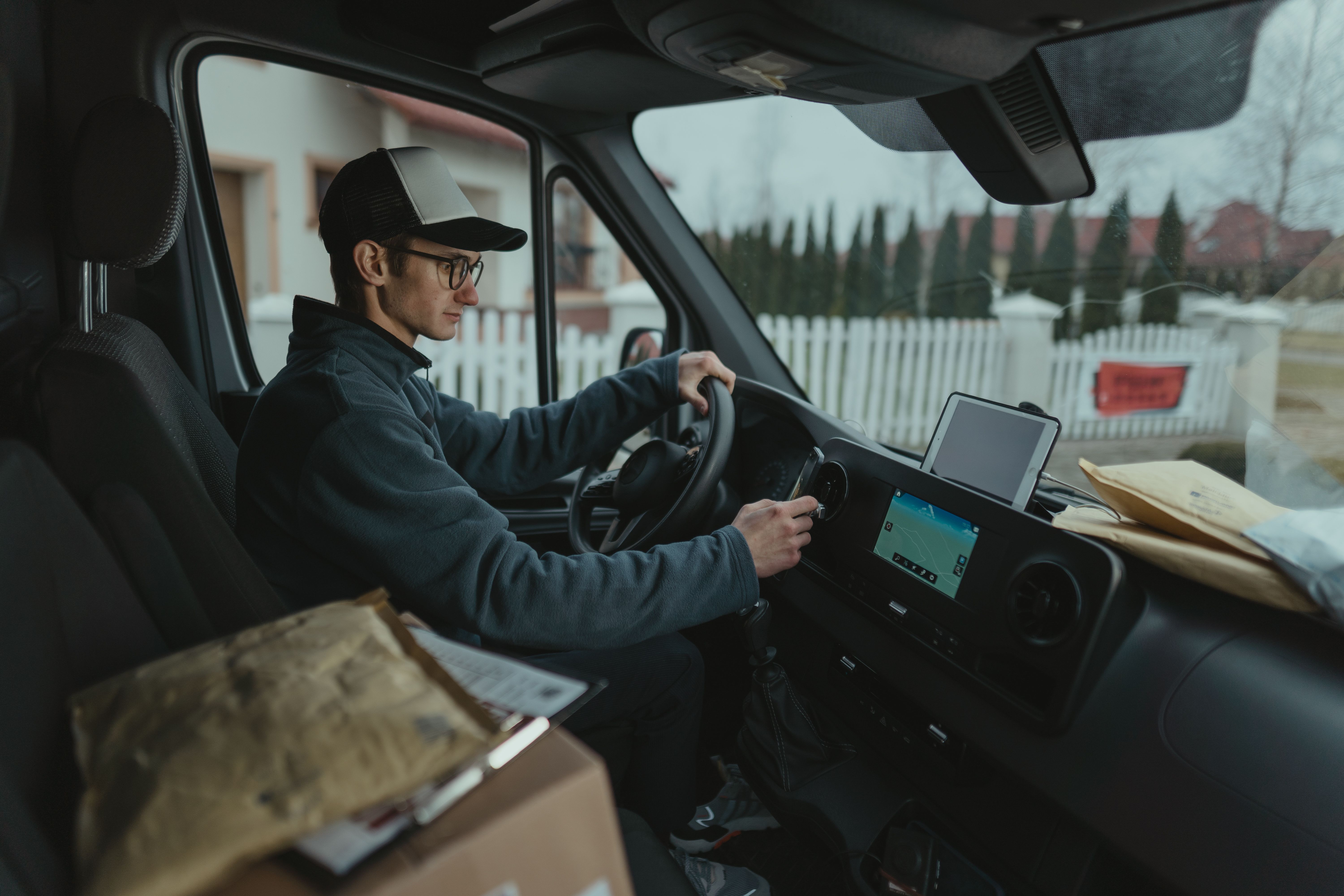
Quick answer: Route optimization software calculates the best sequence of stops for vehicles and drivers under real constraints, time windows, capacity, traffic, service time, and labor rules, so fleets cut miles, raise on-time rates, and lower last-mile cost. It is not the same as a consumer maps app: commercial solvers handle multi-stop fleets, not just “A to B.”
If you searched for commercial delivery routing tools, this guide covers definitions, 2025 - 2026 market stats, must-have features, how it differs from Google Maps, buying criteria, and how routing fits the wider last-mile problem. For the broader delivery context, cost, failed attempts, transparency, and WooCommerce realities, start with our companion piece: key challenges and solutions in last mile delivery.
Related reading: dispatch management software and how to start a transportation business.
Table of contents
- What is a commercial routing platform?
- Market stats (2025 - 2026)
- Why fleets buy it
- How optimization engines work
- Core features checklist
- vs Google Maps and free planners
- Link to last-mile delivery challenges
- Types of routing tools
- Example platforms (including Track-POD)
- How to choose
- ROI math and the KPIs that matter
- Rollout checklist for fleets
- FAQ
$7.92B → $8.98B
Routing software market size from 2025 to 2026 (Mordor Intelligence estimate)
Source: Mordor Intelligence routing market report
What is commercial route optimization?
Answer: Route optimization software is a planning and execution system that builds efficient multi-stop routes for one or many vehicles, then often pushes those plans to driver apps with live tracking and ETA updates.
AEO definition
Route optimization software uses algorithms (and increasingly AI) to assign orders to vehicles and sequence stops so total cost, time, or miles is minimized while respecting business and customer constraints.
Typical inputs: orders with addresses and time windows, vehicle capacity (weight/volume/pallets), driver shifts and breaks, depot locations, traffic feeds, and service times per stop. Typical outputs: sequenced routes, ETAs, load plans, and mobile turn-by-turn for drivers.
Market stats for the routing category
Answer: Analyst estimates vary by scope, but directionally the category is multi-billion and growing mid-teens CAGR as e-commerce and labor pressure rise.
13.32%
Projected CAGR for the routing software market from 2026 to 2031 (Mordor)
Source: Mordor Intelligence
30 - 50%
Share of delivery cost often attributed to the last mile, the stage routing tools attack hardest
Source: Industry summaries cited in Mordor’s value-chain discussion; see also our last-mile guide
~$2.23B
Narrower last-mile routing software market estimate for 2025 (Valuates)
Source: Valuates last-mile routing report summary
| Signal | Figure (directional) | Implication |
|---|---|---|
| Broad market 2025 (Mordor) | $7.92B | Routing is a core logistics spend category |
| Broad market 2026 (Mordor) | $8.98B | Continued double-digit growth |
| Alt. 2025 size (Precedence) | $10.99B | Definitions differ; compare methodologies |
| Last-mile delivery software 2025 | ~$3.01B | Routing sits inside a wider execution stack |
Use market numbers for board context, not for vendor selection. Your stop density, SLA, and integration stack matter more than a global CAGR slide.
Why fleets buy routing platforms
Answer: Manual planning breaks when stop counts, time windows, and same-day promises stack up. Software buys back planner hours and driver miles.
- Lower cost per drop, fewer empty miles and overtime
- Higher stops per route, better vehicle utilization
- More accurate ETAs, fewer “where is my order?” tickets
- Capacity respect, weight/volume/pallet limits enforced in the plan
- Fairer workloads, balanced routes reduce driver burnout
- Compliance hooks, work-time, geo-zones, and low-emission area rules
Vendor case claims vary (Track-POD, for example, markets planning time cuts around 35% and customer stories of minutes shaved per stop). Validate with a pilot on your order file, not a homepage number.
How a routing engine works day to day
| Step | What happens |
|---|---|
| 1. Ingest | Orders, vehicles, drivers, and depots load from CSV, API, TMS, or OMS |
| 2. Constrain | Time windows, skills, capacity, priorities, and break rules are applied |
| 3. Solve | Engine assigns and sequences stops (VRP / VRPTW class problems) |
| 4. Review | Dispatcher checks load, distance, overload flags, and SLA risk |
| 5. Dispatch | Routes sync to driver apps; customers get tracking links |
| 6. Adapt | Traffic, new orders, or failed stops trigger re-optimization |
| 7. Learn | Actual vs planned analytics tune service times and zones |
Static overnight plans still help. Dynamic mid-day re-routing is what separates modern solvers from a printed stop list.
Core features checklist
| Feature | Why it matters |
|---|---|
| Multi-vehicle optimization | Real fleets are not one van with ten stops |
| Time windows | Customer appointments and SLAs |
| Capacity constraints | Avoid overloaded trucks on paper |
| Driver app sync | Plans that never leave the office fail in the field |
| Live GPS + ETA | Customer trust and dispatcher control |
| Geo-zones | Territory design, restricted areas, zone-based planning |
| Proof of delivery | Photos, signatures, barcodes for claims |
| Customer notifications | SMS/email tracking links cut support load |
| Analytics | Planned vs actual miles, idle time, on-time % |
| Integrations | OMS/TMS/ERP and eCommerce order flow |
Practical default
For most delivery SMBs: cloud routing + driver app + customer ETA notifications + weekly planned-vs-actual review. Add advanced geo-zones and deep TMS integration when route count or compliance requires it.
Commercial routing vs Google Maps
Answer: Google Maps is excellent for personal navigation and light multi-stop trips. Commercial fleets outgrow it quickly.
| Google Maps / free apps | Commercial routing suite | |
|---|---|---|
| Stop count | Limited for serious fleets | Dozens to hundreds per day, multi-vehicle |
| Constraints | Basic traffic/time | Capacity, windows, skills, breaks, priorities |
| Fleet view | One driver at a time | Dispatcher control tower |
| Customer ETA links | Manual / limited | Automated notifications common |
| POD / analytics | Not a logistics suite | Often bundled |
If you only run a handful of stops with no capacity math, a free planner may be enough. If you run a depot with many vans, buy a solver.
Routing inside the last-mile problem
Answer: Routing is one lever inside a larger last-mile system. Cost spikes, failed deliveries, seasonal demand, and fragmented tech stacks still sink fleets that only buy a prettier map.
We cover those challenges and solutions in detail here:
Key challenges and solutions in last mile delivery, including escalating cost, transparency gaps, demand volatility, warehouse positioning, real-time tracking, gig capacity, and alternative delivery points for eCommerce and WooCommerce operators.
Read that guide alongside this page: use route optimization software to attack miles and ETAs, and use the last-mile playbook to attack failed attempts, customer communication, and network design.
Types of routing tools
| Type | Best for | Watch-outs |
|---|---|---|
| Standalone route planners | SMBs needing fast win on stop sequencing | May be thin on TMS/WMS depth |
| Last-mile / delivery suites | Couriers needing POD, tracking, notifications | Price scales with vehicles or orders |
| TMS with routing module | Larger shippers already on a TMS | Heavier implementation |
| Field service routing | Technicians with skills and appointment SLAs | Different constraint model than parcels |
| API-first optimizers | Product teams embedding routing in custom apps | You own UX and change management |
Example platforms operators shortlist
Answer: There is no single “best” tool. Match constraints and budget. Examples operators evaluate in 2026 include:
- Track-POD, all-in-one delivery routing with one-click optimization, driver app sync, live tracking, geo-zones, customer notifications, and POD-oriented workflows. Positioned for multi-drop fleets that want planning and execution in one cloud product. Pricing is commonly published around vehicle or order-based plans (verify current Advanced+ rates on their site).
- OptimoRoute, Route4Me, Circuit, frequently cited SMB-friendly planners (also referenced in our last-mile guide for AI-powered routing entry points).
- Enterprise TMS / OR tools, deeper planning for complex networks, usually with longer rollouts.
Wbcom Designs does not sell routing engines. We write about logistics tech because WordPress/WooCommerce merchants and operators keep hitting last-mile cost and visibility problems, routing is often the next software purchase after the storefront works.
What Track-POD-style suites emphasize
- Minimum time / maximum drops / capacity-aware load spreading
- One-click build of routes across the fleet
- Driver app two-way sync and mid-route traffic adjustments
- Idle-time visibility and planned-vs-actual analytics
- Customer SMS/email tracking links with dynamic ETA
Use those bullets as a feature scorecard when you compare any vendor, not as an endorsement that one logo fits every fleet.
How to choose a routing platform
- Export a real week of orders, geocode quality will make or break the pilot
- List hard constraints, windows, skills, hazmat, vehicle size, parking realities
- Decide cloud vs on-prem, most SMBs should start cloud
- Price the unit, per vehicle vs per order vs platform fee; model peak season
- Test driver UX, a perfect plan dies if drivers refuse the app
- Check customer notification quality, ETA accuracy under traffic is the brand moment
- Map integrations, Shopify/WooCommerce/OMS/TMS and accounting exports
- Ask for planned-vs-actual reporting, without it you cannot improve
- Run a two-week side-by-side, old process vs new solver on the same days
- Write an exit plan, export routes, stop history, and customer links
ROI math and the KPIs that matter
| KPI | Why track it |
|---|---|
| Miles per stop | Direct fuel and time proxy |
| Stops per driver-day | Utilization |
| On-time % | SLA and reviews |
| Failed delivery rate | Hidden cost multiplier |
| Planner hours per day | Back-office savings |
| Idle minutes | Execution discipline |
| Cost per drop | The board metric |
Simple model: if you run 5 vans × 20 stops × 250 days, a 10% mile reduction and a few minutes saved per stop compounds into real annual savings, often enough to cover SaaS fees, but only if adoption sticks.
Pair routing ROI with the cost framework in your last-mile playbook so you do not celebrate shorter routes while failed deliveries still burn margin.
Rollout checklist for fleets
- Clean address data and standardize service-time defaults
- Define depot start/end rules and driver shifts
- Pilot one region or one customer segment first
- Train dispatchers on exception handling (not only the happy path)
- Train drivers on POD and ETA etiquette
- Turn on customer notifications after ETA quality looks stable
- Review first-week planned vs actual daily
- Tune geo-zones and priorities in week two
- Document the golden-path SOP
- Expand to the full fleet only after the pilot beats baseline KPIs
Notes for eCommerce operators
If carriers handle your last mile, you may not buy fleet routing at all, you buy better carrier selection, lockers, and tracking UX. If you run local same-day vans (grocery, flowers, medical, B2B replenishment), a commercial routing platform becomes a first-class system next to the storefront.
WordPress merchants should still solve cart-to-fulfillment clarity: order cutoffs, delivery zones at checkout, and honest ETAs. Routing cannot fix a store that promises two-hour delivery without capacity.
Buying mistakes that waste a year
- Buying enterprise TMS complexity for a 3-van fleet
- Ignoring driver adoption until go-live week
- Optimizing only distance while breaking time windows
- No geocoding cleanup before the pilot
- Skipping customer notification setup
- Never measuring failed delivery rate alongside miles
- Assuming Google Maps “multi-stop” equals a commercial solver
FAQ: delivery routing tools
What does a routing solver actually do?
Software that assigns and sequences delivery or service stops across vehicles to minimize time, distance, or cost under real-world constraints.
How is it different from a GPS app?
GPS navigates a known path. Optimization decides which stops go on which vehicle and in which order before navigation starts, and often re-plans during the day.
Can Google Maps replace a commercial routing suite?
For personal trips or tiny stop counts, sometimes. For multi-vehicle fleets with capacity and appointment windows, no.
Does routing software usually include GPS tracking?
Many delivery suites include live tracking via driver smartphones. Confirm whether tracking, POD, and notifications are included or sold separately.
How much does fleet routing software cost?
Pricing is usually per vehicle per month, per order, or tiered SaaS. As a public example, Track-POD has marketed Advanced+ style plans in the tens of dollars per vehicle monthly when billed annually, always verify current pricing on the vendor site.
Where does last-mile strategy fit?
Routing is necessary but not sufficient. Read key challenges and solutions in last mile delivery for cost, transparency, seasonality, and network design beyond the solver.
Is AI required?
Classical solvers already help. AI/ML increasingly improves ETA prediction, service-time estimates, and dynamic re-routing. Ask vendors what is rules-based vs learned.
Dynamic routing and mid-day changes
Answer: Static morning plans assume the world holds still. It does not. Dynamic routing platforms recalculates when traffic spikes, a stop fails, or a VIP order appears.
- Recalculated ETAs for customer trust
- Idle alerts when a van sits too long
- Reassignment of remaining stops across drivers
- Historical deviation analysis for coaching
If a vendor only exports a PDF route at 6 a.m., you bought a planner, not an execution system.
Fuel, emissions, and zone compliance
Fewer miles usually means less fuel and lower emissions. Geo-zones help keep vehicles out of restricted or congested areas when policy requires it. If you report ESG metrics, export distance and idle analytics monthly rather than estimating from anecdotes.
Where routing sits in your stack
| Layer | Job | Example systems |
|---|---|---|
| Commerce | Capture orders | WooCommerce, Shopify, OMS |
| Warehouse | Pick/pack | WMS / 3PL portals |
| Routing | Plan stops | Routing / planning suite |
| Dispatch / field | Assign work | Dispatch suites, driver apps |
| Customer UX | Track and notify | Branded tracking pages, SMS |
For field-ops tooling adjacent to routing, see our roundup of dispatch management software.
A practical 14-day pilot
- Days 1 - 2: Clean data, connect orders, set vehicles
- Days 3 - 5: Shadow mode, software plans, humans still dispatch old way
- Days 6 - 10: Live pilot with volunteer drivers
- Days 11 - 12: Compare KPIs vs baseline week
- Days 13 - 14: Go/no-go and SOP write-up
Do not expand fleet-wide on vibes. Expand on miles, on-time %, and driver feedback.
People also ask
What are the benefits of delivery route planning?
Lower fuel and labor cost, more stops per shift, better ETA accuracy, and less planner burnout compared with manual map work.
What is the best way to plan a route with multiple stops?
Use a commercial routing solver that respects capacity and time windows, then navigate with a driver app, not a hand-built spreadsheet of addresses.
How does dynamic route optimization work?
The system updates ETAs and sometimes resequences remaining stops when delays or new orders change feasibility during the day.
Does every courier need paid routing?
No. Very small volumes can start free. Paid tools pay for themselves when stop density, SLAs, or vehicle count make manual planning error-prone.
Keep a weekly routing review on the calendar the same way you review ad spend.
Standardize service minutes by stop type (parcel, heavy item, signature required) so the solver is not guessing.
Photograph recurring access issues (gates, loading docks) and encode them as notes drivers actually read.
When seasonality hits, re-run zone design, last year’s territories drift.
If customer notifications are wrong twice, turn them off until ETA quality recovers; bad ETAs destroy trust faster than no ETAs.
Export monthly CSV of planned vs actual for your finance partner; routing ROI should show up in fuel and overtime lines.
Train new dispatchers on exceptions first: cancellations, returns, and “customer not home” loops.
Revisit your last-mile network design whenever volumes shift, not only when you change software vendors.
Constraints that make or break a solver
Answer: Pretty maps do not matter if the math ignores how your business actually delivers.
| Constraint | Example | If ignored |
|---|---|---|
| Hard time windows | Grocery slot 2 - 4 p.m. | Missed SLAs and refunds |
| Soft priorities | VIP retail restock first | Angry key accounts |
| Vehicle skills | Liftgate, refrigerated, hazmat | Impossible assignments |
| Driver skills | Certified installer on board | Rework and callbacks |
| Depot rules | Must return by 6 p.m. | Overtime and compliance risk |
| Access reality | No trucks on a street after 10 a.m. | Plans that fail in the city |
During demos, force vendors to load your ugly constraints. If the UI cannot express them, the algorithm cannot honor them.
People and change management
Software fails in logistics when dispatchers keep a shadow spreadsheet. Budget training time equal to the license fee for the first quarter. Nominate a routing owner who reviews planned-vs-actual every morning for thirty days. Celebrate drivers who hit ETAs without cutting safety corners, not only planners who shrink miles on paper.
Union or contractor fleets need clearer communication: what the app tracks, what idle alerts mean, and how exceptions get approved. Surprise surveillance culture kills adoption faster than a clunky UI.
Integration patterns that actually ship
- CSV every night, fine for a pilot, fragile at scale
- OMS/API push, orders arrive as they are confirmed
- TMS bidirectional, enterprise path when freight already lives elsewhere
- Ecommerce webhooks, local delivery promises need inventory and cutoff logic upstream
Never let the routing tool become a second source of truth for customer addresses. Fix master data in the system of record, then sync downstream.
Security and customer data
Delivery apps see home addresses, phone numbers, and sometimes gate codes. Require SSO for dispatchers, device passcodes for drivers, and retention limits on proof-of-delivery photos. If you operate in regulated verticals (pharmacy, alcohol), confirm the vendor’s regional data residency and audit options before you paste production data into a trial.
When not to buy yet
- You ship only via national carriers and never touch a van
- You cannot name your cost per drop today
- Addresses are so dirty that half of stops fail geocoding
- Leadership wants a magic dashboard without changing cutoffs or zones
In those cases, fix network design and customer communication first, the themes in our last mile delivery challenges and solutions guide, then revisit solvers.
Data quality before you buy
Bad addresses create bad routes. Before you evaluate any solver, fix geocoding failures, duplicate customers, and missing time windows. A week of clean historical stops is worth more than a glossy demo on synthetic data.
Also capture true service times: apartment deliveries are not the same as curb-side parcel drops. If the engine assumes five minutes everywhere, your ETAs will lie by lunchtime.
Final takeaway
Route optimization software turns stop lists into constrained, dispatchable plans, then keeps those plans honest with live tracking and analytics. The market is growing because last-mile economics are unforgiving. Pick a tool that matches your constraints, pilot on real orders, measure miles and on-time %, and connect routing gains to the fuller playbook in key challenges and solutions in last mile delivery. Platforms such as Track-POD’s route planning software show what an all-in-one delivery suite looks like; your winning choice is the one your drivers will actually run every morning.
Related reading