
5 min read
Jobs to Be Done: What Is Your Community Actually Hired to Do?

A fast-food chain once wanted to sell more milkshakes. It studied milkshake buyers the normal way: age, income, what else they ordered. The data went nowhere. So a researcher started asking a different question instead. Not who buys a milkshake, but what job someone hires a milkshake to do.
Turned out nearly half of all milkshakes were bought alone, in the morning, by commuters. The job wasn’t “breakfast.” It was something to hold in one hand for a twenty-minute drive, thick enough to last the whole trip, that wouldn’t leave crumbs on the seat or spoil in the cup holder. A banana got eaten in four minutes and left the commuter bored for the rest of the drive. A bagel needed two hands. The milkshake was the only thing on the menu actually built for the job.
Your community was hired for something too
Nobody joins a community because they want “community.” That’s not a job, it’s a category. The real job is more specific, and it’s usually tied to a moment: I just got dumped into a role I don’t know how to do. I finished a course and now I’m alone with the discipline of actually applying it. I started running and every app I own treats it like a chore instead of an identity. Someone hired your community to resolve one of those, and the resolution is the whole reason they showed up.
Jobs to Be Done, the framework this borrows from, is blunt about the difference between a job and a persona. A persona describes who someone is. A job describes what they’re trying to get done, right now, in a specific circumstance. Personas barely change. Jobs change constantly, sometimes within the same person in the same week.
Why this matters more than it sounds like it should
A persona tells you to build for “beginner community members.” A job tells you that the beginner on day one wants reassurance they’re not the only one confused, and the same person by week six wants to stop being treated like a beginner at all. Same person. Different job. A feature built for the persona serves neither moment well. A feature built for the job serves the one it was aimed at, precisely, and gets replaced when the job moves on.
This is also where a lot of community features quietly fail without anyone diagnosing why. A public leaderboard is a great answer to “I want proof I’m making progress.” It’s a terrible answer to “I want to feel less alone right now,” and can actively repel the person who hired the community for the second job while looking, on every engagement dashboard, like it’s working fine for someone else.
How to actually find the job
Not a survey. A survey asks people what they want, and people are bad at narrating their own motivations in the abstract. The real technique, borrowed straight from JTBD interviews, is to ask what was happening right before someone joined. Not their goals. The literal sequence of events. What were you using instead? What made that stop being good enough on that specific day? What almost stopped you from signing up?
The answers are rarely about the community’s features. They’re about a moment that got uncomfortable enough to switch. Someone was Googling the same question for the third time and finally decided a forum full of people asking the same thing beat another dead Reddit thread. Someone finished a course, felt the accountability disappear the second the certificate arrived, and went looking for a room that would notice if they went quiet. That switching moment is the job, stated in the only honest language it comes in.
One job, four communities, four different answers
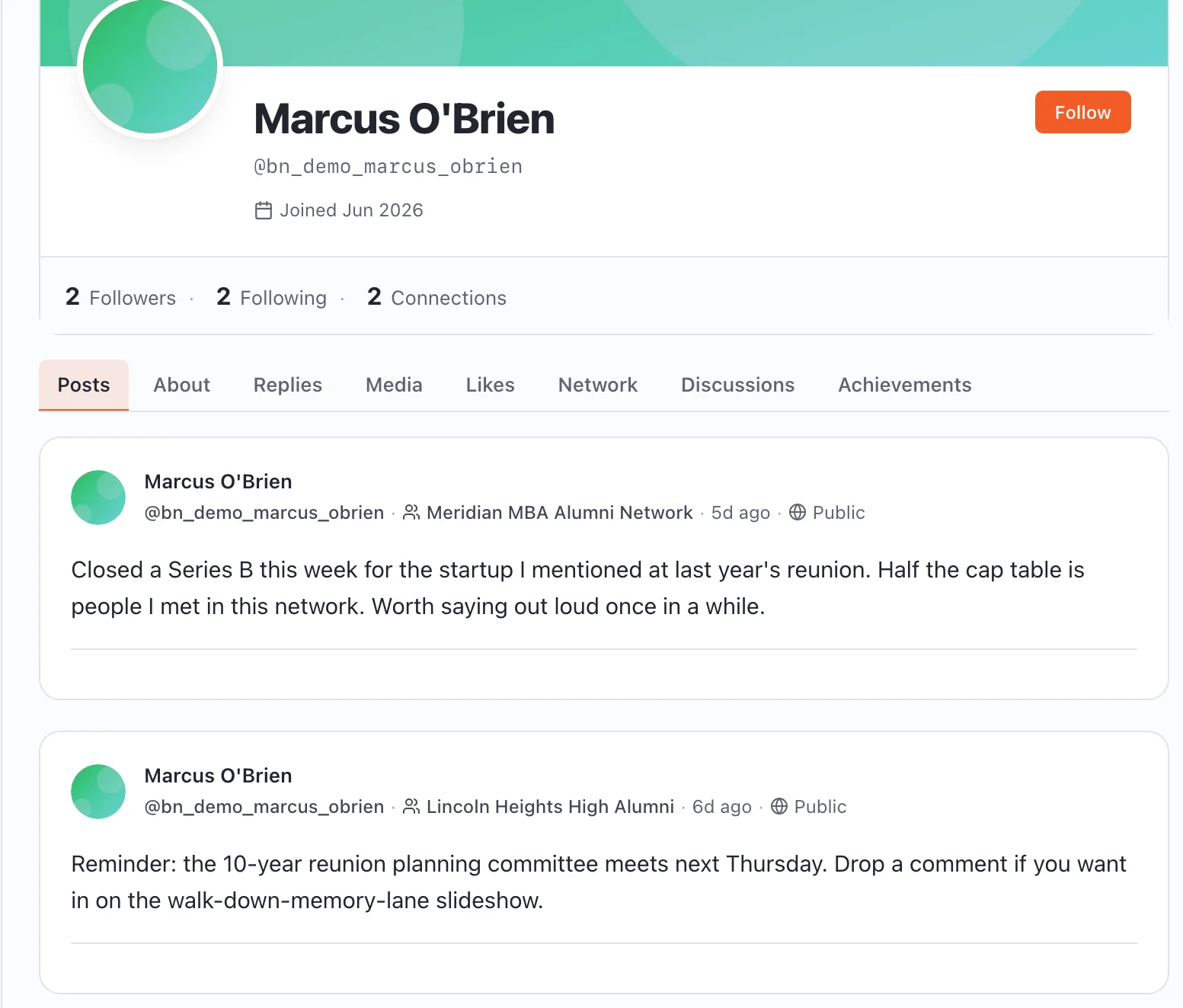
A brand community’s job is usually belonging to something bigger than a transaction: proof that other people bought the same thing and don’t regret it. A course community’s job is almost always accountability that survives after the certificate, since the discipline that got someone through lesson one rarely holds on its own by lesson twelve. A fitness community’s job is a witness, someone besides an app noticing the streak. A hobbyist community’s job is permission, a room where the thing you’re into isn’t the weird part of you anymore.
Four different jobs. Four different first features that matter. The brand community should lead with visible member stories, not a leaderboard. The course community should lead with something that pings back after the certificate, not a bigger badge on it. None of this is a niche preference. It’s what happens when you actually ask the switching-moment question instead of assuming “community” means the same job everywhere.
Where this connects to metrics you might already be tracking
If you’ve already worked through Activation Rate, you know it tells you when someone crossed the line from signed-up to real. If you’ve read the Magic Moment piece, you know it tells you which specific action that line actually is. Neither one tells you why that particular action matters more than any other. The job does. The magic moment is almost always the first time someone gets visible, undeniable progress toward the job they hired you for. Find the job first, and the magic moment usually stops being a mystery you’re A/B testing your way toward.
There’s a low-tech way to start capturing this at the door instead of guessing after the fact. BuddyNext, the free Community OS for WordPress, ships a four-step member onboarding wizard with custom profile fields built in. One honest field asking why someone’s here, cross-referenced later against what they actually did in week one, tells you more than a quarter of dashboard-watching. The stated job and the revealed job won’t always match. When they don’t, the revealed one wins.
The job moves. Communities that don’t move with it lose people quietly
The hardest part isn’t finding the job once. It’s noticing when it changes. A member’s job on day one is rarely their job by month six, and nothing about your dashboard announces the shift. They don’t complain. They just quietly start getting the job done somewhere else, a Discord, a private group chat, a competitor, while your engagement numbers stay flat enough not to raise an alarm.
Ask the switching-moment question again, periodically, on purpose, to members who’ve been around a while, not just new signups. Sit with what they tell you.

Related reading