
7 min read
6 Best Software for Inventory Forecasting

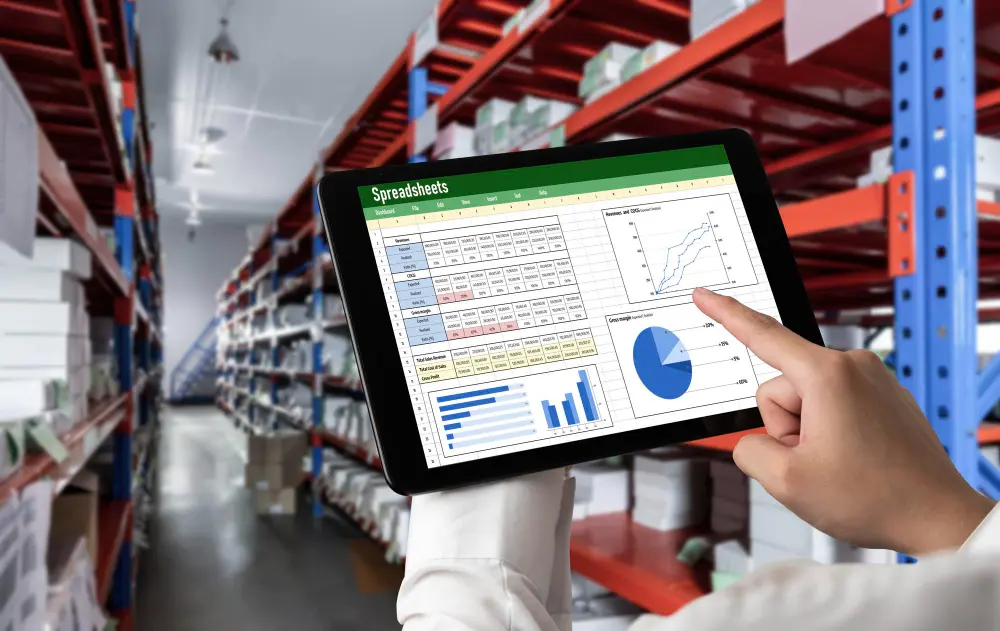
Running out of a best seller costs sales, and over-ordering ties up cash. Inventory forecasting software uses your sales history to predict demand and tell you what to reorder, which matters most when supplier lead times are long and customers expect fast delivery.
This guide covers six tools that exist today and are worth a look, with features, pros and cons, pricing taken from each vendor’s own page, and who each one suits.
Last updated: 13 November 2026
Quick answer: For a growing Shopify store, Prediko (from $49 a month) and Sumtracker (from $59 a month) are the most accessible options with published prices. Inventory Planner suits multi-channel and WooCommerce sellers, Netstock suits ERP-based distributors, Lokad suits complex supply chains, and Bee Low Stock Alert & Forecast is a free-tier starter.

Inventory Forecasting Software at a Glance
| Tool | Best for | Pricing (as listed) | Free trial or plan |
|---|---|---|---|
| Prediko | Shopify brands, AI planning | From $49/month by annual GMV | 14-day trial |
| Inventory Planner | Multi-channel retailers | Quote, by inventory volume | Demo |
| Sumtracker | Small and mid-size sellers | Manage $59, Replenish $119/month | 14-day trial |
| Netstock | ERP-based distributors | Not published | Not listed |
| Lokad | Complex supply chains | Not published | Demo |
| Bee Low Stock Alert & Forecast | Small Shopify stores | Free to 250 SKUs; paid tiers | Free plan |
What Is Inventory Forecasting Software?
Inventory forecasting software is a digital tool that helps businesses predict how much stock they will need based on past sales data, current trends, and seasonal demand. It takes the guesswork out of inventory planning and uses data to support restocking decisions.
Instead of over-ordering or running out of products at the worst time, you stay in control. Whether you manage a small online store or a large warehouse, reliable forecasting can reduce waste, cut costs, and keep the right products available.
How to Choose the Right Software for Inventory Forecasting
Start with the size of your inventory, the complexity of your supply chain, and how often stock levels change. A small store may only need basic demand prediction. Larger operations should look for multi-location tracking, supplier lead time analytics, and purchase order automation.
Check integrations next. Your ecommerce platform, POS, ERP or accounting software decides which tools are even possible. Then compare how each vendor prices: by order volume, by annual sales, by SKU count or by quote.
Finally, ask for a trial or demo and test it on your own sales history. A forecast you cannot understand is hard to trust.
The Best Software for Inventory Forecasting
1. Prediko

Best for: Shopify brands that want AI demand and supply planning.
Pros:
- Unlimited SKUs, users and purchase orders on every plan.
- AI demand planning to hit a revenue target, plus a 12-month purchase order calendar.
- Connects to Shopify, Amazon, TikTok Shop and Walmart, and lists 150+ WMS, ecommerce and 3PL integrations.
Cons:
- Price rises with your annual sales (GMV), so growing stores move up tiers.
- Raw-materials forecasting and BOMs cost extra.
Prediko prices by annual gross merchandise value rather than catalog size, which keeps the entry cost low for small stores with large catalogs. Revenue and sales forecasting come with all plans.
Pricing: Core plan from $49 a month for stores under $100K in annual GMV, $119 a month for $100K to $500K, and $199 a month for $500K to $2M (monthly billing, USD). A 14-day free trial is offered. The page showed no local-currency price.
Verdict: A strong first look for growing Shopify brands, as long as you are comfortable with GMV-based pricing.
2. Inventory Planner
Best for: Multi-channel retailers and brands that need SKU-level forecasts and purchase orders.
Pros:
- SKU-by-SKU demand forecasts, and the page says buyers can see how each forecast is calculated.
- Recommends what to order, when and where, with open-to-buy planning for new SKUs.
- Integrates with Shopify, Amazon, WooCommerce, eBay, BigCommerce, Brightpearl, Cin7, QuickBooks, Linnworks and NetSuite.
Cons:
- Pricing is not published; you request a quote.
- No free trial is listed; a demo is offered instead.
Inventory Planner is now branded Inventory Planner by Sage. It says it is used by more than 2,600 brands, and it offers unlimited users at no extra cost.
Pricing: By quote, based on the volume of inventory you manage. A 30-minute demo is offered instead of a free trial.
Verdict: Best fit for established multi-channel sellers, and the WooCommerce connector makes it one of the few options here that fits WordPress stores.
3. Sumtracker

Best for: Small and mid-size ecommerce sellers who want inventory sync first and forecasting second.
Pros:
- Multi-channel sync across Shopify, Amazon, Etsy, eBay and Walmart.
- Replenish plan adds purchase orders, stock transfers and 12-month forecasting with reorder suggestions.
- 14-day free trial with no credit card.
Cons:
- Forecasting needs the higher Replenish plan.
- Pricing steps up with annual order volume.
Sumtracker starts as an inventory management tool and adds forecasting on its upper plan. The Replenish plan also includes warehouse-level permissions and a QuickBooks integration.
Pricing: Manage from $59 a month and Replenish from $119 a month for 2,500 annual orders (monthly billing, USD); annual billing lowers these to $50 and $100. At 10,000 annual orders Replenish is $179. The page listed USD only.
Verdict: A practical pick if you also need stock sync across channels, not just a forecast.
4. Netstock
Best for: Mid-market manufacturers and distributors that run an ERP.
Pros:
- Demand forecasting and planning aimed at fewer stock-outs and less excess stock.
- Connects to ERPs such as NetSuite, Sage, Acumatica, Microsoft Dynamics, SAP Business One and SYSPRO.
- Used across manufacturing, wholesale distribution, retail and food and beverage; Netstock says it has 2,500+ customers in 67 countries.
Cons:
- No public prices; you use a Get Pricing form.
- Sold through a sales process rather than self-serve sign-up.
Netstock reads data from your ERP and turns it into supply and demand recommendations. It targets companies where inventory sits in an ERP rather than a storefront app.
Pricing: Not published; request pricing from the vendor.
Verdict: Choose it when your inventory lives in an ERP and you need planning on top of it.
5. Lokad
Best for: Large or complex supply chains that want probabilistic forecasts.
Pros:
- Probabilistic forecasts quantify the likelihood of different demand scenarios.
- Recommendations are tied to financial impact, with the stated aim of fewer stock-outs and write-offs.
- Lists retail networks, fashion, automotive, aeronautics and manufacturing as industries it serves.
Cons:
- Sold through contact and demo requests rather than self-serve sign-up.
- No public prices.
Lokad is a supply chain AI company rather than a storefront plugin. Its customer list on its own site includes Air France Industries, Trek and Celio.
Pricing: Not published; the site points to contact and demo requests.
Verdict: A fit for businesses with complex supply chains who want a specialist service rather than a plugin.
6. Bee Low Stock Alert & Forecast
Best for: Small Shopify stores that want alerts first and basic forecasting later.
Pros:
- Free plan covers up to 250 SKUs with one scheduled alert.
- Reorder quantity calculation arrives on the Advanced plan.
- Rated 4.8 from 130 reviews on the Shopify App Store.
Cons:
- Demand forecasting is listed only on the top Enterprise plan.
- The listing shows paid prices in rupees as an estimate.
Bee Low Stock Alert & Forecast is a light app for stores that mainly need to know when to reorder. Its forecasting is a paid upgrade, so check which plan you actually need.
Pricing: Free for 250 SKUs; Professional, Advanced and Enterprise are paid. The listing shows prices in rupees as an estimate and bills in your store currency at the exchange rate on the day of each charge.
Verdict: Good low-cost starting point for alerts, with forecasting only if you take the top plan.
Cogsy, which older lists often include, has been discontinued: its page on Mayple states that “Cogsy has been discontinued and is no longer available”.

Final Thoughts: Choosing the Best Inventory Forecasting Tool
Finding the best software for inventory forecasting is about fit: your platform, your catalog size and how much planning you want automated. Whether you are a small retailer trying to stop overstocking or a company with a complex supply chain, start with your core needs, trial two or three of these, and pick the one whose forecasts you can explain to your team.
For related reading, see our guides to AI inventory management software, ecommerce inventory management software and WordPress stock control and inventory tracking plugins.
Frequently asked questions
What is inventory forecasting software?
It predicts how much stock you will need from past sales, seasonality and lead times, then suggests what to reorder and when. The aim is fewer stockouts and less cash tied up in unsold stock.
How accurate is inventory forecasting software?
It depends on how clean and long your sales history is. A new store with a few months of data gets rougher forecasts than one with several years, so treat early suggestions as a starting point and review them.
Which inventory forecasting tool is best for a small online store?
Prediko, Sumtracker and Bee Low Stock Alert & Forecast all list entry-level plans or a free tier. Start with the one that connects to your platform and lets you try it without a card.
Does inventory forecasting software work with WooCommerce?
Inventory Planner lists a WooCommerce integration on its site. Most of the other tools here focus on Shopify, so check the integration list before you commit.
Do I need forecasting software or just stock alerts?
If you sell a few dozen products with steady demand, alerts may be enough. Once you manage hundreds of SKUs, seasonal peaks or long supplier lead times, a forecast pays for itself.
Interesting Reads:
11 Best Software for UI/UX Design
Related reading