
5 min read
Product Video Ads for Online Stores: Formats That Convert Best

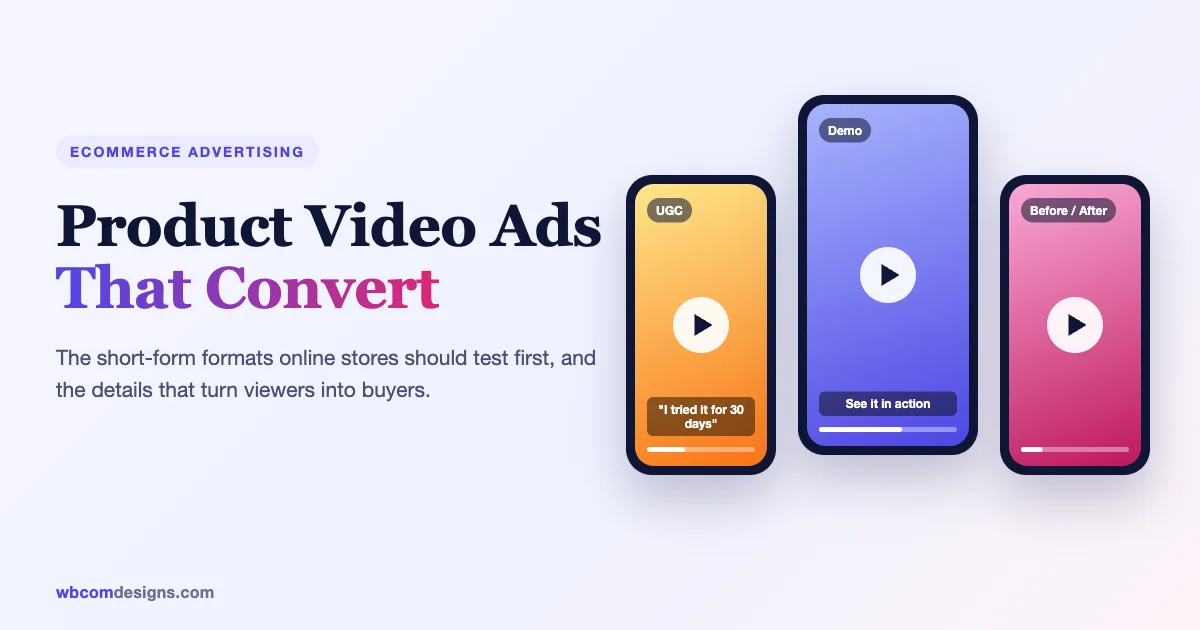
The product video ad formats that convert best for online stores are usually short, vertical videos that hook viewers in the first three seconds and show the product solving a real problem. User-generated-style testimonials, quick product demos, before-and-after clips, unboxing videos and problem-solution ads consistently perform well because they feel authentic, show the product in use and answer the questions shoppers have before buying.
No single format wins for every product or audience, though. The stores that get the strongest results test several formats, hooks and lengths, then scale the ones that drive sales. Understanding what each format does well makes that testing faster and cheaper.
Why Video Outperforms Static Images for Many Products
Static images show what a product looks like. Video shows how it works, how it feels in someone’s hands and what difference it makes. For products where movement, texture, size or results matter, such as skincare, kitchen gadgets, fitness gear or clothing, video can answer questions a photo never could.
Video also fits how people browse. On platforms like TikTok, Instagram Reels and YouTube Shorts, short vertical videos are the native format, and ads that look like regular content tend to feel less intrusive. A well-made ad can grab attention while someone is scrolling, then deliver enough information to move them toward a purchase.
That doesn’t mean static ads are obsolete. Many stores run both, using video to introduce products and build interest, and static images or carousels to retarget people who have already shown interest. Video usually carries the heaviest load at the top of the funnel, where shoppers are discovering the brand for the first time.
UGC-Style and Testimonial Videos
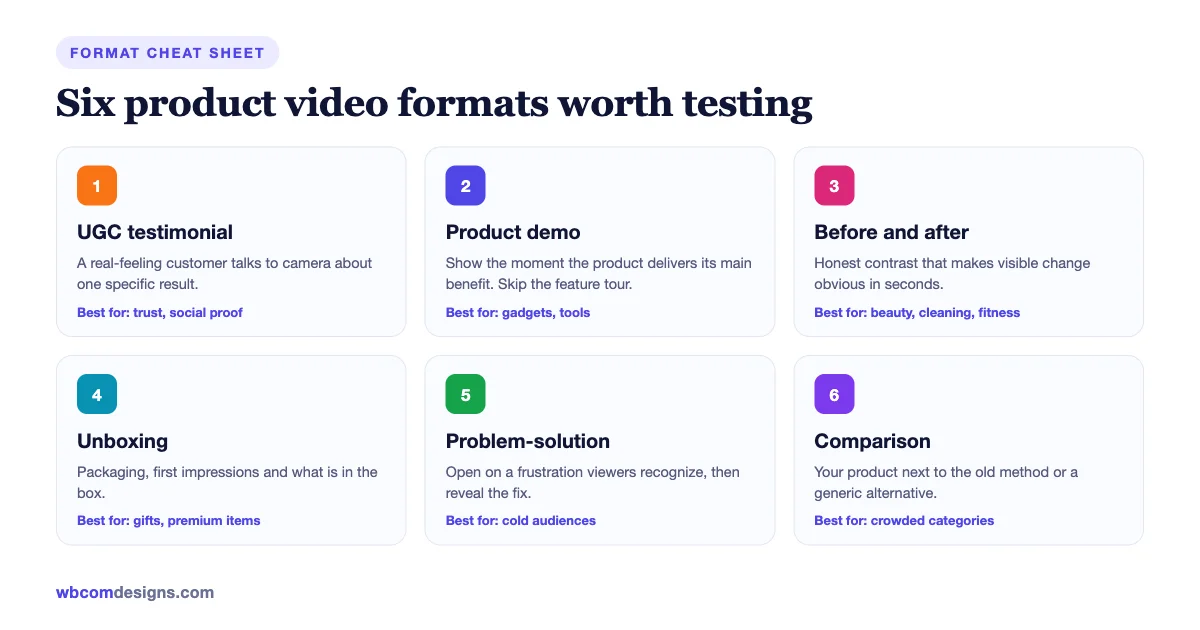
User-generated-style videos, often called UGC, look like content an everyday customer might post. Someone talks directly to the camera, shares why they bought the product, shows it in use and explains what they like about it. These videos often perform well because they feel like recommendations from real people rather than polished advertising.
Testimonial ads work best when they’re specific. A creator saying “this is great” is less convincing than one explaining that a product solved a problem they’d struggled with for months. Showing the product clearly, mentioning a key benefit early and ending with a simple call to action gives the video structure without losing its natural feel.
Unboxing videos are a close cousin. Showing packaging, first impressions and what comes in the box helps shoppers picture receiving the product themselves. They’re especially useful for gifts, premium items and products where presentation is part of the appeal.
Demos, Before-and-After and Problem-Solution Ads
Product demos show exactly how something works. For gadgets, tools and products with a clear function, a quick demonstration can be more persuasive than any claim. Keep demos tight, focusing on the moment the product delivers its main benefit rather than walking through every feature.
Before-and-after videos are powerful for products that create visible change, such as cleaning products, beauty items, home organization tools or fitness equipment. The contrast makes the benefit immediately clear. Stay honest and realistic, however, since exaggerated results can damage trust and may conflict with advertising policies on some platforms.
Problem-solution ads start by showing a frustration the audience recognizes, then introduce the product as the fix. The first few seconds focus on the problem, which grabs attention from people who experience it, before the video shifts to the solution. Comparison ads, which show your product next to an older method or generic alternative, follow similar logic and can help shoppers understand why your product is different.
Producing Enough Variations to Test
The biggest challenge for many online stores isn’t choosing a format. It’s producing enough versions to find out what works. Ad performance often declines as audiences see the same creative repeatedly, a problem known as creative fatigue, so stores need a steady flow of new videos with different hooks, angles and formats.
Traditional production can make this difficult. Hiring creators, filming, editing and adapting videos for different platforms takes time and budget, which limits how many variations a small team can test. Many brands now use tools such as a platform that turns a brief into finished ads, generating multiple video versions from product details, so they can test different hooks, formats and scripts without organizing a separate shoot for each one.
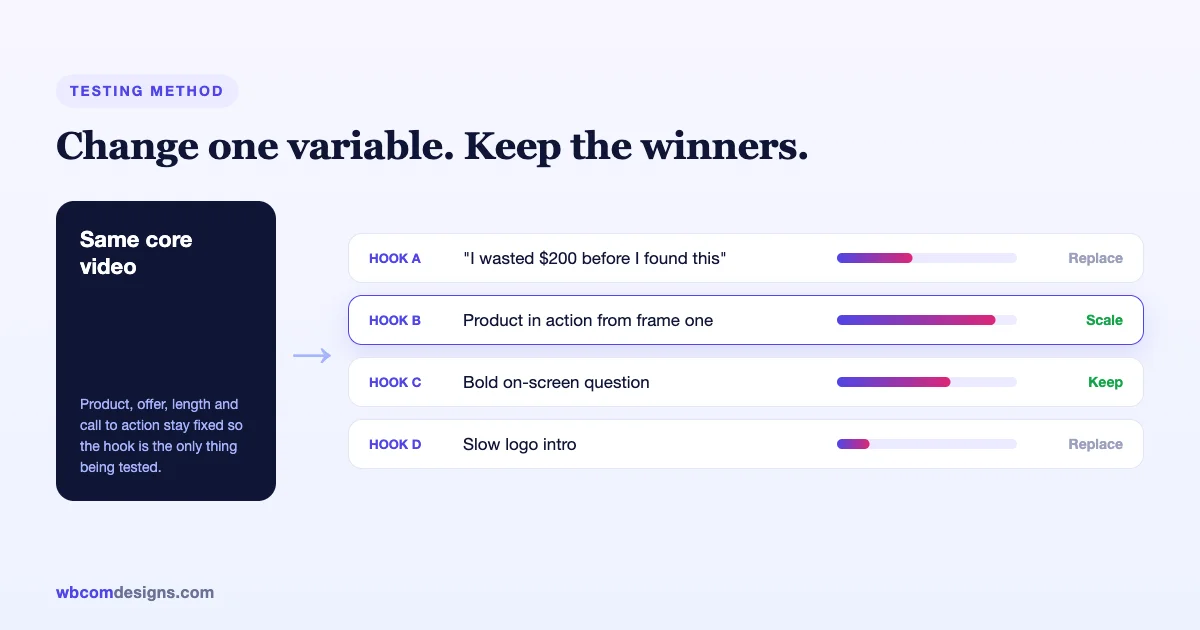
Whatever production method you use, test one variable at a time where possible. Try several hooks with the same main video, or the same hook with different formats, so you can see what’s actually driving results. Keep the winners running and replace poor performers regularly.
The Details That Decide Whether an Ad Converts
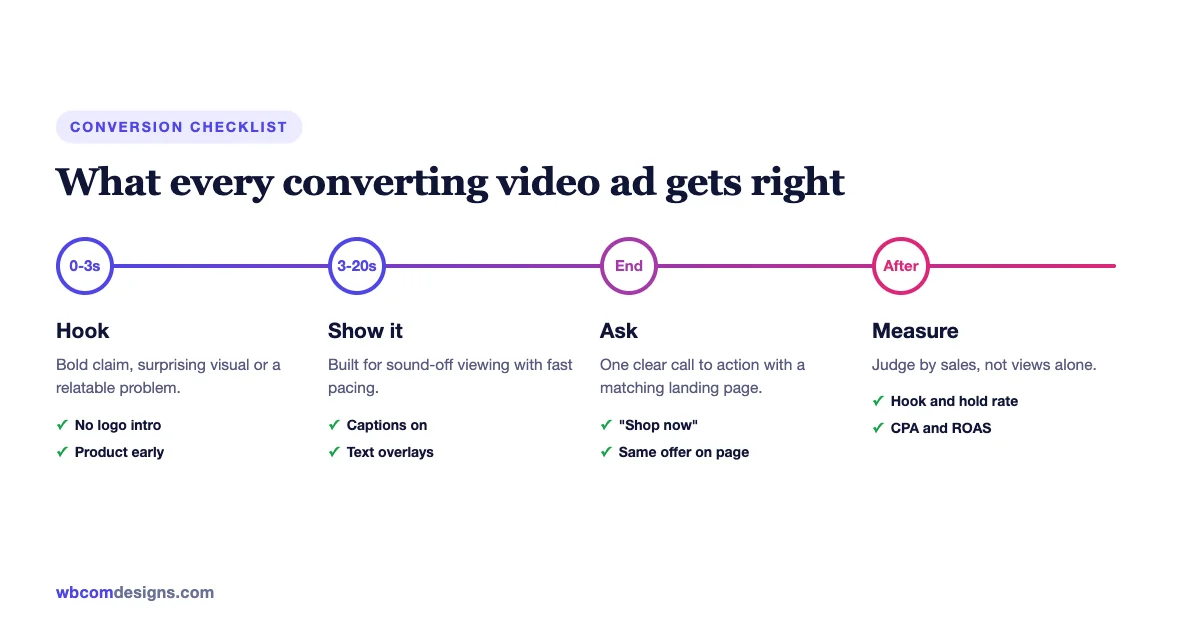
The first three seconds matter most. Many viewers decide almost instantly whether to keep watching, so open with something that grabs attention, such as a bold statement, a surprising visual, a relatable problem or the product in action. Avoid slow introductions and logo animations at the start.
Design for sound-off viewing. A large share of people watch videos without sound, so on-screen captions and text overlays help make sure the message gets through. Show the product clearly and early, and keep the pacing quick, especially on short-form platforms where 15 to 30 seconds is often enough.
End with a clear call to action, such as “shop now” or “try it today,” and make sure the landing page matches the promise in the video. An ad that highlights a specific benefit or offer should lead to a page that reflects it, otherwise shoppers may lose interest before buying.
Track the right metrics. Look at how many viewers watch past the first few seconds, how long they keep watching, click-through rate and, most importantly, cost per purchase and return on ad spend. These numbers reveal whether a video is grabbing attention, holding it and turning viewers into customers.
Start by choosing two or three formats that suit your product, such as a testimonial, a demo and a problem-solution ad, and create several hook variations for each. Run them side by side for a set period, compare results and build your next round of videos around what performed best. Over time, that testing habit will teach you more about what your customers respond to than any general rule.
Related reading