
The situation
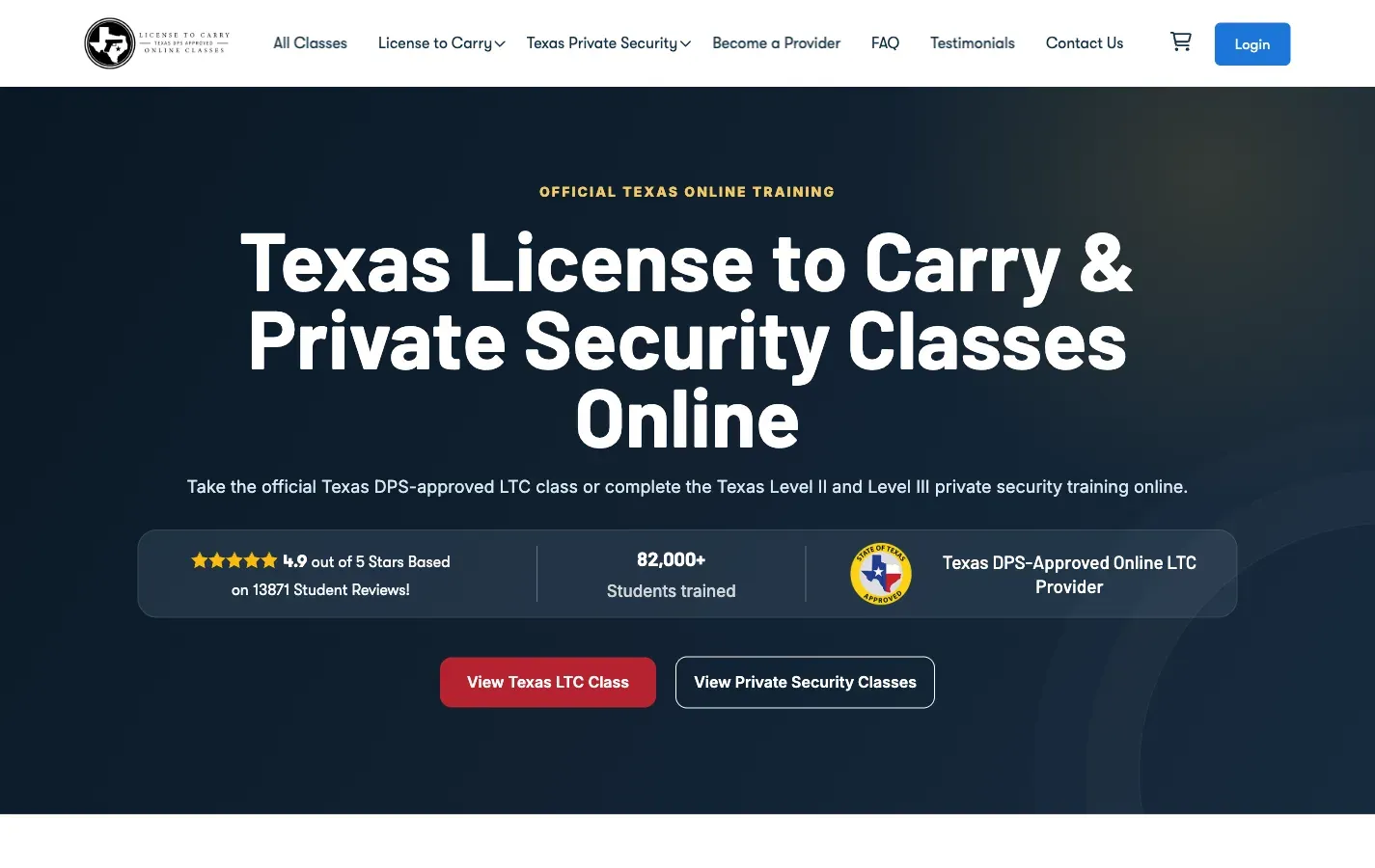
Online Texas LTC sells the state-approved online classroom course for a Texas License to Carry, along with private security training, and says it has trained more than 82,000 students. The rules on both sides are strict. Students must complete the class and then finish range instruction with a qualified instructor. The business has to stay in step with the state’s requirements and keep thousands of student records and reviews in order.
Growth then raised a different question. Other trainers and course providers wanted to sell through the same platform. Letting them in meant three things had to hold: one set of prices and rules for everyone, each provider keeping their own identity, and payouts that nobody has to chase by hand.
Where we started
The business already ran on WordPress with LearnDash and Reign. We began from the provider’s side of the journey: what a new provider needs on day one (a storefront, a way to sell, a way to get paid) and which decisions must stay with the business (pricing, commission, quality). The marketplace was built to keep that line clear.
What we built
A marketplace on WordPress multisite and Dokan, on the Reign theme, with the business rules written as custom plugins.
- A storefront for every provider. A plugin creates a subsite for each Dokan vendor automatically, with its own landing page and product showcase.
- Providers’ own domains. A provider can use their own domain, with DNS verification tools and a domain management screen inside their dashboard.
- Registration codes. Providers generate registration and discount codes in bulk from their dashboard, with expiry dates and redemption tracking, and commission rules that adjust when a code is used. Students redeem a code from a dedicated page.
- A provider dashboard that fits the business. A customers page, the store URL on the dashboard home, a clear view of the admin fee, and menus trimmed to what providers need.
- Courses that follow the sale. LearnDash is connected to Dokan, so a provider’s course is created for them with group integration, students see their progress and enrolled courses, and certificates can be downloaded.
- Controlled pricing. For shared products, the admin sets the price rules (minimum, maximum or fixed) and providers edit only the price.
- Payouts. Provider payouts by direct bank transfer (ACH) through a plugin that works with Dokan, and Stripe-based refunds.
What it makes possible
A marketplace that adds providers without adding work. A new provider gets a storefront, their own codes and their own payouts, and the business keeps one set of rules for all of them.