
4 min read
Why Course Students Never Come Back To Lesson One


A student buys your course. On a revenue dashboard, that’s the win, the moment counted, the number that goes up. It says nothing at all about whether that student ever opened lesson one, and for a meaningful share of buyers on most course platforms, the honest answer is that they didn’t, not within the first week, sometimes not ever.
If you’ve read the AARRR piece on why course communities lose students at Activation, this is that same idea, isolated and pushed further, because it’s worth a piece of its own rather than one stage inside a five-stage framework. And if you’ve read the 90-9-1 rule for course communities, this is the gate before that rule even applies, a student has to activate before they can become part of the silent 90% finishing modules.
In this pieceWhy a purchase isn’t activation
Why 48 hours, not 48 days
A real course catalog, not a mockup
Why this isn’t the same as a day-one login
What actually breaks activation for courses
Where this lives inside Learnomy
Turning it into something you actually check
Why a purchase isn’t activation
A purchase is a credit card transaction. It’s real, it’s easy to measure, and an entire industry of checkout-optimization tools exists to help you improve it. Activation is a completely different question: did the student experience the actual value they paid for, not did they complete a payment form.
Confusing the two is the single most common mistake in how course creators read their own metrics. Sales can rise for months while the percentage of buyers who ever open lesson one quietly falls, and a dashboard built around revenue alone will never show you that the two numbers have started moving in opposite directions.
Why 48 hours, not 48 days
Finishing lesson one within 48 hours of purchase is the single best predictor of whether a student finishes the course at all, far better than anything about the course content itself. Motivation is highest at the moment of purchase and decays fast. A student who hasn’t started within two days is, statistically, unlikely to start with the same enthusiasm a week later, even though nothing about the course changed in the meantime.
This is why a completion-rate number, measured months later, is the wrong number to optimize first. It’s measuring something downstream of a gate that either opened or didn’t in the first 48 hours, and no amount of improving lesson eight fixes a problem that happened before lesson one was ever opened.

A real course catalog, not a mockup
Here’s what the top of this funnel actually looks like, reachable without an account.
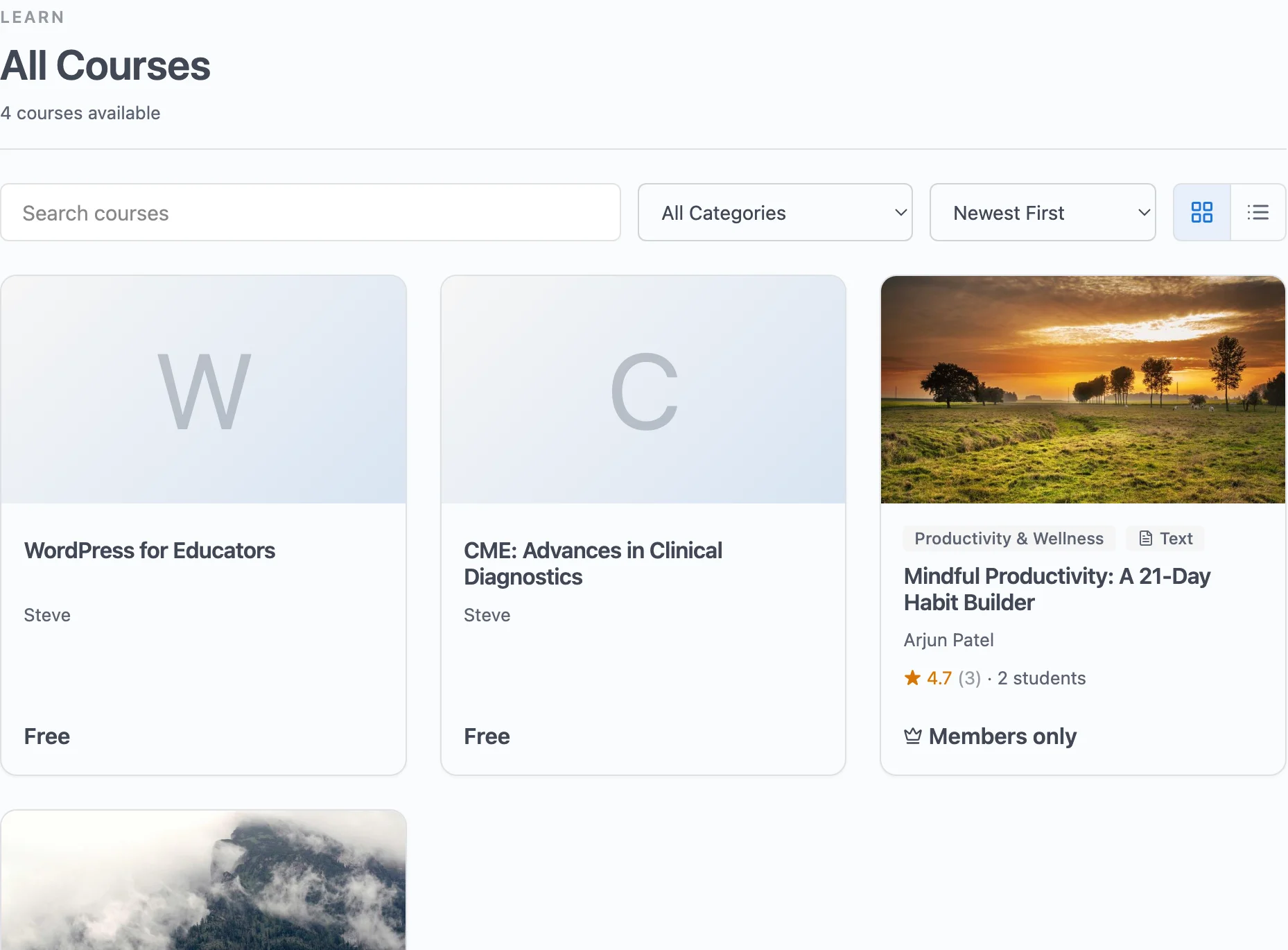
Real ratings, real student counts, a real price. This page is where Acquisition becomes Revenue, and most course platforms are already reasonably good at getting a browser this far. What almost none of them surface anywhere in their own dashboard is what happens to that student in the 48 hours right after this transaction completes, the entire Activation stage, invisible from the one screen everyone’s already watching.
Why this isn’t the same as a day-one login
Plenty of course platforms already track login activity, and it’s tempting to treat a day-one login as good enough evidence of activation. It isn’t. A student can log in, glance at the dashboard, feel a small flicker of intent, and close the tab without opening a single lesson. The login proves curiosity survived checkout. It doesn’t prove anything got consumed.
The gap between “logged in” and “started lesson one” is exactly where a lot of course businesses lose students without ever seeing it happen, because a login event makes the dashboard look fine. Measuring lesson-one starts specifically, not logins, is what actually closes that blind spot.
What actually breaks activation for courses
The first failure is a confirmation email with no obvious next step beyond “log in.” That’s a receipt, not an onboarding flow, and it leaves the student to find lesson one themselves at the exact moment their motivation is starting to fade.
The second is a first lesson that spends its first ten minutes on setup and scene-setting before delivering anything useful. A slow start costs students who would have kept going if the first win had arrived faster.
The third is silence in the window that mattered. No “you’re one lesson away” nudge, no reminder, nothing that notices a student hasn’t started and says something about it before the window closes for good.
Where this lives inside Learnomy
If you’re running courses on Learnomy, a free WordPress LMS with 0% transaction fees, students see a real course dashboard and progress tracking the moment they log in, not buried behind extra clicks. Pairing it with BuddyNext, the way the social learning piece in the North Star Metric series describes, adds visible peer activity that nudges a new buyer toward actually starting instead of quietly drifting.
Turning it into something you actually check
Weekly, not per-launch: of everyone who bought in the last seven days, what percentage started lesson one within 48 hours. That single number predicts more about the health of a course business than total sales ever will, because it’s the number that decides whether this month’s buyers become next month’s completions, reviews, and referrals, or just a transaction that never turned into anything.
Related reading