
4 min read
Almost All Evergreen Course Burn Happens Once, Up Front

An evergreen course has an unusual burn shape compared to almost any other kind of business: nearly all the real spending happens once, up front, during the build, and then burn drops close to zero for as long as the course keeps selling. That’s a genuinely enviable position. It also means the entire burn conversation for an evergreen course is really about one specific, finite window, not an ongoing monthly number, and treating it like an ongoing number is where the math usually goes wrong.
If you’ve read the piece on burn rate for course businesses, this is the front-loaded end of that spectrum, and it has its own specific, easy-to-miss failure mode.
In this pieceThe build window, and why it’s the only burn that matters
Calculating the real number for the build window
A real evergreen course, priced and scoped
The quiet second burn: refreshing content nobody budgeted for
The pushback: “it’s basically free once it’s built”
Where this actually lives inside Learnomy
Turning it into something you actually check
The build window, and why it’s the only burn that matters
Almost every real cost an evergreen course will ever incur happens before the first sale: recording and editing, course platform setup, any paid promotion for the launch. Once that window closes and the course is live, ongoing costs drop to something close to hosting fees and the occasional support question, a small fraction of what the build phase cost.
This means the entire runway question for an evergreen course collapses into a single, answerable version: does the creator have enough cash to survive the build window, plus a reasonable stretch afterward for sales to actually materialize, before the bank account runs dry. That’s a finite, calculable number, not an open-ended monthly burn that continues indefinitely.
Calculating the real number for the build window
The honest calculation adds up every real cost across the build window, equipment, editing, platform fees, any paid help, plus a fair value for the creator’s own unpaid time during that same stretch, and compares it against how much cash is actually available to cover that period before meaningful sales revenue arrives. Most evergreen course creators underestimate this in one specific, predictable way: assuming sales will start the moment the course launches, when realistically there’s often a gap of weeks or months between launch and any meaningful, sustained revenue.
Building that gap into the runway calculation from the start, rather than discovering it live, is what separates a creator who can calmly wait for organic traction to build from one who panics into rushed, poorly-targeted promotion because the bank account is already uncomfortably low by the time the course actually launches.
A real evergreen course, priced and scoped
Here’s what the other side of that build window actually looks like once it’s live, reachable without an account.
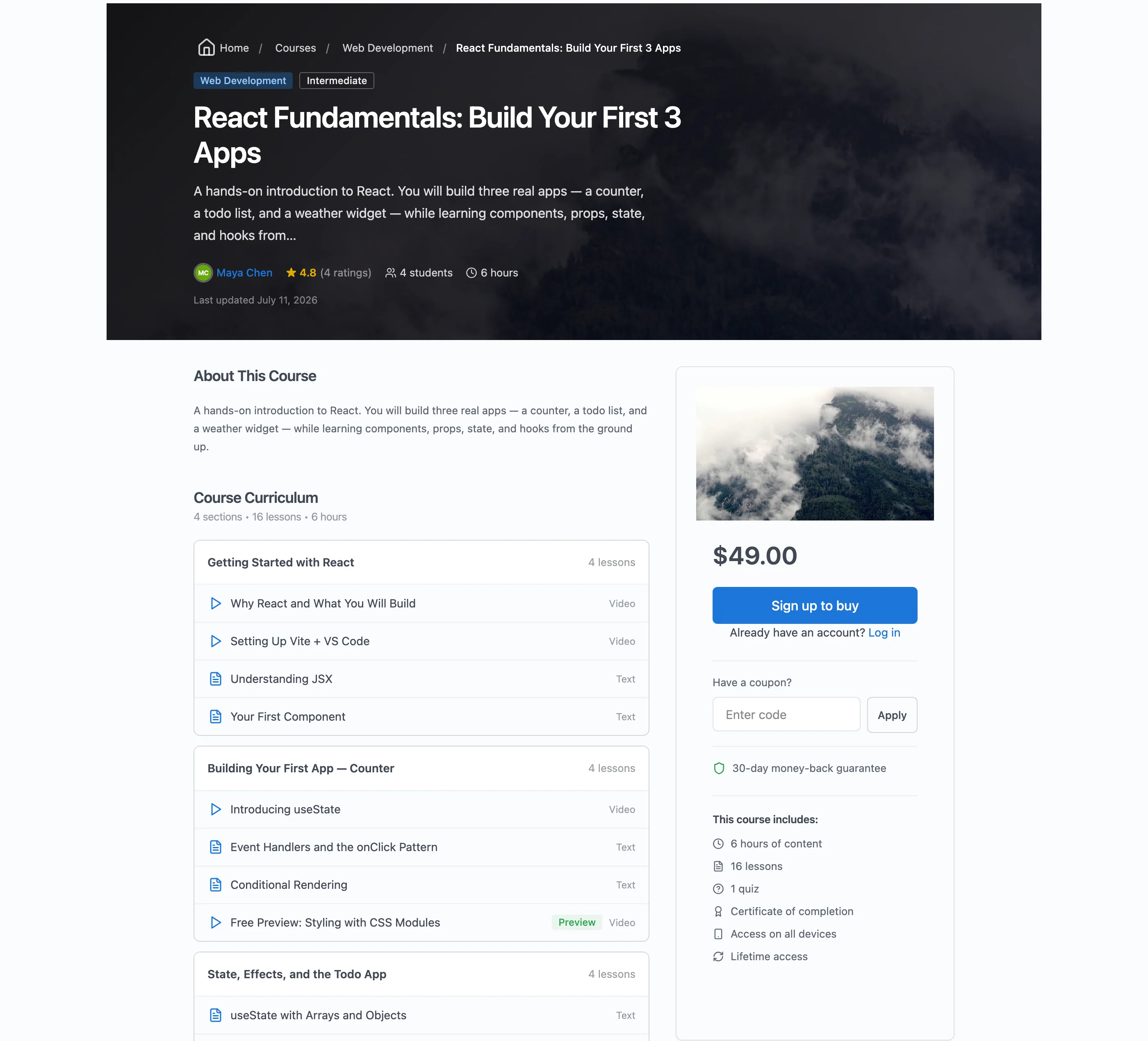
A one-time $49 price, lifetime access, no live component. Whatever it cost to build this course was spent once, already, before this listing ever existed. From this point forward, the marginal cost of the next sale is close to zero, which is exactly the payoff the front-loaded burn was buying. The creator’s actual financial risk was entirely concentrated in the weeks or months before this page went live, not in anything happening now.
The quiet second burn: refreshing content nobody budgeted for
The failure mode specific to evergreen courses isn’t the build window, most creators do budget for that, at least roughly. It’s the second, smaller burn window that shows up eighteen months or two years later, when the course material has quietly gone stale, competitor courses have improved, and a real refresh, new recordings, updated examples, is needed to keep the course competitive. Because this cost wasn’t part of the original plan, it frequently gets funded reactively, in a rush, once sales have already started declining rather than before.
Budgeting a smaller, deliberate refresh window into the original plan, even a rough placeholder for “some real update, eighteen months out,” turns this from a surprise crisis into a planned, second front-loaded burn, the same manageable shape as the original build, instead of an emergency scramble funded by declining revenue.
The pushback: “it’s basically free once it’s built”
Mostly true, and worth taking seriously rather than dismissing, the marginal cost of an additional sale genuinely is close to zero for a well-built evergreen course. The mistake isn’t believing that. It’s extending “marginal cost is near zero” into “total ongoing cost is zero,” which ignores the real, if smaller and less frequent, costs described above: hosting, occasional support, and eventually a real content refresh.
None of those costs are large individually. Ignored collectively, over several years, they add up to a real number worth planning for rather than being surprised by.
Where this actually lives inside Learnomy
If you’re running an evergreen course on Learnomy, the free tier’s built-in progress tracking and signed certificates remove two of the ongoing costs that would otherwise require separate paid tooling, keeping the post-launch burn genuinely close to the near-zero level the evergreen model is supposed to deliver, rather than quietly accumulating tool subscriptions nobody’s tracking.
Turning it into something you actually check
Once, honestly, before starting the build: total real cost of the build window, including fairly-valued founder time, against actual available cash, plus a realistic buffer for the sales gap after launch. And then, annually, not monthly: a deliberate check on whether the content is starting to feel dated, budgeted for as a smaller, planned second burn rather than discovered as an emergency.
The build window is the only real financial risk this business model carries. Get through it honestly costed, and the rest of an evergreen course’s life is close to the effortless payoff it’s supposed to be.
Related reading