6 min read
WordCamp Rajasthan 2026: Our BuddyNext Sponsor Experience in Jaipur
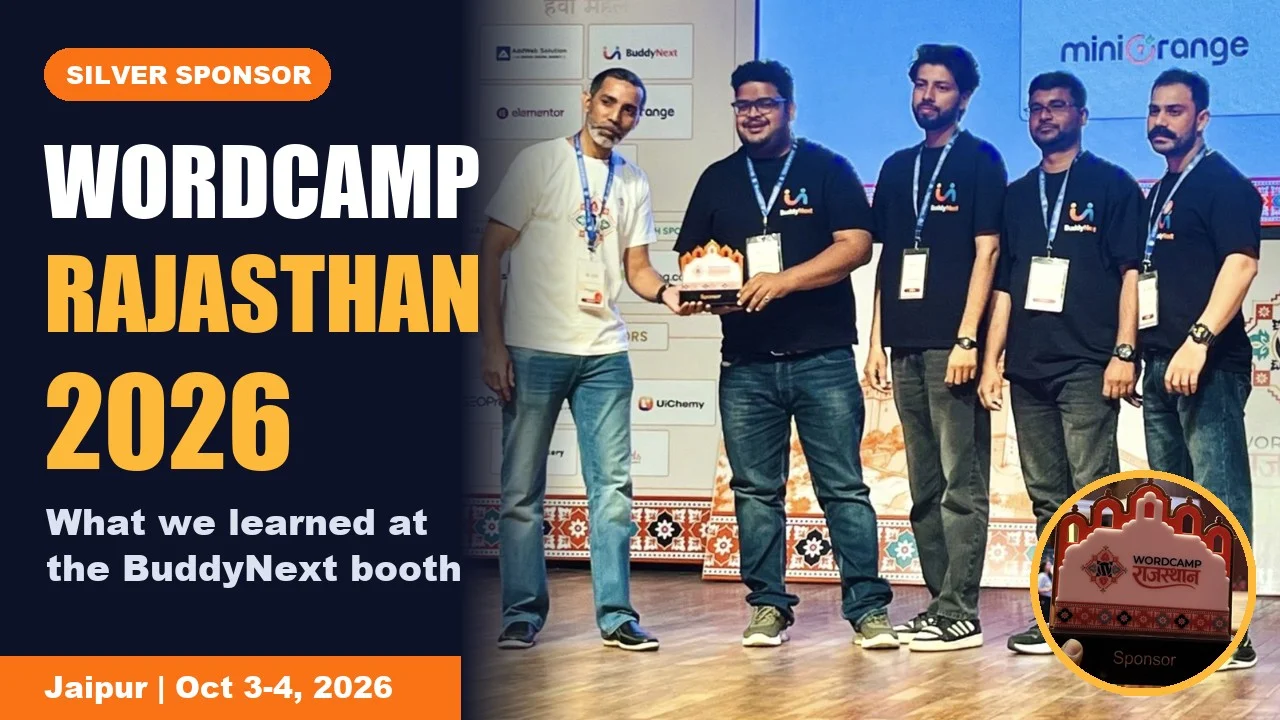
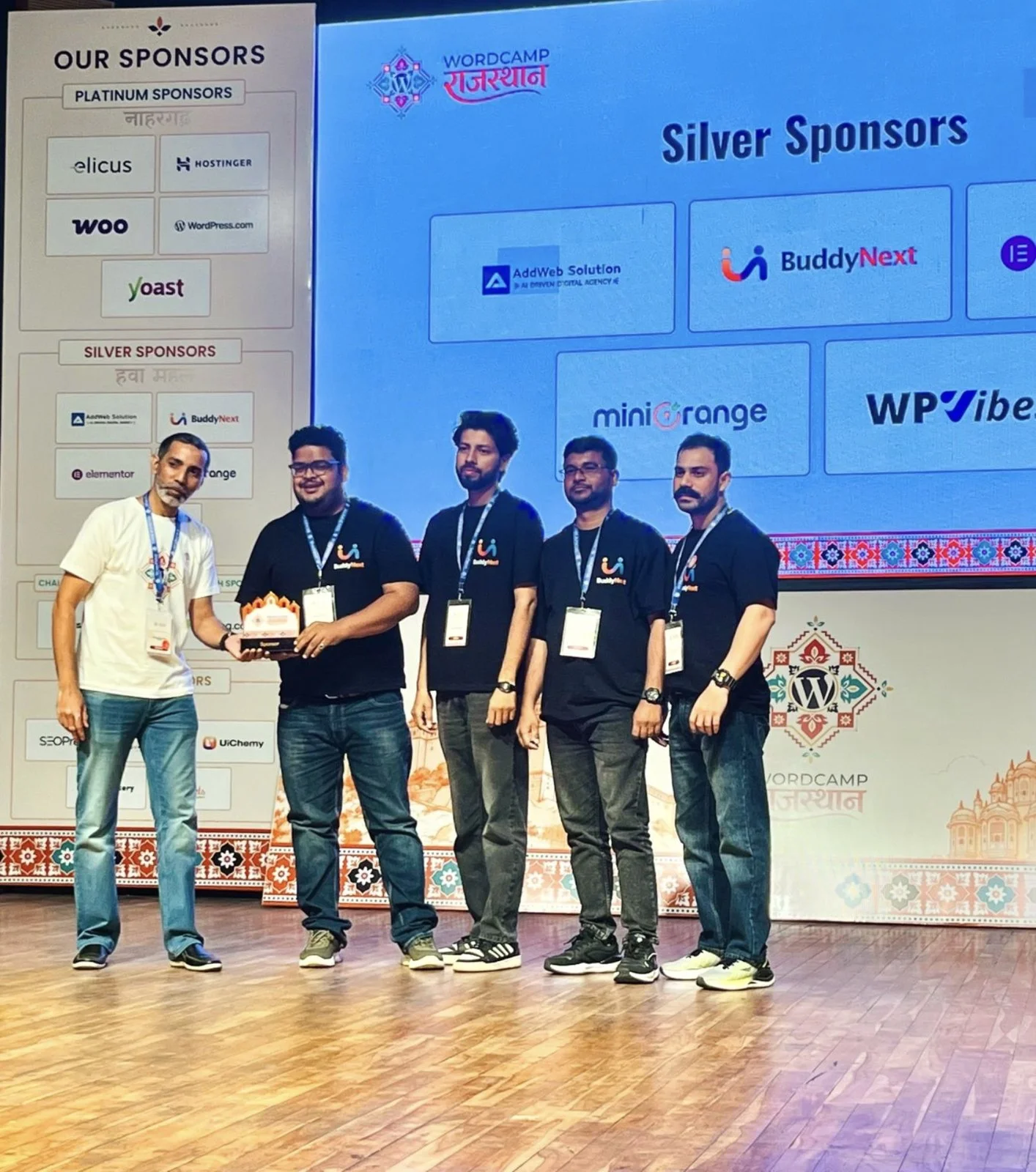
On October 3 and 4, 2026, more than 600 people came together at the Rajasthan International Centre in Jaipur for WordCamp Rajasthan 2026. BuddyNext was there as a Hawa Mahal (Silver) sponsor, and our team spent both days meeting people who build things with WordPress.
I’m Shashank Dubey, co-founder of BuddyNext. This is my recap of what we saw, what people asked us, and why we keep showing up at WordCamps.
WordCamp Rajasthan 2026 at a Glance
WordCamp Rajasthan billed itself as a WordPress and AI event for Rajasthan’s open source community, and the program matched that. More than 15 organizers from five of the state’s IT, AI, and open source hubs put it together.
- Contributor Day (October 3): hands-on tables where people worked alongside experienced contributors on code, design, documentation, and translation.
- Main conference (October 4): talks and workshops on the agentic web, RAG knowledge bases, headless WordPress, multisite at scale, accessibility, SEO, AEO and GEO, WooCommerce development, and AI workflows.
- The crowd: a mix of students taking their first steps with WordPress, freelancers, agency teams, and product companies.
| WordCamp Rajasthan 2026 | By the numbers |
|---|---|
| Attendees, speakers and contributors | 600+ expected |
| Speakers | 26+ |
| Organizers | 15+ from 5 Rajasthan IT, AI and open source hubs |
| Days | 2 (Contributor Day + main conference) |
| Ticket | ₹1,000 for both days, meals, Wi-Fi and swag |
| BuddyNext | Hawa Mahal (Silver) sponsor |
The venue deserves a mention too. Arched doorways, Rajasthani patterns on every banner, and a sponsor memento shaped like a palace. It felt like Jaipur, not a generic conference hall.
Why Events Like This Matter: WordPress by the Numbers
WordCamp Rajasthan is one stop in a much bigger story. A few numbers put it in context:
- WordPress runs 40.1% of all websites, and 58.6% of sites whose content management system is known, according to W3Techs (October 10, 2026).
- WordCamps have reached 72 countries. Since the first WordCamp in San Francisco in 2006, local communities have organized 1,517 WordPress events in 422 cities across six continents, according to WordCamp Central.
- India’s calendar is busy. The official WordCamp schedule lists seven more Indian events coming up: WordCamp Bengaluru (November 2026), WordCamp Delhi (December 2026), WordCamp Pune and WordCamp Mumbai (February 2027), and WordPress Campus Connect events in Ajmer, Kolhapur, and Puttur.
That last point matters to us. WordPress Campus Connect brings WordPress straight to college campuses, and the students we met in Jaipur are exactly who those programs are built for. The next wave of WordPress builders is being trained right now, in cities like Ajmer, Kolhapur, and Jaipur.
At the BuddyNext Booth
Our booth had one message: “Build a community you don’t rent.” We brought BuddyNext mouse pads, keychains, pens, flyers with a QR code to try it, and a laptop running a live community so people could click around instead of listening to a pitch.
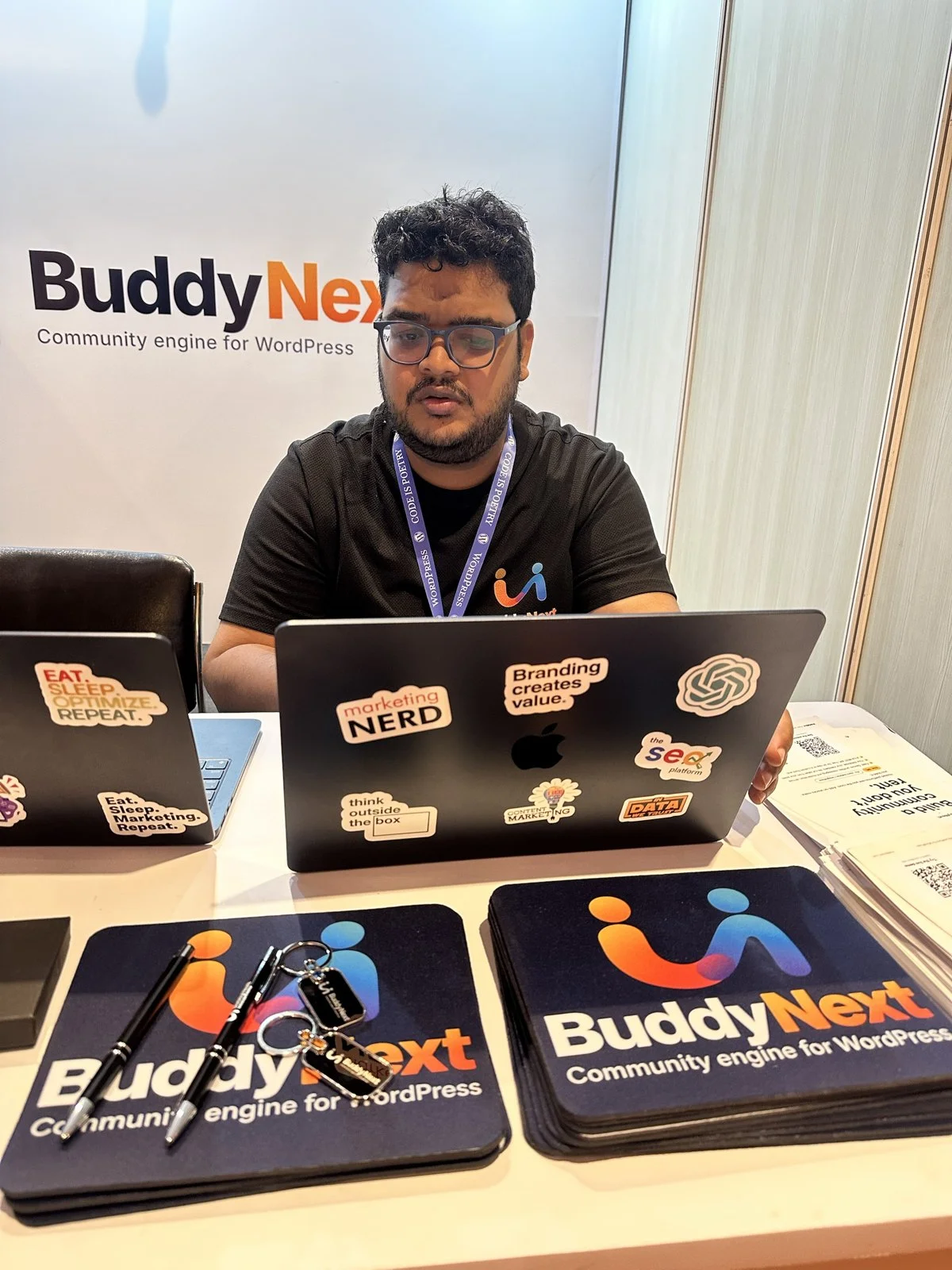
The best moments were the busy ones. Groups of students came by between sessions, scanned the QR code, and watched a live demo of a community running on a regular WordPress site. For many people, a community is something you join on someone else’s platform. Seeing one run on a site you control is a different idea, and that’s where the good questions started.
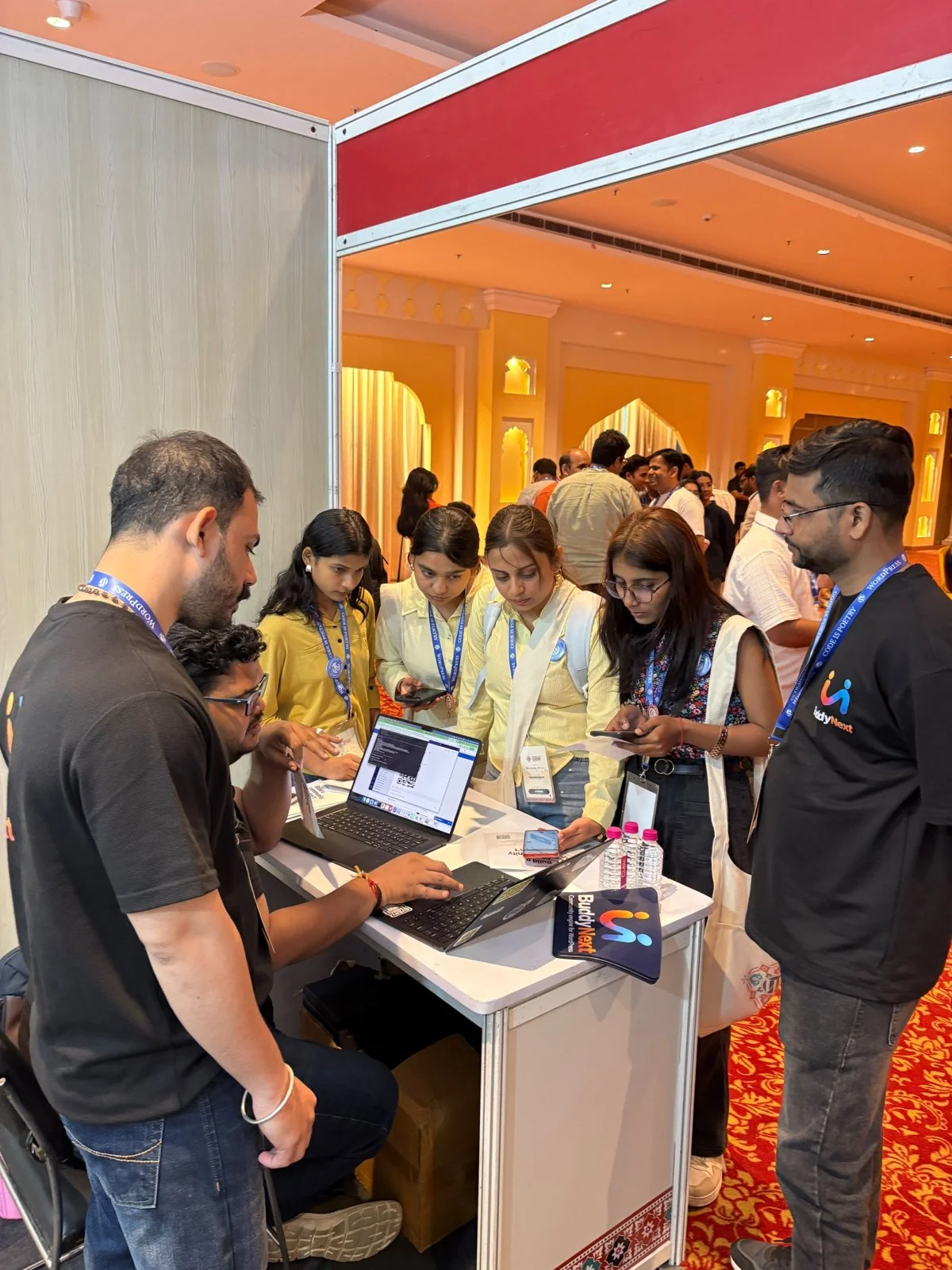
Alongside students, we talked with freelancers, agency teams, and site owners. Most conversations came back to the same few questions, so here are our answers.
How Is BuddyNext Going to Change the Community Builders Space?
Today most community builders either rent a hosted platform or stitch plugins together. BuddyNext is a third option: a complete community that runs on your own WordPress site. Feed, spaces, profiles, messaging, a member directory and moderation, with the members, the data and the domain yours from day one.
That last part is the point. When you rent a community, your members live in someone else’s product. When you stitch plugins together, you spend your time keeping them compatible instead of growing your community. BuddyNext gives you one community engine for WordPress, built to work as a whole.
Why Is So Much Included in the Core Plugin?
A community has to work before it can earn. So the core plugin covers everything a real community needs to run, with no limit on members.
The paid layer is for when your community becomes a business: memberships and checkout, broadcast email, real-time messaging and analytics. You shouldn’t have to pay before you know your community will work, and you shouldn’t hit a member cap the week your community takes off.
Why WordPress Instead of a SaaS?
Because the people who build a community should own it. On WordPress the site, the member list and every conversation stay on your own server, under your own brand. You choose your hosting, your design and the tools you connect, and nobody can change the rules on you.
Pricing changes, feature removals, and “we’re retiring this plan” emails are a real risk when your community lives on someone else’s platform. On WordPress, those decisions stay yours.
There’s a cost side too. Here’s what renting a community costs on three popular hosted platforms, using the prices on their own pricing pages (checked October 10, 2026):
| Hosted plan | Cost |
|---|---|
| Circle Professional | $89/month ($1,068/year) |
| Circle Business | $199/month ($2,388/year) |
| Skool Hobby | $9/month + 10% transaction fee |
| Skool Pro | $99/month ($1,188/year) |
| Mighty Networks Launch | $79/month ($948/year) |
| Mighty Networks Scale | $179/month ($2,148/year) |
Those fees keep coming every month for as long as your community exists. With BuddyNext, the core plugin is free with no member limit, and your main running cost is the hosting you choose. You pay for the paid layer only when your community starts making money.
What We Took Away From Jaipur
- AI is now part of every WordPress conversation. The program covered the agentic web, RAG knowledge bases, AI integration workflows, and SEO, AEO, and GEO. Builders aren’t asking whether to use AI anymore, they’re asking how to fit it into sites they already run.
- Ownership is an easy idea to explain. “Build a community you don’t rent” needed no extra pitch. Once people saw a community running on a normal WordPress site, the question shifted from “why” to “how do I start.”
- Students are the audience to invest in. With campus programs growing across India, the people who learn WordPress this year are the agencies, freelancers, and product teams of the next few years.
- Face to face still wins. A two-minute demo at a booth answers more than a long sales page. We’ll keep showing up.
Why We Sponsor WordCamps
WordPress gave us everything we build on. Sponsoring WordCamps is one small way we give back.
There’s a practical side too. WordCamps are where we hear what people actually need, in their own words, without a support ticket in between. Every question at the booth is a note for our roadmap. And it’s where the next generation of WordPress builders starts. Some of the students who stopped at our booth will be running agencies and launching products in a few years. We want them to know that building on open source is a real career, and a good one.
Thank You, WordCamp Rajasthan
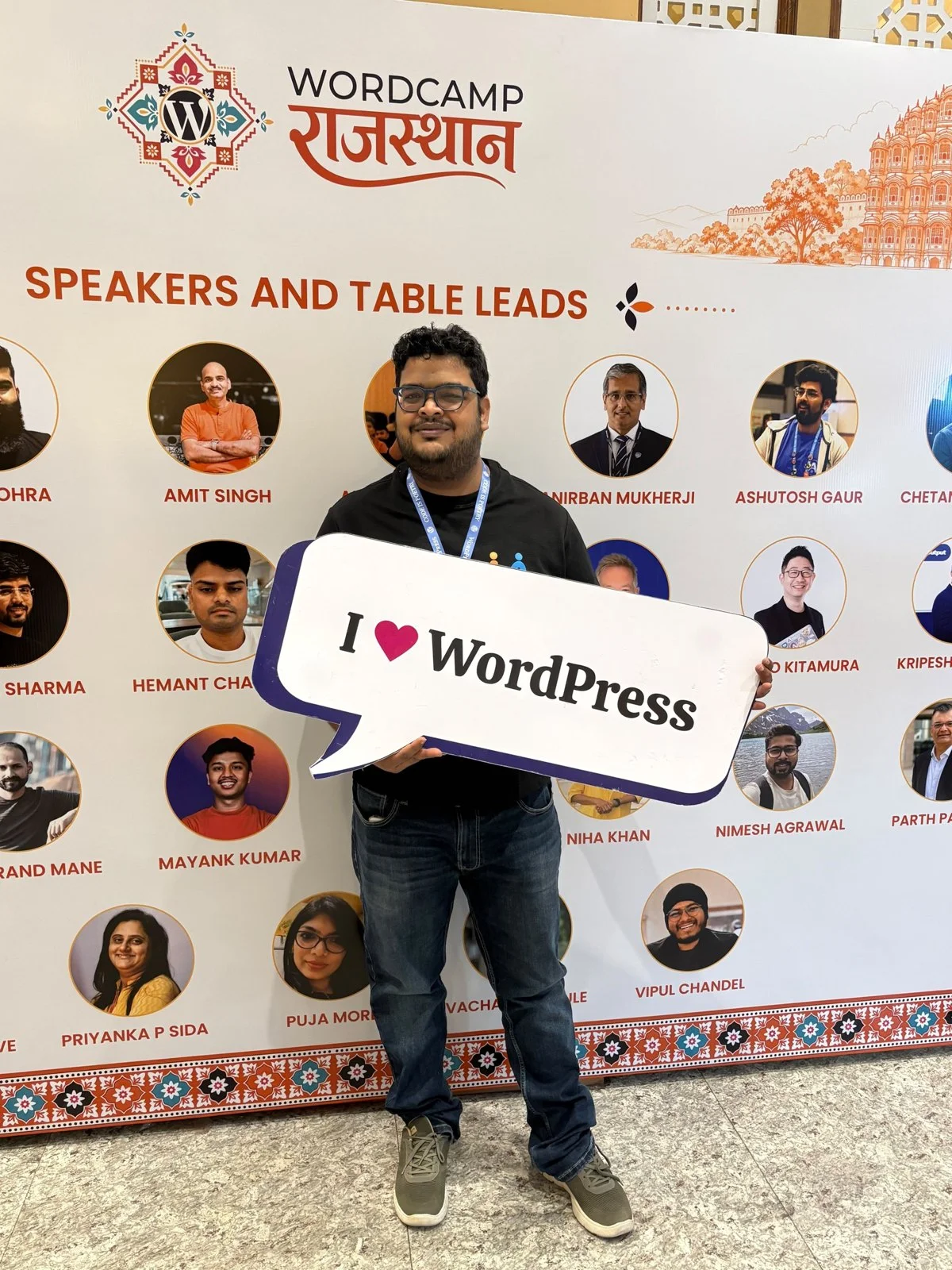
Thank you, WordCamp Rajasthan, for the warm welcome and the memento. Events like this are where students take their first steps with WordPress and where builders meet the people behind the tools they use every day.
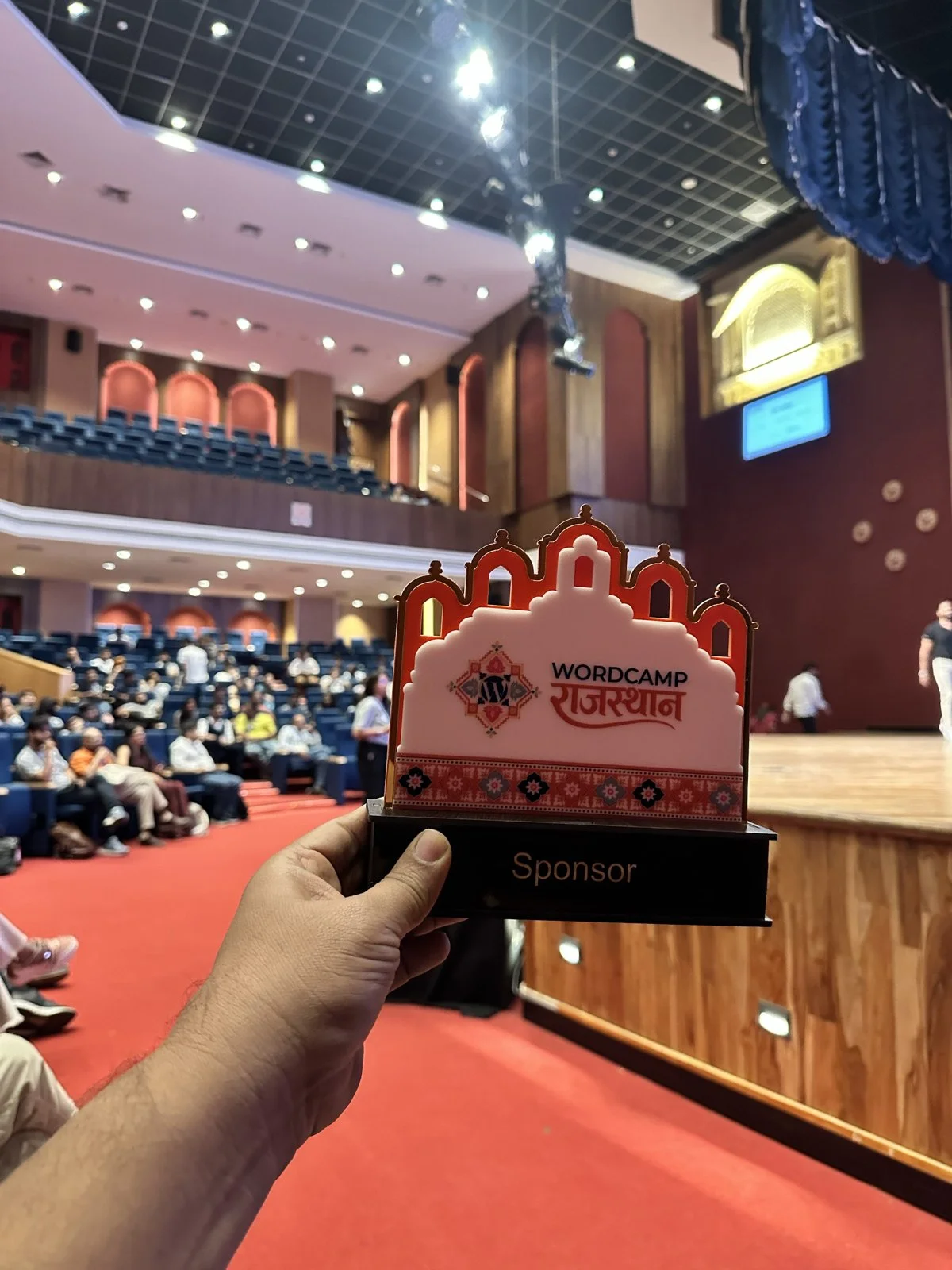
A big thank you to the organizers and volunteers who made two packed days feel easy, to the speakers and table leads who shared what they know, and to everyone who stopped by our booth with a question. We’ll see you at the next one.
Try BuddyNext
If you missed us in Jaipur, you can still try BuddyNext. It’s free to start, runs on your own WordPress site, and has no member limit in the core plugin. Visit buddynext.com to see it in action and build a community you own.
Shashank Dubey is co-founder of BuddyNext at Wbcom Designs. Find him on WordPress.org.
Related reading