
15 min read
Circle vs Kajabi: What I Learned After Using Both Platforms


This comparison exists because Circle is a community platform and Kajabi is a course platform, and most people actually need both. That usually ends in paying two subscriptions and wiring them together.
There is a third shape. BuddyNext covers what Circle does, with an activity feed, spaces, member profiles, direct messaging, and moderation, and Learnomy covers what Kajabi does for courses, with quizzes, certificates, and selling through your own payment gateway. Course activity syncs both ways with the feed, so completions and enrolments surface where the conversation is happening.
Add Jetonomy for forums and WB Gamification for points, badges, and streaks, and the whole stack is free with no percentage taken from sales. Each is an independent product rather than a locked add-on, so you can run any one of them without the others.
The trade is the same as always: you host it, you maintain it, and nobody is on call. That is the actual decision underneath Circle versus Kajabi.
Circle vs Kajabi (What’s the Difference?)
After working with both platforms, the simplest way to understand the difference is this:
Circle is a community-first platform.
It’s built for engagement, live events, group discussions, and membership experiences centered around interaction. Everything inside Circle is designed to make your members show up, participate, and connect. If community is the core of your business, Circle gives you far more flexibility and tools than Kajabi.
Kajabi is an all-in-one business platform.
It combines courses, emails, funnels, automations, payments, and a basic community feature into one system. If your business relies heavily on course delivery, marketing automation, or structured product sales, Kajabi gives you everything in a single dashboard.
The key difference is this:
Circle focuses on connection.
Kajabi focuses on content + marketing.
Neither one is universally better. It depends entirely on whether your business is community-driven or product-driven.
Before diving deeper into each platform, here’s a quick side-by-side comparison to show how they stack up.
Circle vs Kajabi: The Core Differences at a Glance
| Feature | Circle | Kajabi |
|---|---|---|
| Core Focus | Community & engagement | All-in-one: courses, funnels, email |
| Community Tools | Advanced (spaces, groups, events) | Basic feed; limited interaction |
| Course Hosting | Simple, video-based lessons | More complete course builder |
| Membership Structure | Flexible spaces & access control | Tied to product offers; less flexible |
| Email Marketing | No built-in email | Full email suite (broadcasts + sequences) |
| Automation | Basic workflows | Strong automations built in |
| Live Events | Native livestreaming & event hosting | Requires Zoom or third-party tools |
| Customization | Flexible spaces; clean UI | Strong page builder; branded site |
| Mobile App | Native iOS & Android apps | Mobile app included |
| Best For | Community-led memberships & coaching groups | Course businesses & all-in-one marketing |
Circle: My Experience Using the Platform

What Circle Is Designed For
Circle is built for creators, coaches, and businesses whose primary focus is community. The platform gives you tools to create structured discussion spaces, run events, host courses, and build paid memberships in a way that feels natural for members. When I tested Circle, it became clear that everything in the platform is optimized for one thing: engagement.
If your business succeeds when people participate, ask questions, and interact with each other, Circle gives you an advantage that Kajabi simply doesn’t match.
Community Tools and Engagement
This is where Circle stands out. I tested discussions, posts, spaces, private groups, and real-time chat. The experience feels smooth and intentionally designed.
Key highlights from my testing:
- You can create multiple spaces for different topics or member types.
- Spaces can be text-based, chat-style, course spaces, or event spaces.
- Members stay active because posts, comments, and notifications feel modern.
- Moderation tools are strong: member roles, access rules, and content controls.
Circle’s engagement tools are powerful enough that members begin interacting without being pushed. During testing, even small groups felt active because the UI encourages communication.
Courses Inside Circle
Circle isn’t a full LMS, but its course feature is better than I expected. You can create:
- Modules
- Lessons
- Drip schedules
- Video or text lessons
- File attachments
It’s perfect for simple, community-supported courses. However, if you need quizzes, certificates, or advanced student progress tracking, Kajabi or Thinkific are stronger options.
Live Events and Livestreaming
Circle includes native livestreaming, events, and replays, which worked flawlessly in my tests. You can schedule:
- Cohort calls
- Weekly meetings
- Workshops
- Webinars
Members can RSVP, comment, and join live calls without leaving the platform. This is a major advantage over Kajabi, which requires Zoom or third-party tools.
Customization and Flexibility
Circle lets you build a structured community with multiple layers:
- Free and paid spaces
- Private groups
- Topic-based areas
- Member-only resources
The layout is clean, modern, and highly customizable. You have enough flexibility to build anything from a small coaching group to a multi-thousand-member business community.
Circle Pricing
Circle offers tiered pricing ranging from $99 to $399 per month, depending on features, member limits, and advanced functionality. The mid-tier plan is usually enough for most creators.
Pros and Cons of Circle
Pros:
- Best-in-class community tools
- Native livestreaming and events
- Modern, intuitive user experience
- Flexible membership and access controls
- Mobile app for members
Cons:
- Limited email and automation features
- Basic course builder compared to Kajabi
- Costs increase as your community grows
Which Circle Is Best For
Choose Circle if your business is community-led, meaning:
- You run coaching groups
- You teach in cohorts
- Your members need ongoing interaction
- You want an active, social experience
Circle is the right choice when engagement is the core of your business model.
Kajabi: My Experience Using the Platform
What Kajabi Is Designed For
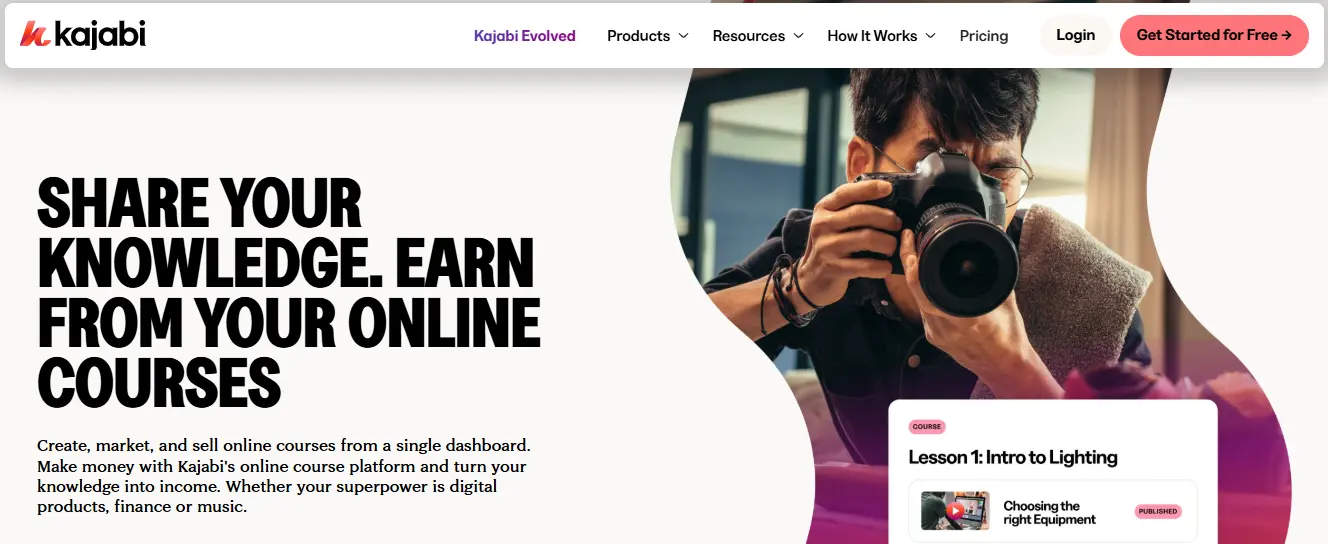
Kajabi is made for creators who want to run their entire digital business in one place. When I tested it, the biggest advantage was how smoothly everything connects: courses, email marketing, funnels, payments, and websites all work together without needing extra tools.
If your business revolves around selling structured content, running automations, and building a scalable digital product ecosystem, Kajabi provides a complete setup from day one.
Courses and Digital Products
Kajabi’s course builder is one of the best for creators who want a polished student experience. During my testing, building lessons, uploading videos, and organizing content felt smooth and intuitive.
Kajabi supports:
- Video, audio, text lessons
- Drip schedules
- Assessments and quizzes
- Unlocking conditions
- Downloadable files
- Premium video hosting via Wistia
The student player is modern, distraction-free, and responsive across devices. Compared to Circle’s simpler course setup, Kajabi clearly offers more robust tools for structured learning programs.
Kajabi Community Tool
Kajabi does include a community feature, but during testing, it quickly became clear that it’s not as flexible or as engaging as Circle. It works for simple discussions and announcements, but it lacks:
- Multi-space structuring
- Advanced moderation
- Events and livestreaming
- Real-time chat
- Gamification
Kajabi is primarily a content and marketing platform, not a community engine.
Funnels, Email Marketing, and Automations
This is where Kajabi truly excels.
I built multiple funnels and automated email sequences while testing, and the experience was smooth and powerful. Kajabi allows you to create:
- Automated email sequences
- Behavior-based triggers
- Upsells and downsells
- Order bumps
- Checkout flows
- Landing pages and pipelines
You do not need tools like ConvertKit, ClickFunnels, or Zapier just to run your marketing. Kajabi replaces all of them in one dashboard.
Payments, Offers, and Checkouts
Kajabi gives you full control over selling:
- Courses
- Memberships
- Coaching programs
- Bundles
- Subscriptions and payments
The checkout builder is fast and flexible, and Kajabi Payments (plus Stripe/PayPal support) makes it easy to manage recurring revenue.
Customization and Website Builder
Kajabi includes a complete website builder with customizable templates. You can create:
- Homepages
- Sales pages
- Landing pages
- Blog posts
The design flexibility is significantly higher than Circle.
Kajabi Pricing
Kajabi is premium-priced, ranging from $89 to $399 per month depending on product and contact limits. The Growth plan is the most popular.
Pros and Cons of Kajabi
Pros:
- True all-in-one business platform
- Excellent course experience
- Native email marketing and automations
- Strong funnels and sales tools
- Website builder included
- Great for scaling digital products
Cons:
- More expensive than Circle
- Community features are limited
- Not ideal for social-led memberships
- Pricing limits may require upgrading as you grow
Who Kajabi Is Best For
Choose Kajabi if your business is content-driven, such as:
- Course creators
- Educators
- Digital product sellers
- Coaches with structured programs
- Entrepreneurs wanting full marketing automation
Kajabi is best when you want to build, sell, and automate everything in a single ecosystem.
Circle vs Kajabi: Feature-by-Feature Breakdown
After using both platforms side by side, the differences become very clear. Each tool excels in areas the other doesn’t attempt to compete in. Here’s a detailed breakdown of how Circle and Kajabi compare across the features that matter most to creators, coaches, and membership businesses.
1. Community Tools: Circle Wins Easily
Circle was built for communities from the ground up. During my testing, everything, from discussions to events to member organizations, felt intentional and polished.
Kajabi’s community tool works for basic conversations, but it doesn’t support advanced needs.
Circle strengths:
- Multiple spaces for topics or member types
- Native livestreaming and events
- Real-time chat
- Member directories and profiles
- Rich moderation and access controls
- Better notifications and engagement loops
Kajabi limitations:
- Only one main feed
- No multi-space structure
- No native livestreaming
- No gamification
- Engagement feels lower
If your goal is to build an active, engaged community, Circle is clearly the stronger platform.
2. Courses: Kajabi Wins (More Structure, Better Experience)
Kajabi’s course builder is significantly more advanced than Circle’s. I tested both using the same curriculum, and Kajabi delivered a better experience for structured lessons.
Kajabi strengths:
- Drag-and-drop organization
- Premium video hosting
- Quizzes and assessments
- Drip scheduling
- Certificates via integrations
- Cleaner student interface
Circle’s course tool is simple and works well for basic content, but lacks assessments, certificates, and deeper tracking.
3. Membership Options: Depends on Your Model
This category comes down to what kind of membership you want to run.
Circle is better if:
- Your membership focuses on discussion
- You offer ongoing coaching or group interaction
- You want multiple spaces for different tiers/topics
Kajabi is better if:
- Your membership is primarily course-based
- You need bundles, upsells, coupons, and automations
- You want to manage everything inside one product ecosystem
Both support paid memberships, but the experience is very different.
4. Marketing and Automation: Kajabi Wins Without Question
This is Kajabi’s biggest advantage. While testing funnels, email campaigns, and automations, it became clear that Kajabi replaces several marketing tools at once.
Kajabi includes:
- Email broadcasts
- Automated sequences
- Behavior-based triggers
- Landing page builder
- Pipeline (funnel) builder
- Checkouts, upsells, order bumps
- Visual automation workflows
Circle does not include email marketing and only offers basic workflows for tagging and permissions.
If you want to automate your business, Kajabi is far more powerful.
5. Live Events and Calls: Circle Wins
Circle’s native event system outperformed Kajabi in every way during testing.
Circle includes:
- Native livestreaming
- Events with RSVP
- Calendar view for members
- Event replays
- Structured cohort-based experiences
Kajabi relies on Zoom or third-party tools, which adds friction for both creators and members.
6. Design and Customization: Different Strengths
Circle customization strengths:
- Flexible community layout
- Customized spaces
- Clean UI with simple branding
- Great for discussion-first ecosystems
Kajabi customization strengths:
- Full website builder
- Sales pages and funnels
- Email templates
- Product pages
- More design control overall
Kajabi gives you more creative freedom for marketing pages, while Circle gives you more structure for community spaces.
7. Pricing: Circle Is Cheaper Short-Term, Kajabi is More Expensive
Circle starts lower and stays affordable unless you grow very large communities.
Kajabi starts higher and scales quickly as your product library and contacts grow.
Circle is better for:
- Membership communities
- Startups with smaller budgets
- Creators who do not need email or funnels
Kajabi is better for:
- Full digital businesses
- Course creators
- Anyone who would otherwise pay for multiple tools
Which One Should You Choose?
Choosing between Circle and Kajabi becomes easy once you understand what type of business you’re building. After testing both platforms extensively, I found that neither one is universally better. They simply serve different purposes. Here is a straightforward decision guide to help you choose the right fit.
Choose Circle if Your Business Is Community-Led
Go with Circle when engagement and interaction are the core of your offer.
Circle is the stronger choice if your success depends on:
- Members talking, sharing, and participating
- Group coaching or cohort-based learning
- Multi-topic communities with multiple spaces
- Live sessions, workshops, and events
- An environment that feels social, modern, and active
Circle is perfect for:
- Coaching programs
- Membership communities
- Mastermind groups
- Cohort courses
- Brand communities
- Networking groups
If your goal is to build an ongoing connection, Circle will feel natural and effortless.
Choose Kajabi if Your Business Is Content-Driven
Kajabi is the better platform when your business relies heavily on structured content, automation, and marketing.
Choose Kajabi if you need:
- A polished course builder
- Email marketing is built into the platform
- Funnels, pipelines, and automations
- A website and landing page builder
- A single platform to sell courses, coaching, and memberships
Kajabi is perfect for:
- Online course businesses
- Digital product creators
- Educators
- Coaches who sell structured programs
- Entrepreneurs who want an all-in-one system
Kajabi works best when your sales depend on delivering content and automating your marketing.
If You Want the Best of Both Worlds
Some creators actually use both platforms:
- Kajabi for courses, funnels, email, and payments
- Circle for community, events, engagement
If your business model supports it, this combination becomes extremely powerful.
My Recommendation After Testing Both Platforms
- Choose Circle if community is your product.
- Choose Kajabi if content and marketing are your product.
Both are excellent platforms, but the right choice depends entirely on whether you want to build engagement-first or content-first experiences.

Your Ideal Platform Depends on Your Business Model
After testing both Circle and Kajabi in real-world scenarios, one thing became clear: the better platform isn’t the one with the longest feature list, but the one that aligns with how your business actually operates.
Circle excels when your community is the core product. Its engagement tools, structured spaces, events, and member experience make it the strongest option for coaches, masterminds, and community-led memberships. If interaction drives your value, Circle will better support that vision than Kajabi.
Kajabi shines when your business revolves around content, automation, and digital product sales. Its course builder, email marketing, funnels, and all-in-one ecosystem help you launch and scale a content-driven business without having to stitch together multiple tools. If structured programs and marketing systems are central to your growth, Kajabi is the smarter choice.
Both platforms are powerful, but their strengths serve different types of creators. Your decision should be based on how you deliver value, how your audience engages, and where you want your business to grow. Once you’re clear on that, the choice between Circle and Kajabi becomes straightforward, and either platform can support a successful, scalable creator business when used for the right purpose.
FAQs
1. Which platform is better for beginners, Circle or Kajabi?
Kajabi is better for beginners because it combines courses, email, automations, and marketing in one place. Circle is simple to use, but you may still need additional tools for payments and funnels.
2. Is Circle better than Kajabi for community building?
Yes. Circle offers more advanced community features, including spaces, events, chat, livestreaming, and structured group engagement. Kajabi’s community tool is functional but limited.
3. Can I host courses on both Circle and Kajabi?
Yes. Both platforms support video-based lessons. However, Kajabi is better for structured courses, quizzes, assessments, drip content, and a polished student experience.
4. Does Kajabi replace tools like ConvertKit or ClickFunnels?
For most creators, yes. Kajabi includes email marketing, automations, landing pages, and full funnel-building tools. Circle does not provide any of these natively.
5. Can I run paid memberships on both platforms?
Yes. Circle offers flexible membership access across different community spaces, while Kajabi ties memberships to products and offers. Circle is stronger for engagement-driven memberships, and Kajabi for content-driven memberships.
6. Which platform is more affordable?
Circle is generally cheaper, especially for community-focused businesses. Kajabi costs more but replaces multiple tools, which can make it more cost-effective for creators who need an all-in-one system.
7. Can I use Circle and Kajabi together?
Absolutely. Many creators host courses, funnels, and email on Kajabi while using Circle for community and engagement. Together, they form a powerful combination.
Interesting Reads:
10 Best Kajabi Alternatives for 2026 (I Tested Them All)
Related reading