
9 min read
Best Marketing Analytics Tools To Try in 2026

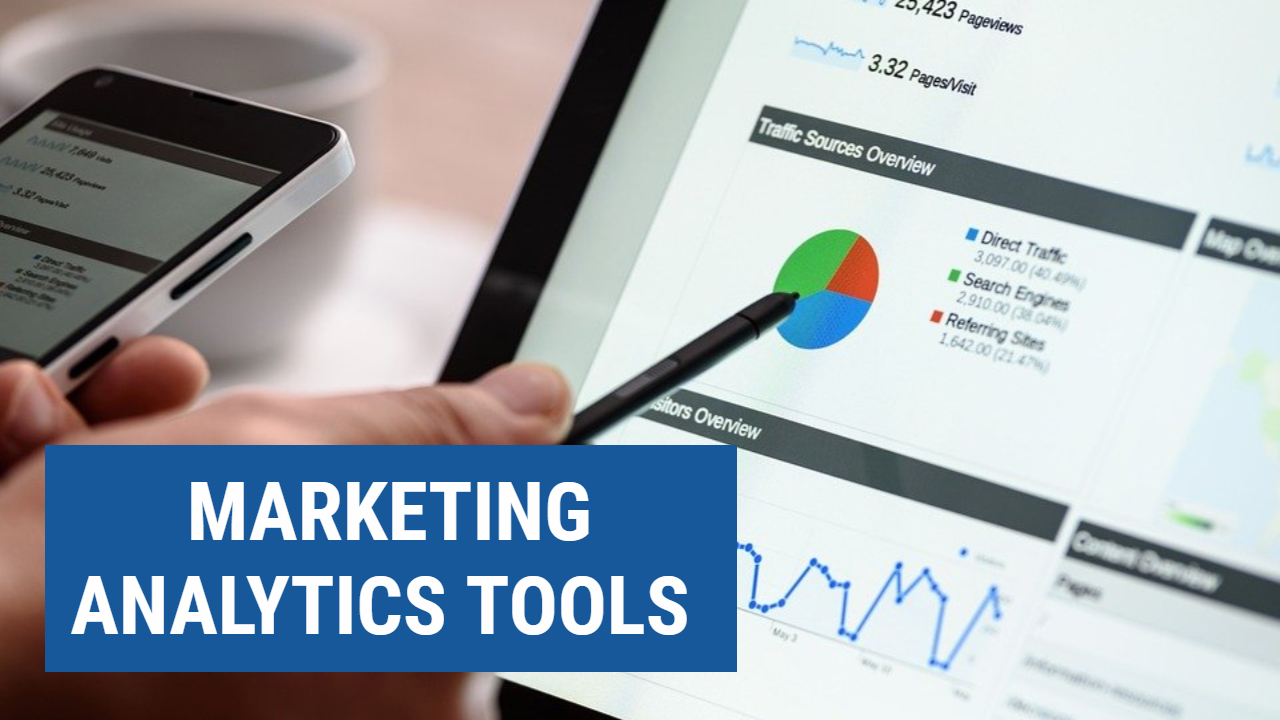
Marketing analytics tools have become indispensable for businesses that want to measure campaign performance, optimize spending, and prove ROI. Whether you run a WordPress-powered online store or manage content marketing for a SaaS product, the right analytics platform can transform raw data into actionable insights that drive revenue growth.
In 2026, the marketing analytics landscape has evolved significantly. Artificial intelligence, cross-channel attribution, and real-time reporting are no longer premium features reserved for enterprise budgets. Mid-sized businesses and even solo entrepreneurs now have access to powerful platforms that consolidate data from email campaigns, social media, paid advertising, and organic search into unified dashboards.
This guide covers the best marketing analytics tools you should consider this year, along with practical advice on choosing the right one for your WordPress site or digital business.
What Marketing Analytics Tools Actually Do
Before diving into individual platforms, it helps to understand the core capabilities that define a marketing analytics tool. Unlike basic website analytics (such as tracking pageviews), marketing analytics tools are designed to answer higher-level business questions.
The key functions include:
- Cross-channel attribution - Understanding which touchpoints (email, social, paid ads, organic search) contributed to a conversion.
- Campaign tracking and ROI measurement - Connecting marketing spend to actual revenue outcomes.
- Customer segmentation - Grouping audiences by behavior, demographics, or purchase history for targeted campaigns.
- Marketing mix modeling - Determining the optimal allocation of budget across channels.
- Competitive analysis - Benchmarking your performance against industry peers.
- Predictive analytics - Using historical data and AI to forecast future campaign performance.
For WordPress site owners, these tools often integrate through plugins, tracking pixels, or API connections. The goal is to move beyond vanity metrics and understand how marketing efforts translate into real business outcomes. If you are building a growing online business, having the right analytics stack is foundational.
Marketing Analytics Tools Worth Your Attention
1. Looker (Google Cloud)
Looker, now part of Google Cloud, is a business intelligence platform that excels at data exploration and visualization. It connects directly to your SQL database, which means you work with live data rather than stale exports. This is particularly valuable for businesses running WooCommerce stores or membership sites on WordPress, where real-time sales and engagement data matters.
The platform uses a modeling language called LookML that lets you define business logic once and reuse it across all reports. Marketing teams can build custom dashboards without relying on data engineers for every request. The self-service features include pivoting, filtering, and creating visualizations that update automatically as new data flows in.
Looker is best suited for mid-sized to large organizations that already have a data warehouse. If you are a smaller operation, it may be more infrastructure than you need, but for data-mature teams it is hard to beat.
2. HubSpot Marketing Hub
HubSpot remains one of the most comprehensive marketing platforms available, combining analytics with execution tools under a single roof. Its marketing hub lets you build landing pages, run email campaigns, manage social media, and analyze results from one dashboard. For WordPress users, HubSpot offers a free plugin that connects your site to their CRM and tracking system.
The analytics capabilities are particularly strong for inbound marketing. You can track the entire customer journey from first website visit through to closed deal, with attribution reports that show which blog posts, emails, or social interactions influenced the conversion. The A/B testing features for emails and landing pages are built in, removing the need for separate testing tools.
HubSpot works well for businesses that want an all-in-one solution. The free tier is generous enough for startups, and the paid tiers scale up with features like predictive lead scoring and custom reporting. It integrates smoothly with WordPress and other digital marketing tools in your stack.
3. Adobe Marketo Engage
Marketo, now under the Adobe umbrella, specializes in B2B marketing automation with deep analytics capabilities. Its strength lies in lead management, where you can score and nurture prospects based on behavior, demographics, and engagement signals. The platform connects natively with major CRMs like Salesforce and Microsoft Dynamics.
For marketing analytics specifically, Marketo provides revenue cycle modeling that maps how leads move through your funnel and identifies where they get stuck. The email analytics go beyond open rates to track how individual messages influence pipeline and revenue. The account-based marketing features let you analyze engagement at the company level rather than just the individual contact level.
Marketo is an enterprise-grade tool with pricing to match. It is best for B2B organizations with complex sales cycles and dedicated marketing operations teams. If your content marketing strategy involves nurturing leads over weeks or months, Marketo provides the analytics to optimize that journey.
4. Salesforce Marketing Cloud (Einstein Analytics)
Salesforce Einstein brings AI-powered analytics to the Salesforce ecosystem. For businesses already using Salesforce CRM, Einstein layers predictive intelligence on top of your existing customer data. It analyzes patterns in your historical data to predict which leads are most likely to convert, which deals might stall, and which customers are at risk of churning.
The marketing-specific features include journey analytics that visualize how customers move across email, mobile, social, and web touchpoints. The Einstein Engagement Scoring feature predicts which contacts are most likely to engage with your next email campaign, allowing you to optimize send times and content for maximum impact.
Einstein is deeply integrated into the Salesforce platform, which is both its strength and limitation. If your business runs on Salesforce, it is the natural choice. If not, the overhead of adopting the Salesforce ecosystem may outweigh the analytics benefits.
5. Google Analytics 4 (GA4)
No list of marketing analytics tools would be complete without Google Analytics. GA4 represents a fundamental shift from the previous Universal Analytics, moving to an event-based data model that tracks user interactions across websites and apps. For WordPress users, GA4 integration is straightforward through plugins or direct tag implementation.
The machine learning capabilities in GA4 are particularly noteworthy. It can automatically surface insights about unusual changes in your data, predict purchase probability for individual users, and identify audiences likely to churn. The cross-device tracking provides a more complete picture of how users interact with your brand across desktop and mobile.
GA4 is free for most businesses, making it the default starting point for marketing analytics. However, it has a steeper learning curve than Universal Analytics, and some marketers find the reporting interface less intuitive. Pairing GA4 with a tool like Looker Studio (formerly Data Studio) can bridge that gap.
6. Mixpanel
Mixpanel focuses on product analytics but has strong applications for marketing teams, especially those working on SaaS products or membership-based WordPress sites. Its event-based tracking provides granular insights into how users behave after they arrive at your site or product. You can build funnels, analyze retention cohorts, and run experiments all within the platform.
The strength of Mixpanel lies in understanding user behavior at the individual level. Rather than just knowing that 1,000 people visited your pricing page, you can see how those visitors behaved differently based on their acquisition channel, the content they consumed, and the features they used during a trial. This level of detail is invaluable for optimizing conversion funnels.
For WordPress-based businesses that offer memberships, courses, or digital products, Mixpanel can reveal which onboarding steps correlate with long-term retention. It pairs well with tools like conversion-optimized blog pages to close the loop between content and product engagement.
7. Semrush
While primarily known as an SEO tool, Semrush has expanded into a full marketing analytics platform. Its competitive intelligence features let you benchmark your organic search performance, paid advertising spend, and content marketing efforts against competitors. For WordPress site owners who depend on organic traffic, the keyword tracking and site audit capabilities are essential.
The content marketing analytics in Semrush help you understand which topics and formats drive the most traffic and engagement. The position tracking feature monitors your keyword rankings over time, and the backlink analytics reveal opportunities to strengthen your link profile. For teams that manage both organic and paid search, the advertising research module shows competitor ad copy, spending estimates, and keyword strategies.
Semrush integrates with Google Analytics and Google Search Console to combine your own performance data with competitive intelligence, creating a more complete marketing picture.
How to Choose the Right Tool for Your WordPress Business
Selecting a marketing analytics tool depends on several factors specific to your situation. Here is a practical framework for making the decision:
- Budget - Tools range from free (GA4) to thousands per month (Marketo, Salesforce). Be realistic about what you can sustain.
- Team size and skill level - Some platforms require dedicated analysts, while others are designed for marketers without technical backgrounds.
- Integration requirements - Check that the tool connects with your WordPress setup, CRM, email platform, and ad accounts.
- Primary marketing channels - Choose a tool that excels at analyzing the channels that drive most of your business.
- Data volume - Higher-traffic sites may need tools with better data processing and storage capabilities.
For most WordPress-based businesses, starting with GA4 as the foundation and adding a specialized tool based on your primary marketing channel is a sound approach. If content marketing drives your growth, pair GA4 with Semrush. If email and marketing automation are central, HubSpot provides an integrated solution. If you need deep product analytics for a membership or SaaS offering, Mixpanel fills that gap.
Whatever tools you select, the critical habit is reviewing your analytics regularly and acting on what the data reveals. The best marketing analytics platform is the one your team actually uses to make decisions.
Best Practices for Marketing Analytics in 2026
Having the right tools is only part of the equation. To extract real value from marketing analytics, adopt these practices:
- Define clear KPIs before choosing tools - Know what success looks like for your business before investing in analytics infrastructure.
- Implement proper tracking from day one - Setting up UTM parameters, conversion tracking, and event tracking correctly saves months of cleanup later.
- Build a measurement framework - Document what you are tracking, why it matters, and how it connects to business outcomes.
- Review data weekly, not monthly - Faster review cycles allow you to course-correct campaigns before wasting budget.
- Focus on actionable metrics - Pageviews and follower counts are vanity metrics. Revenue, conversion rate, and customer acquisition cost drive decisions.
- Respect user privacy - With evolving regulations like GDPR and state-level privacy laws, ensure your analytics setup complies with data protection requirements. This is especially important for WordPress sites serving international audiences.
If you are building or refining your on-page SEO strategy, marketing analytics tools provide the feedback loop you need to understand what is working and where to focus next.
Summary
Marketing analytics tools have matured to the point where businesses of every size can access sophisticated measurement and optimization capabilities. The gap between knowing your marketing works and proving how it works continues to narrow as these platforms add AI-powered insights, cross-channel attribution, and predictive modeling.
For WordPress site owners and digital marketers, the key is selecting tools that match your current needs and growth trajectory. Start with the fundamentals, build a culture of data-driven decision making, and expand your analytics stack as your business grows. The companies that invest in understanding their marketing performance today will have a significant competitive advantage in the years ahead.
How to Increase Organic Traffic to Your WordPress Site
Related reading