
6 min read
Stop Broadcasting To Your Community. Start Talking To It.

Most brands treat their community the way they treat their email list: a channel to broadcast into. Announcements go out, campaigns get scheduled, an automation welcomes each new member and then goes quiet. And then everyone wonders why the community feels dead, why members lurk instead of talk, why the thing that was supposed to build loyalty produced a slightly more crowded version of the same one-way relationship the brand already had.
The fix isn’t more content or a better automation flow. It’s the opposite of automation. If you’ve read the piece on relationship marketing over automation, this is what those three habits look like when the goal is specifically a brand community, one that markets the product better than any campaign because it runs on genuine trust rather than scheduled posts.
In this pieceThe broadcast trap brands fall into
Relationship marketing when you’re a brand
Educational storytelling with your own product
Why a small team should engage less, not more
A real member relationship, not a broadcast
The payoff: a community that markets for you
Where this lives inside BuddyNext
Turning it into something you actually check
The broadcast trap brands fall into
The trap is structural, not lazy. A brand’s marketing team already thinks in campaigns, reach, and scheduled sends, so when they get handed a community, they run it the same way. It’s the natural instinct, and it’s exactly wrong, because a community is the one channel where the broadcast model actively destroys the value. People don’t join a community to receive announcements. They join to be among other people, and a stream of scheduled brand content tells them the other people were never really the point.
Breaking the trap means the brand has to do something genuinely uncomfortable for a marketing team: show up as a participant, not a publisher. Reply as a named human. Ask questions it doesn’t already know the answer to. Let members talk to each other without routing everything through the brand’s voice. That’s relationship marketing, and it feels inefficient right up until it becomes the most efficient marketing the brand has.
Relationship marketing when you’re a brand
The specific move is replacing automated touchpoints with real ones at the moments that matter most. The automated welcome email becomes a real, personal reply to a new member’s first post. The scheduled “how’s everyone doing” prompt becomes a genuine question from a real team member who actually reads the answers. The support ticket that would have closed in a private thread becomes a public, human exchange that the next customer with the same problem can find.
None of this scales the way automation does, and that’s the point covered in the piece on bootstrapping a brand community: the warmest members are the ones who already had a real interaction with your team, and a real interaction is precisely what an automation cannot produce. A brand that spends its community effort on genuine, named, human replies builds something a competitor with a bigger automation budget simply cannot copy.
Educational storytelling with your own product
The second habit, for a brand, means teaching people how to get value from the thing you sell, openly, before and after they buy, without turning every post into a pitch. The most trusted brands in any category are usually the ones that teach their market rather than just selling to it, because teaching demonstrates competence in a way that claims never can.
For a product community specifically, this is nearly free content, because it already exists inside your support team’s answers. Every genuinely useful resolution to a real customer question is an educational story waiting to be told publicly instead of privately, the exact reuse the growth loop piece on brand communities describes. The brand that publishes its own best answers becomes the authority on its own product, which is a position no amount of promotional spend can buy.
Why a small team should engage less, not more
The third habit is a relief for any brand running a community on a small team, which is most of them. You do not need to respond to everything, post daily, or maintain a constant presence. You need a few genuinely high-quality interactions, placed where they matter, more than you need a high volume of shallow ones.
This is what makes a brand community survivable long-term rather than a burst of enthusiasm that fizzles when the responsible person gets busy. A team that tries to engage with everything burns out and goes quiet, leaving the exact dead community the broadcast model produces. A team that picks its moments, welcoming a promising new member properly, answering one hard question thoroughly, can sustain real presence indefinitely, which is the only kind of presence that actually compounds.
A real member relationship, not a broadcast
Here’s what relationship marketing actually produces, reachable without an account.
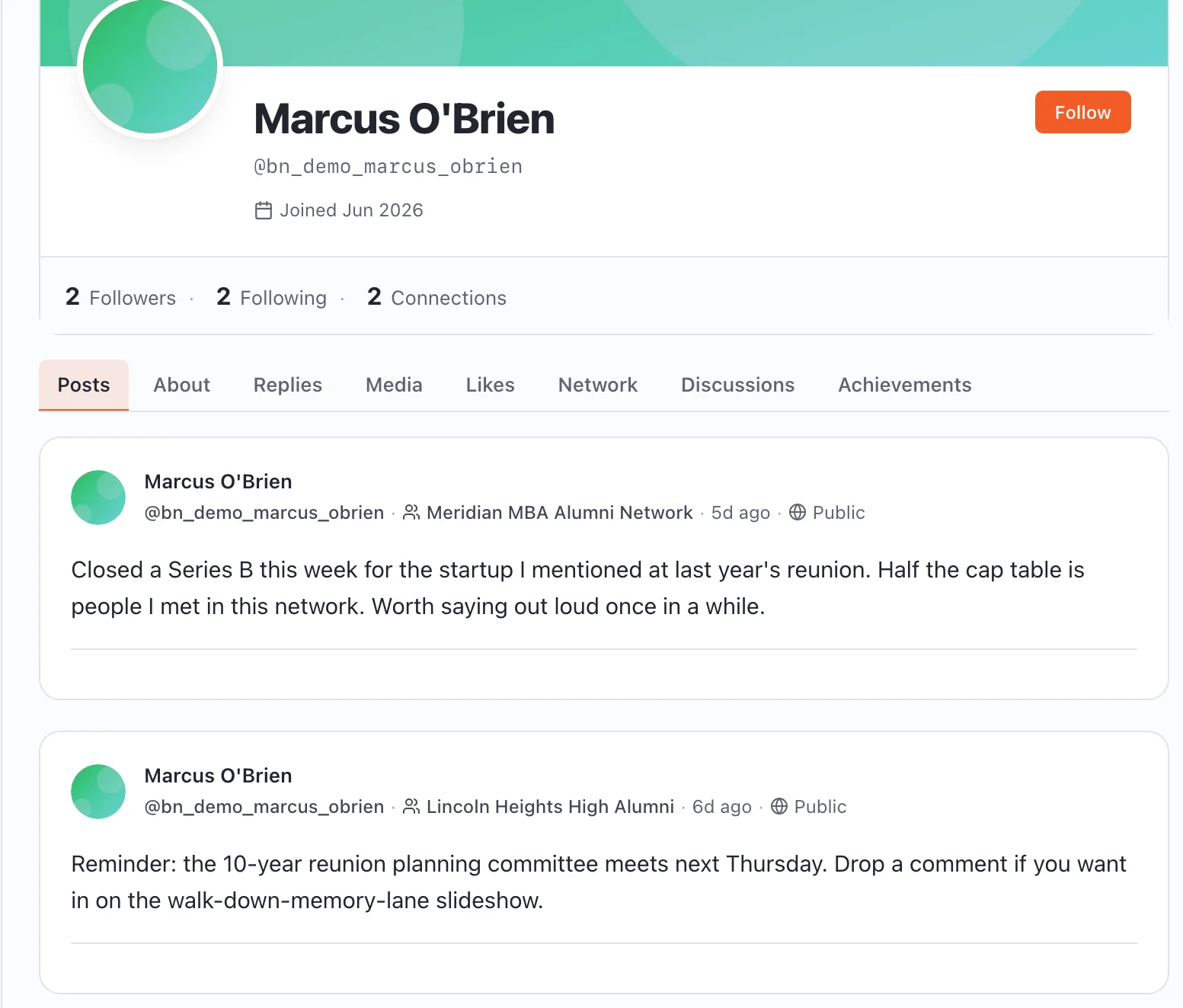
This is a real member with a real, public history of posts, a person, not a segment, not a list entry, not an automation target. Every one of those posts is a relationship the brand can actually have, a genuine exchange with a specific human who chose to show up. A broadcast model treats this person as one of many recipients. Relationship marketing treats them as exactly what they are, one real person worth answering, and that difference is what the entire playbook comes down to.
The payoff: a community that markets for you
When the three habits are actually running, the community stops being a channel the brand markets into and becomes a thing that markets the brand. Members answer each other’s questions, so support load drops. They share their real results, so prospects see proof the brand could never credibly claim about itself. They defend the brand in public because they have a genuine relationship with it, not a transactional one.
That’s the outcome the opening case study actually reached, thirty-six times the audience with zero paid spend, and it’s available to any brand willing to run the human version of the playbook instead of the automated one. The automation was always going to be cheaper per action. It was never going to produce this.
Where this lives inside BuddyNext
If you’re running the community on BuddyNext, public member profiles make every member a real, visible person rather than a hidden list entry, which is what makes genuine relationship marketing possible in the first place. Public Spaces let the brand’s best answers become findable educational content instead of buried private threads. And the whole thing is built so a small team can run the high-efficiency version, real presence without the volume that burns people out.
Turning it into something you actually check
Monthly: of your brand’s interactions in the community this month, how many were genuinely human replies to specific people versus scheduled or automated broadcasts. And separately, how many members are now answering each other without the brand in the thread at all, the real sign that relationship marketing has taken root and the community has started marketing for you.
A broadcast reaches everyone and moves no one. A real relationship moves one person, who then moves the next. That’s slower, it doesn’t fit neatly on a campaign calendar, and it’s the only version that turns a customer list into a community.
Related reading