
8 min read
Create a Website Like Flipkart on a Small Budget


If you are also planning to create a website like Flipkart, we’ve got you covered. Flipkart is no doubt one of the largest marketplace websites in the world.
Obviously, you might not have an entire team of developers who can work 24/7 to run your marketplace. Hence, resource limitations! So, how will you create a website like Flipkart?
Last updated: 6 November 2026
Quick answer: To create a website like Flipkart on a small budget, install WordPress and WooCommerce, add a multivendor plugin such as Dokan, MultiVendorX or WCFM Marketplace, choose a marketplace theme such as StoreMate, and connect a local payment gateway such as Razorpay. The core plugins have free versions, so your main costs are hosting, a premium marketplace plugin and the theme.
Create a website like Flipkart on a small budget
The tools I’ll share with you in this post will allow you to build your own eCommerce store that can process thousands of sales every year without hiring a full developer team.
A marketplace is different from a normal online shop. In a shop, you sell your own products. In a marketplace, many independent sellers list products, customers buy from several of them in one cart, and you earn a commission on each sale. Flipkart works this way, and so does everything built with the plugins below.
Creating the site isn’t so complex. It can be broken down into seven steps:
What a Flipkart-style marketplace needs
Before you pick tools, list the features you cannot launch without. A bare-minimum marketplace needs:
- Vendor registration and approval, so sellers can apply and you can review them
- A frontend vendor dashboard where sellers add products and manage orders without touching wp-admin
- Commission rules, either a flat amount or a percentage of each sale
- Seller payouts, with a withdrawal request flow
- Product search, categories and filters that work on a large catalog
- Reviews and ratings for products and for sellers
- A clear returns and refunds policy that vendors agree to
Everything else, such as coupons, shipping rules per vendor and analytics, can come after launch.
1. Pick a domain name
Without a name, there is no game! So, choose a name you would like to give your marketplace site. Being choosy in picking up a name is good as it’s a one-time game. So, think of a short, sweet, and interactive domain name to create a marketplace like Flipkart.
Keep it easy to spell and say aloud. If your customers are in India, check that the name is free on the .in extension as well as .com.
Also Read: How To Create An Online Marketplace Like Etsy With WordPress
2. Get hosting to create a website like Flipkart
Next, time to get a hosting service from a well-known hosting company. You can choose GoDaddy, BlueHost, Hostinger, or any other hosting company to create a site like Flipkart.
I strongly recommend you compare the prices and benefits you’ll get from the different hosting service providers and then choose the best one.
WooCommerce asks for PHP 7.4 or later (8.0 or later recommended), a 256 MB memory limit and HTTPS (WooCommerce on WordPress.org). A marketplace runs far more queries than a single shop, so shared hosting is fine for a pilot with a few vendors, but plan to move to a VPS or managed WordPress host once you have hundreds of products and active sellers.
Also Read: Why To Use Dokan To Create Your Own Online Marketplace Using WordPress?
3. Install WordPress and WooCommerce
When you’re ready, install WordPress. WordPress is an easy way to create a website like Flipkart. Moreover, it doesn’t require coding, is easy to manage, and also doesn’t cost you more!
Then add WooCommerce, the free ecommerce plugin that most marketplace plugins build on. It has more than 7 million active installations, supports physical and digital goods, and offers over 100 payment gateways (WooCommerce on WordPress.org).
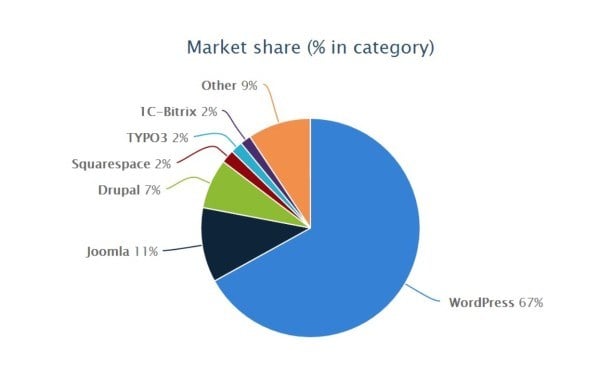
Have a look at a quick overview of how big the WordPress market share is compared with other marketplace platforms.
4. Install & configure the marketplace plugin
Time to turn your simple WordPress site into a marketplace like Flipkart. And, with the Dokan plugin, you can rock in the e-commerce industry.
It’s a multivendor marketplace plugin that helps you to set up your multi-vendor marketplace.
Read out the amazing Dokan features here.
4. Install and configure the marketplace plugin
Time to turn your simple WordPress site into a marketplace like Flipkart. The Dokan plugin is one popular way to do it.
Dokan is a multivendor marketplace plugin for WooCommerce. The free version has 30,000+ active installations and a 4.6 out of 5 rating from 769 reviews, and includes unlimited vendors, a frontend vendor dashboard, order management and a withdrawal system (Dokan on WordPress.org). Admins can set commission as a flat amount or a percentage, with a per-vendor override.
Dokan Pro adds variable and downloadable products, vendor analytics and extra modules. Current plans on the Dokan pricing page start at $104 a year for one site (list price $149), $162 for three sites and $299 for five sites, with promotional discounts that apply to the first purchase only. Lifetime options also exist.
Whichever plugin you choose, set these basics on day one:
- Registration: decide whether vendors are approved automatically or manually
- Commission: start with one simple percentage so vendors understand it
- Withdrawals: set a minimum payout amount and a payout schedule
- Product types: allow only the types you can support, such as simple products first
Dokan, MultiVendorX and WCFM compared
Dokan is not the only choice. Two other WooCommerce multivendor plugins are actively maintained, and all three have free versions on WordPress.org.
| Plugin | Version and last update | WordPress.org rating | Notes |
|---|---|---|---|
| Dokan | 5.3.4, November 2026 | 4.6 out of 5 (769 reviews) | Free Lite plus Pro plans from $104/year |
| MultiVendorX | 5.0.21, October 2026 | About 4.8 out of 5 (432 reviews) | Free core with premium upgrades |
| WCFM Marketplace | 3.8.4, November 2026 | About 4.6 out of 5 (449 reviews) | Free core with premium add-ons |
Test the free version of each on a staging site with two or three dummy vendors before you commit to a paid plan. Check how the vendor dashboard feels on a phone, because many sellers will manage orders from one.
Improve your marketplace appearance with a multivendor e-commerce theme
You will find many marketplace themes for your online store. But, here is a recommendation for you.
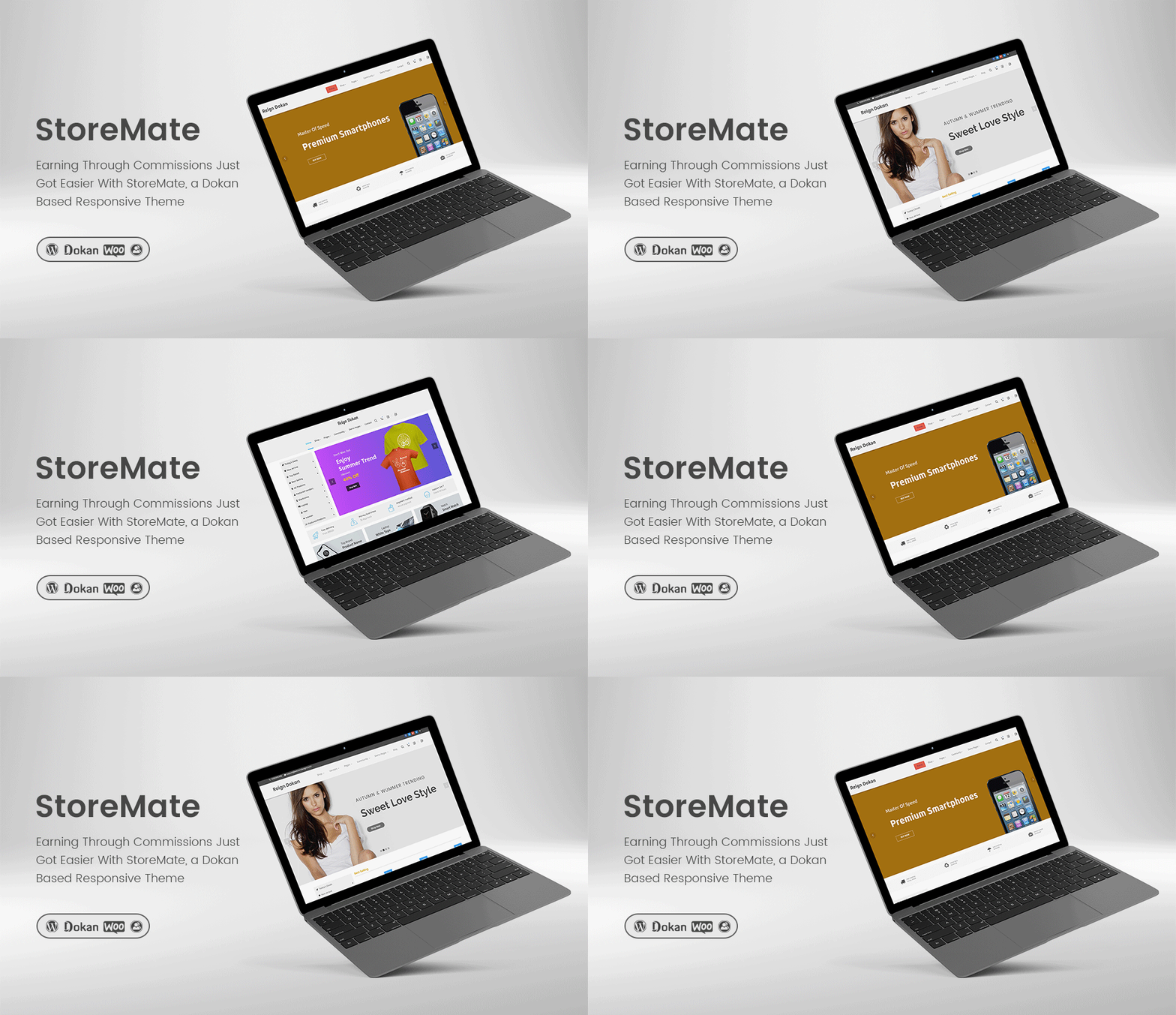
Try StoreMate. StoreMate is a multi-vendor e-commerce theme that has come up with some cool functionalities. In short, it’s a professional responsive WordPress e-commerce theme.
5. Connect payments and handle taxes
Customers in India expect UPI, cards, net banking and wallets. Razorpay for WooCommerce is an actively maintained gateway plugin (version 4.8.9, updated in November 2026) that covers those options on the checkout side.
A marketplace has one extra problem: splitting each payment between you and the vendor. Check whether your chosen gateway supports split payouts or whether the multivendor plugin pays vendors manually through withdrawal requests. Also talk to an accountant about GST, since you may be responsible for tax on your commission even if vendors handle tax on their own sales.
6. Onboard your first vendors
An empty marketplace does not attract buyers, and a marketplace without buyers does not attract vendors. Break the loop by recruiting 10 to 20 sellers you know personally, and help them upload their first products.
- Write a short vendor guide that covers pricing, photos, shipping and returns
- Set a clear commission and payout schedule before anyone signs up
- Review the first products yourself so the catalog looks consistent
7. Launch your site
Now that you know how to create a website like Flipkart, time to take action. With WordPress, WooCommerce, a multivendor plugin and StoreMate, you can have a working marketplace running in days, not months.
Before you announce it, place a test order as a customer, request a test payout as a vendor, and refund an order as an admin. If all three work, you are ready.
What this setup will not give you
Be honest about scale. Flipkart runs its own logistics, warehouses and fraud systems, and a WordPress marketplace does not include those. You will rely on vendors to ship their own orders, or on courier services you integrate. Start with a focused niche, such as handmade goods or local electronics, and add categories as your seller base grows.
When traffic grows, read our guide on how to scale your marketplace.
Frequently asked questions
How much does it cost to create a website like Flipkart?
WordPress, WooCommerce and the free versions of Dokan, MultiVendorX and WCFM cost nothing. Your main costs are hosting, a domain, an optional premium plugin (Dokan Pro starts at $104 a year on promotion) and a theme. Payment gateway fees apply on every sale.
Can I build a multi-vendor marketplace with WordPress?
Yes. WooCommerce plus a multivendor plugin such as Dokan lets sellers register, list products from a frontend dashboard and request payouts, while you earn commission on each sale.
Do I need coding skills to build a marketplace like Flipkart?
No. Installing WordPress, WooCommerce, a marketplace plugin and a theme is point-and-click. You only need a developer for custom features such as a unique checkout flow or a mobile app.
Which is the best plugin for a multi-vendor marketplace?
Dokan, MultiVendorX and WCFM Marketplace are all actively maintained and rated between 4.6 and 4.8 out of 5 on WordPress.org. Install the free version of each on a test site and pick the one whose vendor dashboard suits your sellers.
Can a WordPress marketplace handle Flipkart-level traffic?
Not on cheap shared hosting. With a VPS or managed host, caching and a CDN, it can handle large catalogs, but you will not match Flipkart’s logistics or fraud tooling. Start niche and scale up.
How to scale your marketplace?
Related reading