
4 min read
How to Create a Community Website with User Forums

Search for how to create a community website with user forums and you’ll get the same recipe everywhere. Pick forum software, install it, make categories, invite people.
I’ve watched that recipe fail more times than I can count.
Not because the software was bad. Because it answers the wrong question first. The question isn’t which forum tool to install. It’s what job the forum is actually doing for your community, and most people have never stopped to name it.
So let’s name it.
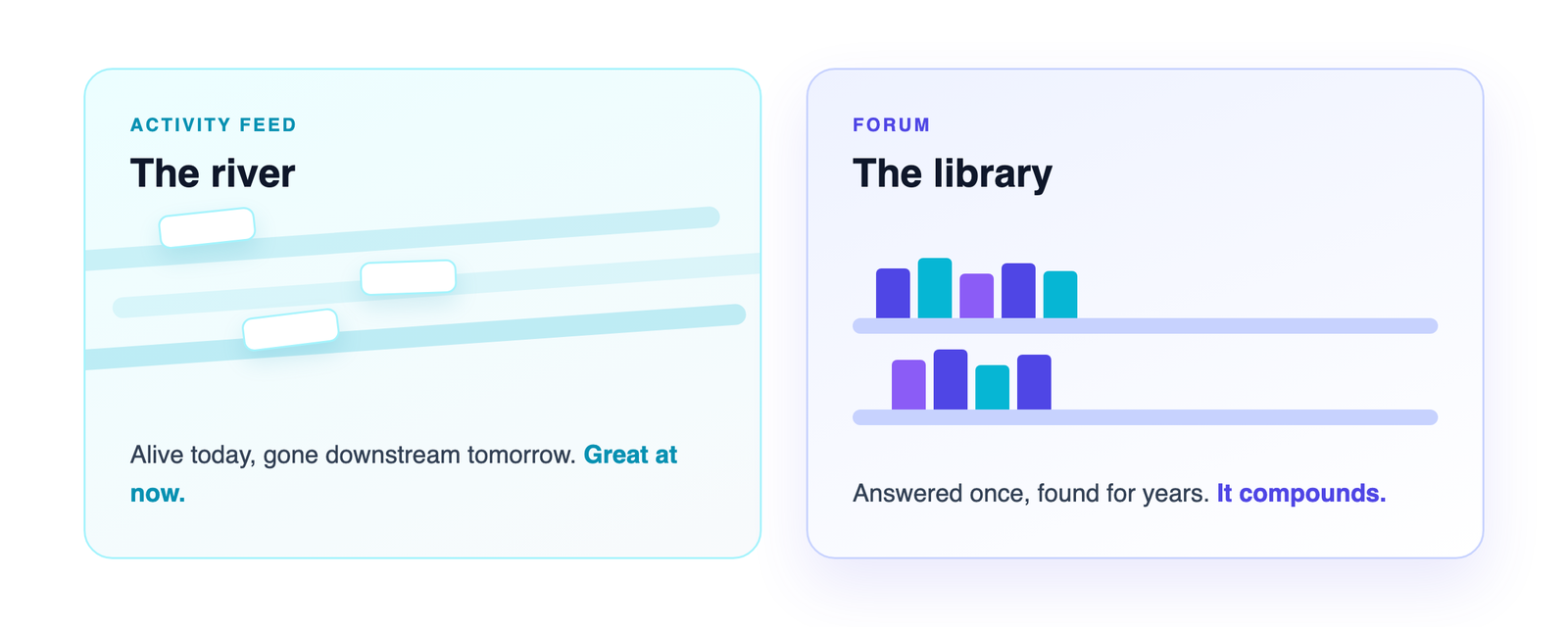
A feed is a river. A forum is a library.
Modern community sites lean on activity feeds, and feeds are great at one thing: now. Someone posts, people react, the conversation burns hot for a day and then flows past. Try finding that thread three months later. It’s gone downstream.
A forum works the opposite way. A good question gets a good answer, the answer gets found, and the thread keeps paying out for years. People land on forum threads from Google a decade after they were written. Nobody lands on a feed post from last spring.
So the feed is a river and the forum is a library. The river makes the place feel alive. The library makes it worth coming back to.
Here’s the reframe most people miss: forums aren’t the old-fashioned option you tolerate. They’re the only part of your community that compounds. Every answered question is an asset that keeps working while you sleep.
You want both eventually. But if your community exists to help people get unstuck, to answer questions, to collect ideas, you start with the library.
Build on ground you own
First decision, before any software: where does it live?
You can rent a forum from a hosted service and be running by lunch. You’ll also be paying more every time your membership grows, and every thread your members write will sit on servers you don’t control. I’ve made the long case for ownership elsewhere, so here’s the short version. The library you’re about to spend years filling should not sit in a building someone else can sell.
WordPress is the obvious ground to build on. You likely have it already, it’s yours, and the forum becomes one more thing your site does instead of a separate island with its own logins.
For the forum layer itself, this is the exact job Jetonomy was built for, and it’s what I’d hand you if you asked. It runs on any WordPress site as a standalone plugin, no other stack required. And it treats discussion as more than one shape. A support question where someone marks the accepted answer is not the same thing as an open discussion, and neither is an idea board where members vote on what you should build next. Jetonomy does all three, which matters more than it sounds, because those are the three jobs people actually hire a forum for.
Three rooms, not thirty
Now the part where almost everyone sabotages themselves. Categories.
The instinct is to map out every topic you might ever discuss and launch with thirty neat boards. Resist it. Thirty boards with two posts each reads as a ghost town. Three boards with real conversation read as a place.
Empty rooms don’t say “room to grow.” They say “nobody comes here.”
Start with three. A place to ask, a place to talk, a place to suggest. Split a category only when it’s visibly bursting. Growth should look like a library adding a wing, not a mall opening with the shops boarded up.
And expect to write the first fifty threads yourself. That’s not failure, that’s the job. Seed the questions you already get by email, answer them well, and you’ve turned your support inbox into a public asset. New members don’t join an empty forum. They join an argument already in progress.
When threads turn into relationships
Run the forum well and something predictable happens. The same names start showing up. They answer each other before you get there. They start wanting to know who the other regulars are, to follow them, to message them directly.
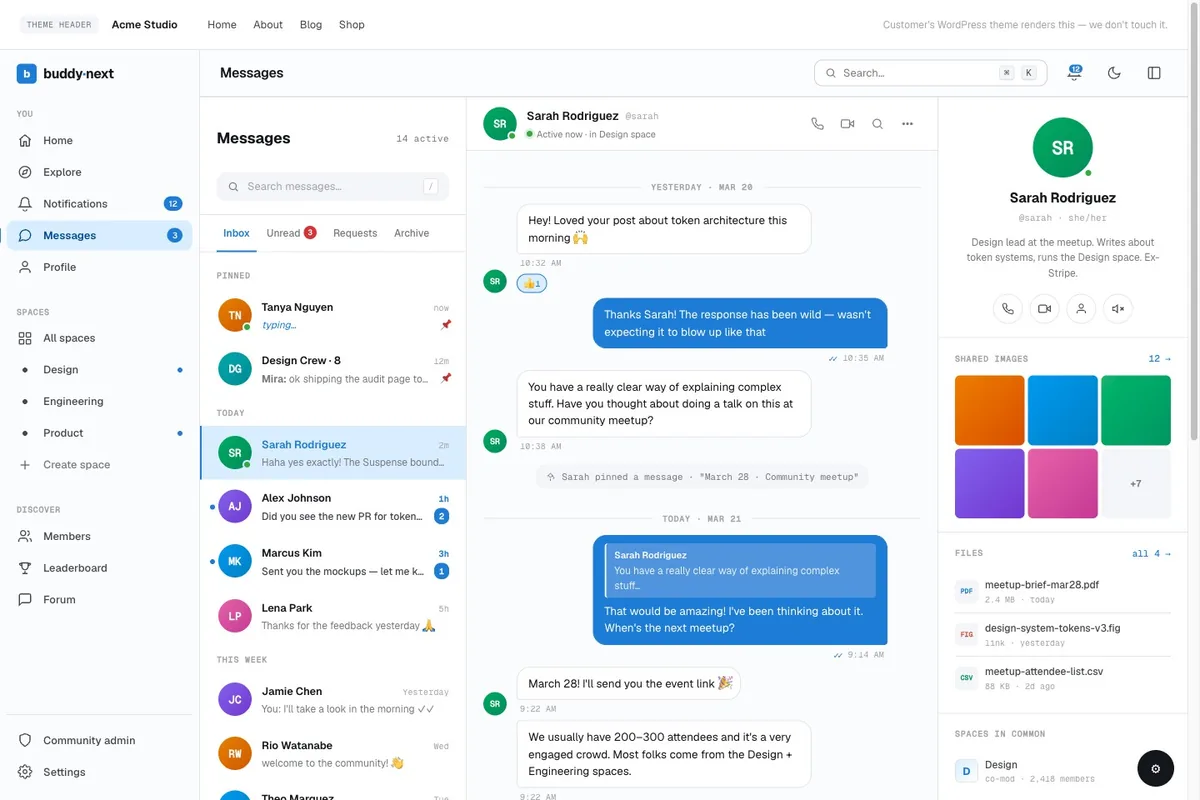
That’s the moment your forum is trying to become a community, and it’s the moment to add the river to the library. Profiles, an activity feed, groups, private messaging. On the setup I’ve described you don’t re-platform to get there, which is precisely why I pointed you at ground you own. Jetonomy snaps into BuddyNext, the community layer from the same family, and your forum keeps every thread while the space around it grows into a social network.
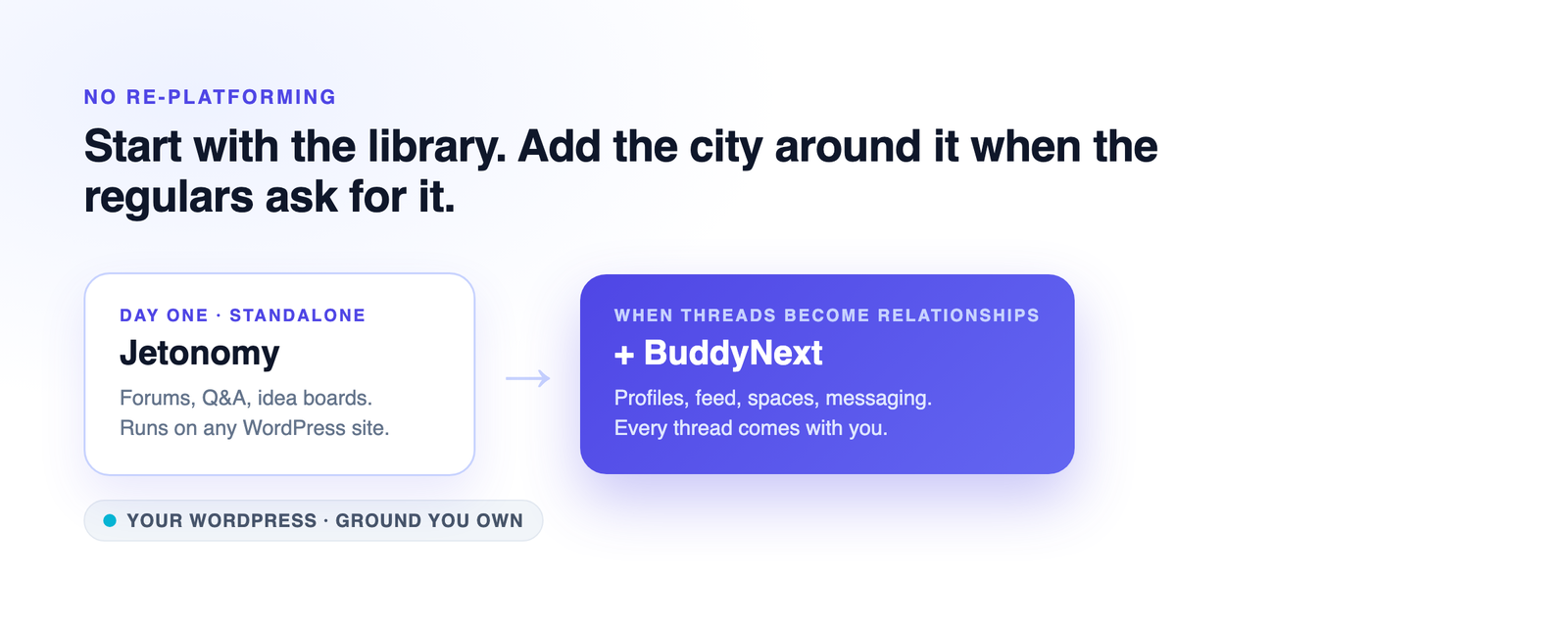
Sit with how rare that is. The usual story is outgrowing your forum software and bleeding members through a migration. This one is a building that was designed for the second floor before you needed it.
So that’s the whole method. Name the job. Own the ground. Open three rooms. Write the first fifty threads. Add the river when the regulars ask for it.
The software question, the one everyone starts with, turns out to be the easiest one on the list. Answer the others honestly and it nearly answers itself.
Related reading