
4 min read
Gutenberg Buba Blocks Review 2026

WordPress, as we all know, is one of the biggest content management platforms. It is updated frequently with minor and major fixes that enhance functionality and provide a better user experience. WordPress 5.0 brought a major change: it replaced the original editor with the all-block Gutenberg Editor.
Gutenberg has revolutionized how you create WordPress pages. Blocks are the building material for your pages. You can create, stack, drag, and drop them with ease.
The editor includes a selection of blocks that cover most content creation needs: paragraphs, headings, quotes, images, galleries, cover images, lists, buttons, embeds, audio, and video. Advanced users can create custom blocks, and there is a dedicated block for inserting code.
Gutenberg Buba Blocks Review
Introducing Buba Blocks, a collection of blocks for Gutenberg. It is a better alternative to remembering HTML code and using shortcodes. Blocks can be arranged and rearranged by clicking and dragging. It is a visual method of creating web pages where you can see your content and make changes as you go. The Buba Blocks plugin expands what Gutenberg can do and is popular among web designers and bloggers.
How to Use the Buba Blocks Plugin
Click on Plugins > Add New. Search for Buba Blocks. Click Install and Activate. Alternatively, download the file and upload it via FTP, or go to your WordPress admin and click Plugins > Add New > Upload Plugin.
Buba Blocks Elements
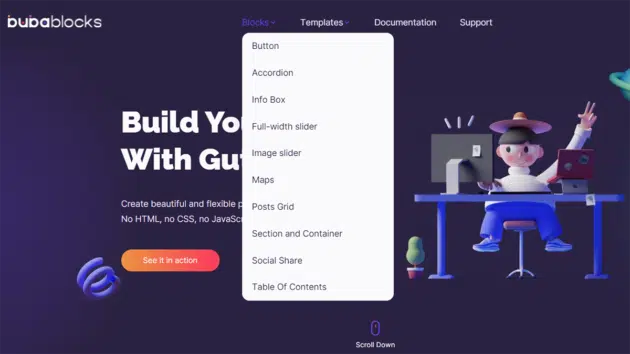
Buba Blocks are built around elements. They can be moved, customized, and adapted for many purposes. You can use features to add animations, change backgrounds and colors, or adjust properties. Below are the main elements available in Buba Blocks.
Whether you are a beginner, designer, developer, or marketer, you can build beautiful pages with Buba Blocks.
- Accordion block: display content in a fully configurable accordion
- Button with icon block: create a button with multiple style options
- Card block: create blocks with image, text, and border color
- Section Block: nest inside another block and choose styles like background image and position
- Container Block: place inside a section block with background color, margin, and padding controls
- Slider: full-width slider with animation, duration, and delay options
- Slider-images: image slider with animation, duration, delay, and slide count controls
- Table of contents block
- Map block
- Social share block
- Posts block
- Hero pattern block
Blocks for Work
The Gutenberg editor is actively maintained and regularly updated. When updates are available, update the plugin to get the latest improvements.
Buba Blocks also includes three pre-made section templates: Review, Hero, and CATS.
Click Add block > Patterns > Sections and select the appropriate template to use them.
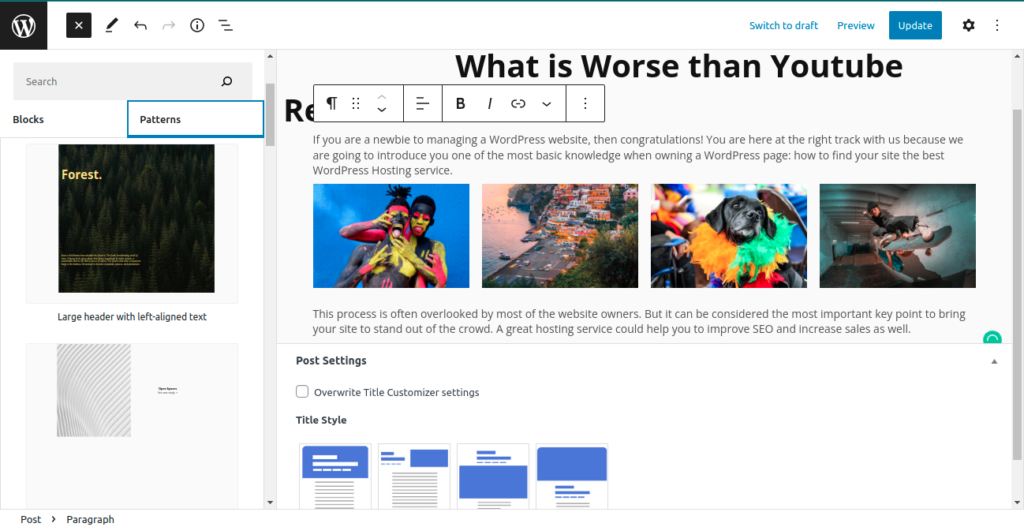
Adding new blocks to the editor
Click the (+) sign to open a window listing all available blocks. Type “Buba” to filter the Buba Blocks plugin blocks and patterns. You can search by full or partial name. Click a block to add it.
The Gutenberg editor lets you view and style elements in live mode. When you add a block, you will see its placeholder and a menu with setting options.
Changing block settings
Each block has settings found in the Inspector sidebar. The Inspector appears when you click any block. Settings vary by block type, which gives you the flexibility to use the same block multiple times with different configurations.
Block Alignment
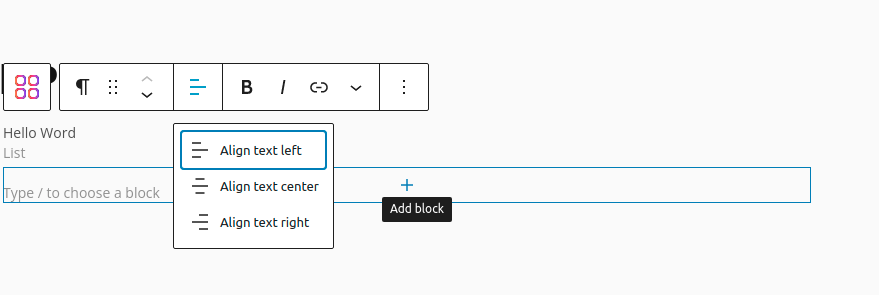
Some blocks have a position setting at the top that controls horizontal alignment along the X-axis.
Buba Block Descriptions
1. Button with Icon Block
Choose the icon you want to use and style the button with a wide range of options.
2. Info Box Block
The card block gives you flexible column customization and lets you build lists with images and text.
3. Full-Width Slider Block

The full-width slider block is a WordPress block that lets you customize navigation styles, slide sizes, and animation effects.
4. Slider Block
Slider Block creates slideshows with animated layers that can be customized in size.
5. Section Block and Container Block
Combine multiple blocks into a single element using Section and Container Blocks. Create sections with different backgrounds, margins, and columns and style them as needed.
6. Accordion Block
Accordion Block provides collapsible tabs for FAQ sections or categorized content using Gutenberg blocks. Any content can go inside the accordion, and headings are customizable.
7. Maps Block
Display Google Maps on your webpage. Customize the map height, zoom level, title text, and background and text colors. Ideal for showing visitors your location.
8. Posts Grid Block
Add posts to your website with layout options including author filter, images, author name, date, and more. A useful block for bloggers and web designers who want to surface recent content.
9. Social Share Block
Let users share pages on social media. Add social media icons and background styles to your pages.
10. Table of Contents
The Table of Contents block lets readers jump to a specific section without scrolling. Links are automatically generated from headings. You can customize background colors, text colors, and the title text.
Summary
Buba Blocks is a free Gutenberg plugin that makes it easy to create web pages. Anyone can use it, from web designers and developers to complete beginners. The pre-made templates save time, and every component can be customized to fit your design. Buba Blocks brings visual, live-mode editing to Gutenberg and is worth adding to your plugin toolkit.
Related reading