
12 min read
15 Best WordPress SEO Plugins You Should Invest in 2026


If you are searching for the best WordPress SEO plugins, you need more than a basic list of names. You need tools that help with on-page optimization, schema markup, XML sitemaps, internal linking, redirects, image SEO, and WooCommerce SEO without slowing down your site.
That is exactly where WordPress SEO plugins make a measurable difference. The right plugin can help you optimize titles and meta descriptions, improve content structure, automate technical SEO tasks, and monitor issues that affect rankings.
In this guide, I compared the best WordPress SEO plugins for blogs, business sites, online stores, membership websites, and content-heavy WordPress projects. I looked at ease of use, schema support, WooCommerce compatibility, performance impact, automation features, and overall SEO value so you can choose the right plugin for your site.
If your goal is better visibility in Google, stronger organic traffic, and easier SEO management inside WordPress, these WordPress SEO plugins are the tools worth considering.

Table of Contents
- Best WordPress SEO Plugins Compared
- How I Tested These WordPress SEO Plugins
- Best WordPress SEO Plugins
- Best SEO Tools for WordPress Users
- Best Performance & Analytics Plugins for SEO
- How to Choose the Right WordPress SEO Plugin
- Final Thoughts
- FAQs
Best WordPress SEO Plugins Compared
| Plugin / Tool | Best For | Schema Support | WooCommerce SEO | Price |
|---|---|---|---|---|
| Rank Math | All-in-one SEO optimization | Yes | Yes | Free (Pro from $69/year) |
| AIOSEO | Beginner-friendly SEO | Yes | Yes | Free (Pro from $49/year) |
| Yoast SEO | Content optimization | Yes | Premium | Free (Premium from $99/year) |
| SEOPress | Lightweight SEO optimization | Yes | Yes | Free (Pro from $49/year) |
| The SEO Framework | Lightweight automated SEO | Yes | Limited | Free |
| WP Meta SEO | Bulk SEO management | Yes | Limited | Free (Pro available) |
| Schema Pro | Rich snippets and schema markup | Advanced | Limited | Paid |
| Redirection | 301 redirects and 404 tracking | No | No | Free |
| Rankie | Keyword rank tracking | No | No | Paid |
| Ahrefs | Keyword and backlink research | No | No | Paid |
| Semrush | SEO and competitor analysis | No | No | Paid |
| Google Search Console | Search performance monitoring | Limited | No | Free |
| Google Keyword Planner | Keyword research | No | No | Free |
| MonsterInsights | Google Analytics integration | No | Yes | Free (Pro available) |
| W3 Total Cache | Website speed optimization | No | No | Free (Pro available) |
How I Tested These WordPress SEO Plugins
To make this comparison genuinely useful, I evaluated each WordPress SEO plugin based on real-world website optimization needs instead of simply comparing feature lists.
I tested how easy each plugin was to set up, configure, and use for different types of WordPress websites, including blogs, business websites, WooCommerce stores, membership platforms, and content-heavy sites.
Here are the main factors I considered while reviewing these WordPress SEO plugins:
- Ease of setup and beginner friendliness
- On-page SEO tools and content analysis
- Schema markup and rich snippet support
- XML sitemap generation
- WooCommerce SEO compatibility
- Technical SEO features and automation
- Website performance and speed impact
- Redirect management and broken link handling
- Internal linking and keyword optimization tools
- Overall usability and long-term SEO value
I also considered how well each plugin balances advanced SEO functionality with performance, usability, and scalability for growing WordPress websites.
Best WordPress SEO Plugins
1. Rank Math
Rank Math is a WordPress SEO plugin with tools for on-page SEO, schema markup, rich snippets, local SEO, and keyword optimization. It integrates with Google Search Console and WooCommerce. Features are modular and customizable.
Key Features:
- On-page SEO analysis
- Schema markup and rich snippets
- Google Search Console integration
- WooCommerce SEO support
- 404 monitoring and redirections
Pros: Free version is feature-rich, lightweight, fast, modular, and customizable
Cons: Too many features can overwhelm beginners, and some analytics require the Pro version
2. All-in-One SEO for WordPress (AIOSEO)

AIOSEO simplifies SEO management with meta tag optimization, XML sitemaps, social media integration, and schema markup. Its setup wizard helps configure the plugin easily. Pro version offers local SEO tools, audit checklists, and Google Analytics integration.
Key Features:
- Meta title and description management
- XML and RSS sitemaps
- Social media integration
- Schema markup support
- SEO audit checklist
- Local SEO tools (Pro)
Pros: Beginner-friendly, lightweight, and fast, comprehensive SEO features
Cons: Some features require the Pro version, and limited keyword analysis
3. Yoast SEO
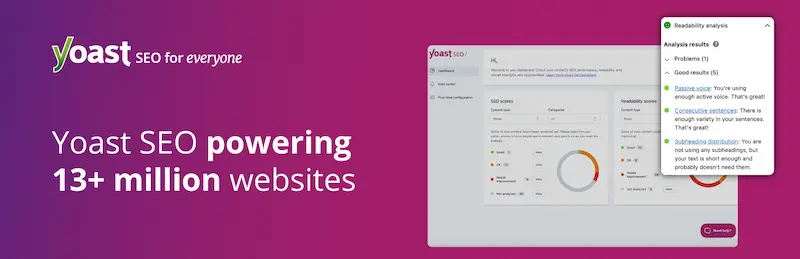
Yoast SEO is a widely used WordPress SEO plugin designed to help website owners optimize their content for search engines and improve site visibility. It provides tools for meta tag management, readability analysis, keyword optimization, and internal linking suggestions. The plugin uses a traffic light system to evaluate content SEO quality. Yoast SEO integrates well with WooCommerce, and its premium version offers additional features like multiple focus keywords, internal linking suggestions, and advanced content insights.
Key Features:
- Focus keyword optimization
- Readability analysis
- Meta title and description management
- XML sitemap generation
- Breadcrumb control
- Schema markup support
- WooCommerce integration
- Redirect management (premium)
Pros: Beginner-friendly interface, strong documentation and tutorials, frequent updates, and support
Cons: Can be resource-heavy on large sites; some advanced features require the premium version
Also Read: Sell Services with WordPress
4. SEOPress
SEOPress is a lightweight WordPress SEO plugin with meta management, XML/HTML sitemaps, Open Graph and Twitter Card support, and WooCommerce SEO. White-label mode is available for agencies.
Key Features:
- Meta title and description management
- XML & HTML sitemaps
- Open Graph & Twitter Card support
- Schema markup
- WooCommerce SEO
- White-label mode
Pros: Lightweight and fast, white-label option, comprehensive SEO coverage
Cons: Some features require the Pro version, less popular than Yoast or Rank Math
5. The SEO Framework

The SEO Framework is a lightweight WordPress SEO plugin focused on speed, automation, and clean performance. Unlike many feature-heavy SEO plugins, it keeps the interface simple while still covering essential SEO tasks like meta management, schema markup, XML sitemaps, and social sharing optimization.
What I like most about The SEO Framework is its performance-focused approach. It avoids unnecessary ads and bloat while providing automated SEO settings that work well for beginners and advanced users alike.
Key Features:
- Automated SEO optimization
- Meta title and description management
- XML sitemap generation
- Schema markup support
- Social media optimization
- Breadcrumb support
Pros: Lightweight and fast, beginner-friendly automation, and clean interface without ads
Cons: Fewer advanced features compared to Rank Math or Yoast SEO and a smaller extension ecosystem
6. WP Meta SEO
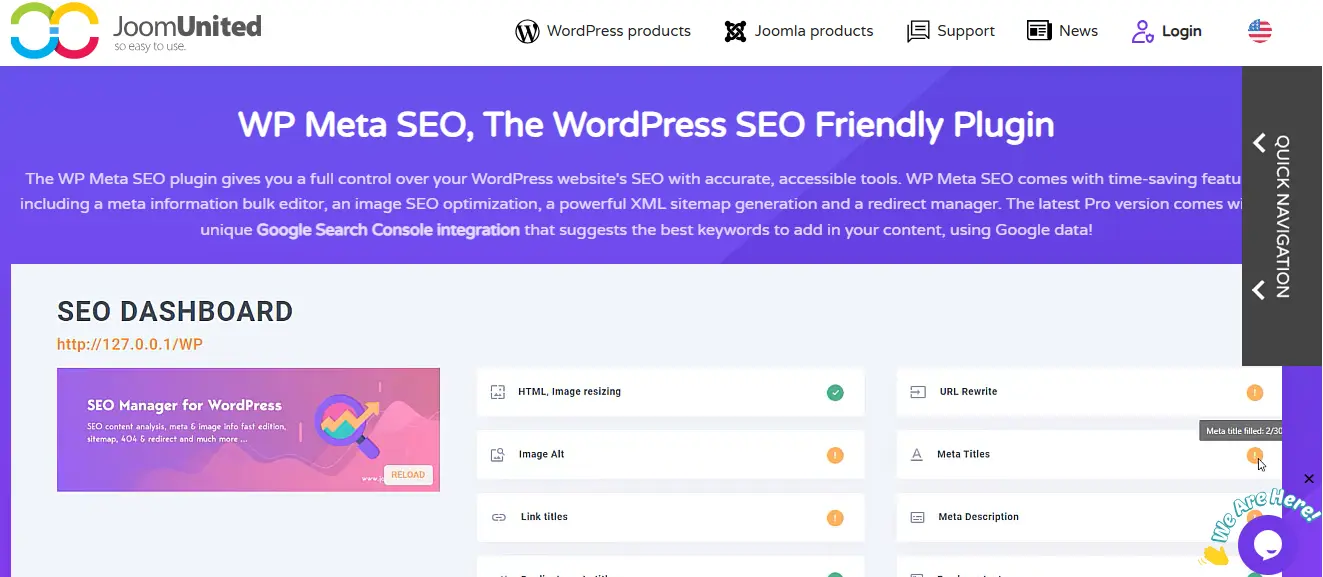
WP Meta SEO centralizes SEO management with bulk meta editing, image optimization, and sitemap management. Includes Google Analytics integration and internal link suggestions.
Key Features:
- Bulk meta editing
- Image SEO optimization
- Sitemap management
- Google Analytics integration
- Broken link checker
Pros: Efficient for large websites, user-friendly, bulk editing saves time
Cons: Not as popular, some features are limited to the Pro version
7. Schema Pro

Schema Pro implements structured data to enhance the appearance of search results. Supports multiple schema types and automates markup for easy configuration.
Key Features:
- Supports multiple schema types
- Automated schema markup
- Compatible with most themes/plugins
- Enhances rich snippets
- Easy configuration
Pros: Saves time, boosts search visibility, and is easy to use
Cons: Paid plugin, limited other SEO functionalities
8. Redirection

Redirection manages 301 redirects, tracks 404 errors, and improves site structure. It helps maintain SEO value during URL changes or content restructuring. Provides logs for redirects and errors.
Key Features:
- 301 redirect management
- 404 error tracking
- Conditional redirects
- Regular expression support
- Logging and reporting
Pros: Free, easy to use, preserves SEO during site changes
Cons: No built-in SEO suggestions, can be overwhelming with large redirect lists
9. Rankie
Rankie tracks keyword positions on Google and generates reports over time. Provides automated ranking checks and historical tracking. Useful for monitoring SEO campaigns.
Key Features:
- Keyword rank tracking
- Automated daily checks
- Historical data reports
- SEO campaign monitoring
- Email notifications
Pros: Focused rank tracking, easy monitoring, and accurate historical reports
Cons: Limited SEO management features, paid plugin for full features
Also Read: 8+ Best WordPress CRM Plugins In 2025
Best SEO Tools for WordPress Users
10. Ahrefs

Ahrefs is a powerful SEO tool that helps with keyword research, backlink analysis, competitor tracking, and content optimization. It provides detailed SEO insights that can help improve search rankings and organic traffic for WordPress websites.
Its strongest features include backlink analysis, content gap research, keyword tracking, and site audits, making it a popular choice among bloggers, marketers, and SEO professionals.
Key Features:
- Backlink analysis
- Keyword research
- Competitor analysis
- Content gap analysis
- Rank tracking
- Site audit tools
Pros: Comprehensive SEO insights, accurate backlink data, and strong keyword research capabilities
Cons: Paid tool and not a standalone WordPress plugin
11. Semrush

Semrush is a popular SEO and digital marketing platform that helps website owners improve search rankings, analyze competitors, track keywords, and optimize content. It combines SEO, content marketing, backlink analysis, and PPC research tools in one platform.
The tool is especially useful for keyword tracking, technical SEO audits, competitor research, and content optimization. Its detailed reports and analytics make it a strong option for businesses, bloggers, marketers, and agencies looking to grow organic traffic.
Key Features:
- Site audit and SEO health checks
- Keyword research and tracking
- Competitor analysis
- Backlink tracking
- Content optimization recommendations
- Position tracking
Pros: Powerful analytics and reporting, comprehensive SEO tools, and strong competitor insights
Cons: Expensive for beginners and can have a steep learning curve
12. Google Search Console
Google Search Console is a free service that monitors site performance in search results. It provides data on indexing, search queries, clicks, impressions, and technical SEO issues. Users can submit sitemaps, monitor crawl errors, and track search analytics. It also notifies about manual actions, mobile usability issues, and security concerns.
Key Features:
- Search performance analytics
- URL inspection and indexing status
- Sitemap submission
- Mobile usability reports
- Security and manual action alerts
- Rich results tracking
Pros: Free and reliable, direct insights from Google, essential for monitoring organic performance
Cons: Limited advanced competitor analysis, no built-in keyword research tool
13. Google Keyword Planner

Google Keyword Planner helps discover keywords and analyze search volume and competition. Users can plan content, PPC campaigns, and SEO strategies. It provides historical metrics, forecasts, and competitive analysis. A Google Ads account is required.
Key Features:
- Keyword discovery
- Search volume and competition data
- Historical trend analysis
- Keyword grouping
- Forecasting and traffic estimates
Pros: Free with a Google account, accurate search data, supports SEO and PPC campaigns
Cons: Requires a Google Ads account, limited organic insights
Best Performance & Analytics Plugins for SEO
14. MonsterInsights

MonsterInsights integrates Google Analytics with WordPress. Tracks page views, referrals, conversions, and events. Supports enhanced e-commerce and affiliate link tracking.
Key Features:
- Google Analytics integration
- Real-time stats
- E-commerce tracking
- Affiliate and link tracking
- Custom event tracking
Pros: Beginner-friendly analytics, actionable insights, no coding required
Cons: Free version is limited, advanced features require the Pro version
Also Read: Top Ecommerce Marketing Trends to Watch
15. W3 Total Cache
W3 Total Cache optimizes WordPress performance by caching pages, browser content, database queries, and objects. Supports CDN integration and minification. Improves site speed, which benefits SEO.
Key Features:
- Page, browser, and object caching
- Database caching
- Minification of HTML, CSS, JS
- CDN integration
- Mobile and SSL support
Pros: Improves site speed, free and feature-rich, supports large sites
Cons: Setup is complex for beginners, conflicts with some themes/plugins

How to Choose the Right WordPress SEO Plugin
The best WordPress SEO plugin for your site depends on the type of website you run and how much control you want over SEO settings.
- Choose Rank Math if you want an all-in-one WordPress SEO plugin with strong free features, schema markup, WooCommerce SEO, and built-in redirect tools.
- Choose Yoast SEO if you want a familiar interface, solid content analysis, and a plugin that is easy for beginners to understand.
- Choose AIOSEO if you want a beginner-friendly setup wizard with a balanced mix of automation and manual SEO controls.
- Choose SEOPress or The SEO Framework if site speed, lightweight performance, and a cleaner interface matter more than add-on features.
- Use tools like Ahrefs, Semrush, and Google Search Console alongside your plugin if you also need keyword research, backlink analysis, and SEO performance tracking.
For most WordPress websites, using one primary SEO plugin plus one or two research or analytics tools is a better setup than stacking multiple SEO plugins that overlap.
Final Thoughts
The best WordPress SEO plugin depends on your website goals, technical experience, and SEO strategy.
If you want an all-in-one SEO solution with advanced features, Rank Math is one of the strongest overall choices. Yoast SEO remains ideal for beginners, while SEOPress and The SEO Framework are excellent options for users who prefer lightweight and performance-focused SEO tools.
For advanced keyword research, backlink analysis, and competitor tracking, tools like Ahrefs and Semrush can further strengthen your SEO workflow beyond what WordPress plugins alone can provide.
Choosing the right SEO plugin and optimization tools can significantly improve your search visibility, organic traffic, and long-term website growth.
FAQs
1. Which is the best WordPress SEO plugin?
Rank Math is one of the best all-in-one WordPress SEO plugins because it offers schema markup, keyword optimization, redirects, WooCommerce SEO, and technical SEO tools in the free version.
2. Is Yoast SEO better than Rank Math?
Yoast SEO is more beginner-friendly, while Rank Math offers more advanced features and customization options.
3. Do WordPress SEO plugins improve rankings?
SEO plugins help optimize technical SEO, meta tags, schema markup, and content structure, which can improve search visibility and support better rankings.
4. Which SEO plugin is best for WooCommerce?
Rank Math, All in One SEO, and SEOPress are strong options for WooCommerce SEO optimization.
5. Can I use multiple SEO plugins on WordPress?
Using multiple SEO plugins together is not recommended because they can create conflicts, duplicate metadata, and technical SEO issues.
6. What is the best free SEO plugin for WordPress?
Rank Math and Yoast SEO are among the most popular free SEO plugins for WordPress websites.
7. Which SEO tool is best for keyword research?
Ahrefs and Semrush are widely used for keyword research, competitor analysis, and backlink tracking.
Interesting Read:
5 WordPress Plugins That Help In Doubling Your Website Traffic
Track Google Algorithm Updates
Related reading