
5 min read
8 Best Text Editors For Developers In 2026


A text editor may not appeal to everyone, but works like a spark plug for many enterprises all across the globe. It covers all aspects, from development to publishing, and speeds up everyone’s workflow. Whether you’re scripting PHP or taking quick notes for a project, a good text editor makes the task easier.
Here are 8 of the best text editors for developers in 2026, covering tools that cater to beginners, programmers, and web designers alike.
1. Sublime Text
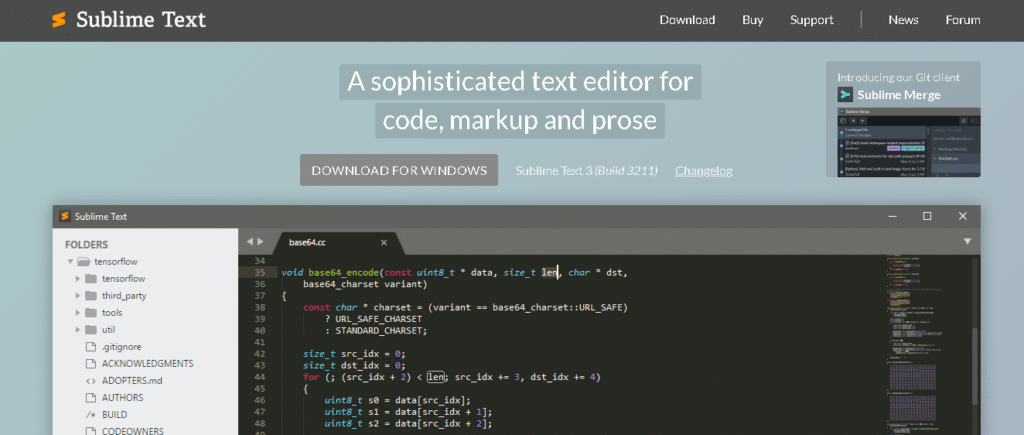
A favourite among developers, Sublime Text is a feature-packed text editor that handles code editing and levels up the user experience. Its modular approach makes it suitable for developers of all skill levels.
Key Features
- Distraction-free writing mode
- Split editing
- Fast shortcuts and powerful search
- Extensive keyboard shortcuts for file management, line operations, and navigation
- Code autocomplete and syntax highlighting
- Fully customizable via plugins
- Minimap to monitor file size
Pros
- Easy to use with many customization options
- Package control system
- Simple and efficient text manipulation
- Free to evaluate
- Excellent text highlighting for debugging
- Improved find-replace compared to most alternatives
- Handles multiple projects cleanly
- Accurate syntax recommendations
Cons
- Frequently prompts to purchase a license
- Cannot highlight a specific portion of text
2. Notepad++
Notepad++ is a free, open-source code editor available under the GPL. It features multi-document management, syntax highlighting, code folding, auto-completion, and a customizable GUI. Written in C++, the installer is only around 2.7MB. It loads fast, uses minimal memory, and has an active multilingual community behind it.
Key Features
- Supports 60+ programming, scripting, and markup languages with code folding and syntax highlighting
- Search and replace across multiple documents; line operations including join, split, sort, and move
- Fully customizable user interface
- Document map and multiple cursors
- Large plugin library
- Macro recording
Pros
- Simple file read and write access
- Supports many languages out of the box
- Reads multiple file formats
- Auto-fill syntax when a language is selected
- Mobile compatible
- Large plugin ecosystem
Cons
- Code errors are not easy to locate
- Limited built-in debugging support
3. Coffee Cup
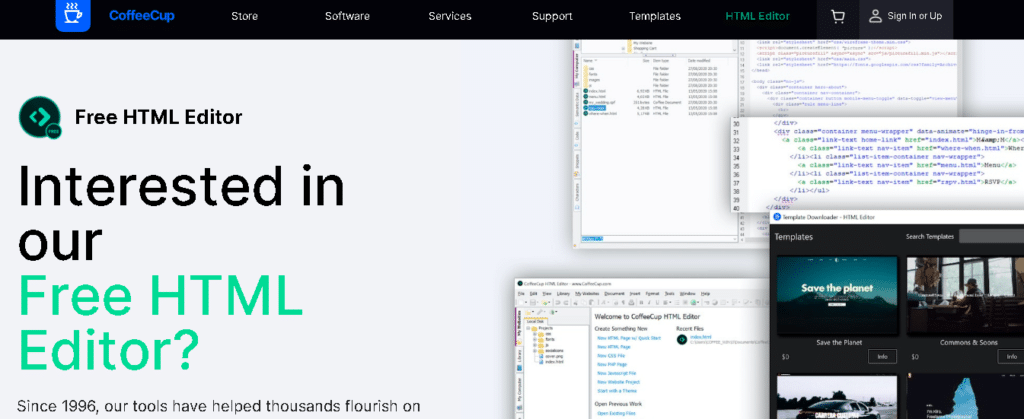
Coffee Cup Free HTML Editor is a traditional HTML editor for developers who prefer direct code editing over drag-and-drop visual builders. It supports WYSIWYG and standard HTML/text editing modes, with syntax highlighting for XHTML, CSS, PHP, Perl, and more. An integrated code cleaner gives you control over how your code is tidied up.
Key Features
- Fast startup
- Component library
- Visual code selector and live preview
- Customizable responsive themes
- Publish anywhere
Pros
- Useful code completion
- Good template selection
- Site management and FTP publishing
- Helpful split-screen HTML preview
- Wizards for inserting tables, images, links, and audio
Cons
- Requires manual coding throughout
- Not ideal for beginners
4. Visual Studio Code
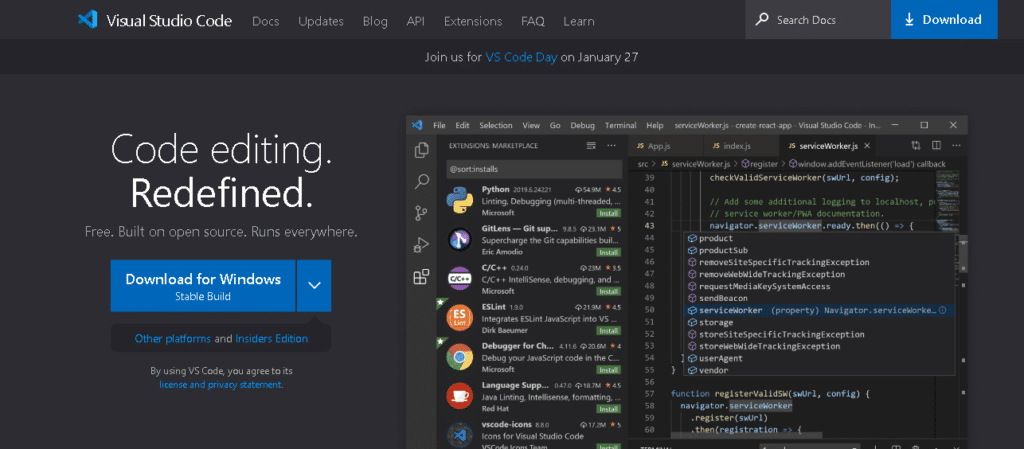
Visual Studio Code (VS Code) is a free, cross-platform, open-source code editor built by Microsoft. It runs on Linux, Windows, and Mac and includes a full suite of debugging and editing tools. The Live Share feature enables pair programming without shared environment setup. VS Code also includes strong Git integration, IntelliSense, syntax highlighting for popular languages, and a large extension marketplace.
Features
- Auto-completion for types, imported modules, and function definitions
- Extensible and customizable via extensions
- Debugging with call stacks, breakpoints, and interactive console
- Git version control integration
- Easy to deploy
Pros
- Lightweight memory usage
- Rich set of code-editing features in one tool
- Intelligent code completion saves time
- TypeScript integration
- Embedded Git control
- JavaScript IntelliSense support
- Integrated terminal
Cons
- Can run slowly on some Linux systems
- Higher battery consumption compared to lighter editors
5. Brackets
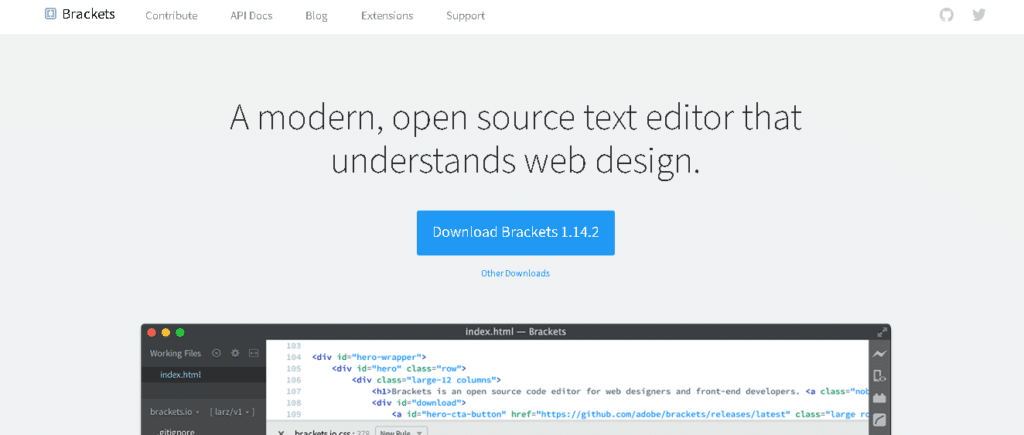
Brackets is an HTML text editor originally created by Adobe and now maintained by the open-source community. It is fully optimized for CSS, HTML, and JavaScript and available for Windows, Mac, and Linux. Its live preview tool is a standout feature, letting you edit code and see changes in real time. It also integrates with Photoshop for importing colors, fonts, and measurements.
Key Features
- Syntax highlighting and color-coded styling
- Tag auto-completion with dropdown options
- Matching tag highlighting to find opening and closing pairs in long files
- Automatic closing quotes to prevent common errors
- Easy relative links and project folder navigation
- CSS code forecasting as you type
Pros
- Good extension library
- Free and open source
- Inline browser that updates live
- Built-in extension manager
- Multi-line editing
- Supports Adobe PSD content
Cons
- Missing some basic text editor commands
- Primarily supports web languages by default
6. Nova (formerly Coda 2)
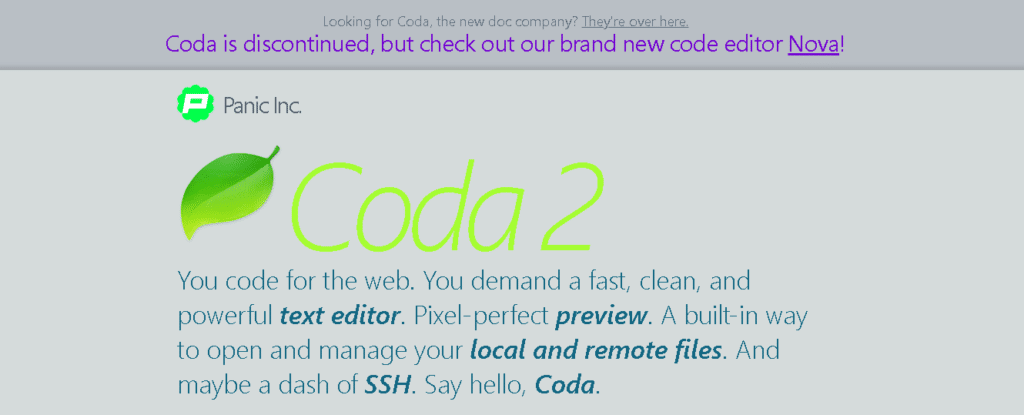
Coda 2, now succeeded by Nova from Panic, is a web editor, SSH client, and file manager in one. It provides a clean, color-coded text editor with a built-in preview so you can switch between source code and how it looks to visitors. It supports editing files on FTP, SFTP, WebDAV, local drives, and Amazon S3. Available for Mac only.
Main Features
- Code folding
- Syntax highlighting
- Project-wide autocomplete
- Indentation guides
- Quick find and replace
- Automatic tag closing
- Solid file management
Pros
- Clippings support
- CSS helpers
- Fast startup
- Built-in terminal
- Functions as a full IDE
Cons
- Mac only; paid license required for commercial use
- No XDebug support
7. Vim
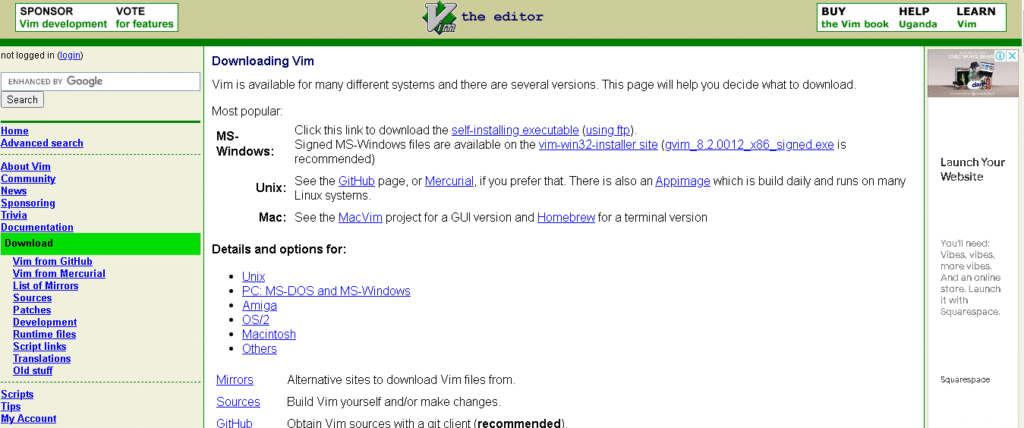
Vim is a powerful open-source terminal editor that comes pre-installed on most UNIX systems. It is fully keyboard-based and has a steep learning curve, but once mastered it delivers extreme productivity gains. Tasks that take time in other editors can be done in a few keystrokes. Extended with scripts and plugins, Vim becomes a highly capable coding tool that uses a fraction of the memory of graphical editors.
Key Features
- Keyboard-driven interface
- Active community for updates, documentation, and help
- Can function as a lightweight IDE depending on skill level
- Large plugin system
- Supports virtually every programming language
- Syntax highlighting
Pros
- Supports multiple programming languages
- Macro recording
- Powerful search and replace
Cons
- Steep learning curve
- Limited IDE features compared to full IDEs
8. BBedit

BBedit is a professional text editor for macOS that handles both light and heavy coding projects. It is known for speed and convenience. Features include text completion for clippings and symbols, Universal Tags support, code folding, and access to Subversion and Git for working with files under version control.
Features
- Column editing
- Auto-complete
- Debugging tools
- Customizable themes
- Multi-monitor editing
- Formatting and table editing
Pros
- Built-in syntax highlighting
- Folder-level diff tool
- Markup preview
- Open remote folders via FTP/SFTP
- Sorting and grep-based search and replace
- Open files from the command line
Cons
- No real-time code error checking or debugging
- Remote file tracking can be difficult
Summary
Choosing the right text editor comes down to your workflow and skill level. For beginners, Notepad++ is a great starting point: simple to use but powerful and flexible. For web developers, VS Code and Sublime Text are industry standards. For terminal users, Vim rewards the investment in learning. Whatever you pick, you will find that a good text editor makes coding faster and more enjoyable.
Related reading