
6 min read
5 Social Learning Strategies to Engage Online Learners

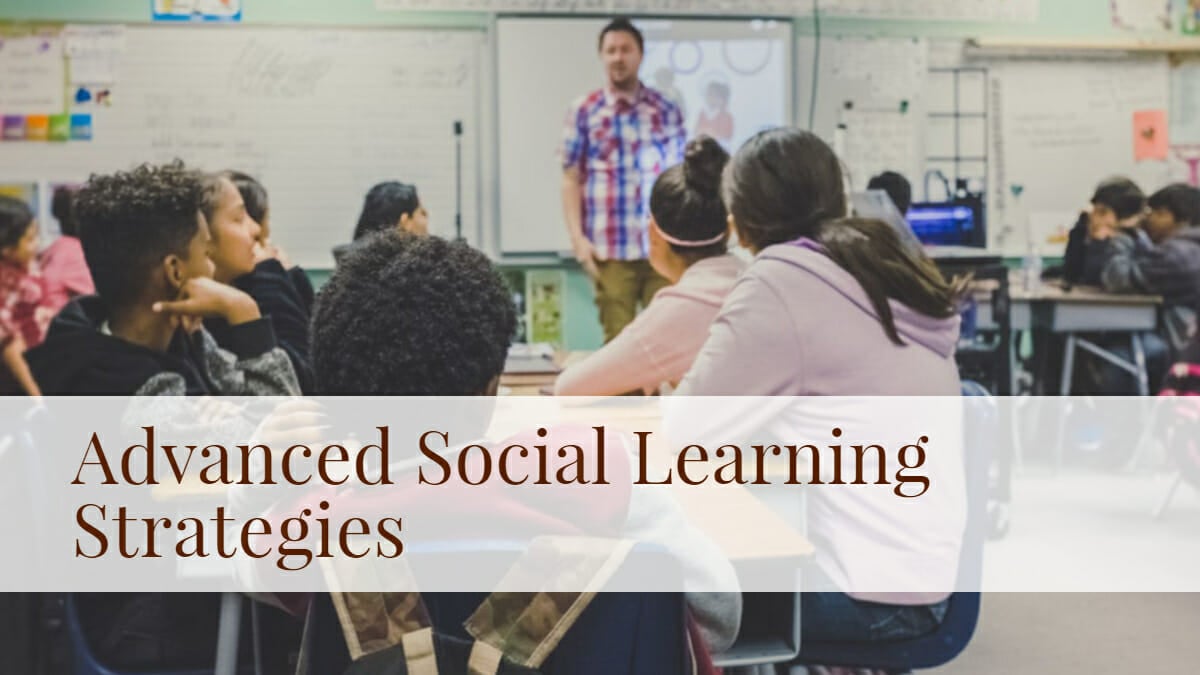
Social learning keeps students motivated by turning a solo course into a shared experience. If you are an online educator, these five social learning strategies will help you engage your students with your course content.
Last updated: 7 November 2026
Curiosity is what keeps students moving through a course. Until students want to know more, you can’t make them engage with your course content. And curiosity grows fastest among other people. When learners are in a group they interact more, they discuss topics, and they start to understand a concept rather than just reading and cramming to pass the exam.
Even an introverted learner benefits from being in a group with mentors and batchmates.
Online education can leave learners feeling isolated, so being part of a social learning environment matters. There are many ways to engage your students with online course material, and the strategies below help learners build real connections with their peer group.
Quick answer: what are the best social learning strategies for online courses?
The most effective social learning strategies for online courses are active discussion forums, small interest-based groups, friendly competition, learner presentations and live Q&A sessions. They work because, as Albert Bandura’s social learning theory describes, people learn by observing and interacting with others, which keeps online learners motivated and connected to the course.
Why social learning works
Social learning is not a new idea. Psychologist Albert Bandura set it out in his 1977 book Social Learning Theory, and his 1961 Bobo doll study showed that children copy behaviour they see modelled by adults. According to Simply Psychology’s summary of Bandura’s theory, four processes decide whether an observed behaviour is imitated: attention, retention, reproduction and motivation.
Translated to an online course, that means learners need to notice good examples, remember them, have the chance to try them, and see a reason to keep going. Each strategy below supports at least one of those four steps.
There is also research on peer interaction in online learning. A University of Michigan study presented at the ACM Learning at Scale conference in 2015 found that signing up for a MOOC with friends or colleagues correlated positively with course completion, level of achievement and discussion forum usage. The authors describe a correlation from a survey of one professional development course, not proof of cause, but it matches what most instructors see in practice.
The widely used Community of Inquiry framework, developed by Randy Garrison, Terry Anderson and Walter Archer, makes a similar point. It treats an online course as the overlap of three things: cognitive presence, social presence and teaching presence. Social presence is the part this article is about.
Top Social Learning Strategies You Should Try
Here are five social learning strategies you can apply to engage learners with your online course material and help them understand it properly.
1. Encourage Student Involvement In Your LMS Forum

The more involved learners are, the more they engage. The more they engage, the more they learn.
A forum attached to each course or lesson gives that involvement a home. Seed it with one open question per lesson, reply to the first few posts yourself, and ask learners to answer each other before you step in. That models the behaviour you want, which is exactly the attention and reproduction steps in Bandura’s theory.
If you have not connected a forum to your eLearning site yet, it is worth doing. For LearnDash users, the wpForo LearnDash plugin offers a simple and intuitive way to create discussion forums on a LearnDash powered eLearning website. Get LearnDash wpForo here.
2. Create Groups Depending On The Niches

A stronger social connection forms between learners who share interests. Creating smaller learning groups based on learners’ niches is one of the most practical social learning strategies.
Here is why.

Say you have formed one common group for everyone. Learners can discuss their issues and share views, but as more members join it becomes hard to manage the group and answer questions as they come in.
To stay ahead of that, create niche forums or groups, for example by course, skill level or cohort start date, and encourage each learner to take an active part in the group they belong to. Small groups also make it easier for quieter learners to speak up.
3. Create Healthy Competition Among Your Learners

With LMS forums, you can create discussion groups within your eLearning website, and healthy competition gives those groups a reason to stay active.
Gamification in education is a practical way to do this. Ask learners to build a small project from what they are learning, or to finish an assignment before a deadline, and recognise the winner in front of the group. Public recognition is the motivation step in Bandura’s model: learners see a peer rewarded and want to repeat the behaviour.
Keep the stakes low and the criteria clear, so competition motivates learners instead of discouraging those who are behind.
4. Encourage Learners To Give Presentations

Remember your college days, when you had to present a topic in front of your classmates. Standing up and explaining something is one of the fastest ways to find out whether you understand it.
You can follow the same approach in your LMS forum. Distribute topics among the group, then schedule a date and time for each presentation. A presentation can be a short video, a slide deck or a live session. Reward the learner you think performed well, and let the group give feedback.
5. Offer Q & A Sessions

Q & A sessions are one of the most common and powerful social learning strategies.
Asking questions of experts clears doubts and encourages proper communication between students and mentors. It also gives instructors a clear view of how well learners are grasping the concepts.
Run them on a fixed schedule, for example a weekly live hour, and keep a pinned thread where learners can post questions in advance. Answers that are written down also help future students.
It’s Your Turn To Incorporate Social Learning Techniques
Don’t worry if the first attempt falls flat. Keep trying these social learning strategies and you can build a stronger community of committed learners.
And don’t forget to respond to posts in your forum regularly. Learners notice when nobody answers.
Frequently asked questions
What is social learning in online courses?
Social learning means students learn through interaction with instructors and peers, not alone. In an online course that usually happens through forums, groups, live sessions and peer feedback. The idea goes back to Albert Bandura’s 1977 book Social Learning Theory.
Who developed social learning theory?
Psychologist Albert Bandura developed it. His theory says people learn by observing and imitating others, and that attention, retention, reproduction and motivation decide whether an observed behaviour is copied.
Does peer interaction improve course completion?
Research points that way, but it shows correlation. A 2015 University of Michigan study of a professional development MOOC found that learners who enrolled with friends or colleagues showed higher completion, achievement and forum usage. It does not prove that interaction causes completion.
How do I start social learning on my eLearning site?
Start with one course forum and one open question per lesson, and answer the first posts yourself. Once learners are posting, split them into smaller groups and add a weekly Q&A.
Do introverted learners benefit from social learning?
Yes. Small groups and written forum threads give quieter learners time to think before they reply, which makes it easier to take part than a live class discussion.
Related reading