

Your customers visit your online store with specific needs, but finding the perfect product among hundreds of options can feel overwhelming. They browse, hesitate, and often leave without making a purchase. This common scenario represents a missed opportunity that many e-commerce businesses face daily.
Interactive quizzes have become a powerful solution to bridge the gap between customer uncertainty and confident purchasing decisions. When implemented correctly, a Shopify quiz transforms the shopping experience from passive browsing into an engaging, personalised conversation that guides customers to their ideal products.

Why Interactive Quizzes Work So Well for E-commerce
Modern consumers expect personalised experiences that speak directly to their unique needs and preferences. Traditional product catalogues and search functions, while functional, lack the personal touch that builds trust and confidence in purchasing decisions.
Interactive quizzes work because they mirror natural human conversation. Instead of asking customers to filter through countless options, quizzes ask the right questions in the proper order, gradually narrowing down choices based on individual responses. This approach feels natural and helpful rather than pushy or overwhelming.
The Psychology Behind Customer Engagement
The psychological appeal goes deeper than simple convenience. When customers actively participate in finding solutions, they feel more invested in the outcome. This engagement creates a sense of ownership and satisfaction that passive browsing cannot match.
Traditional search and category browsing often fail when customers don’t know precisely what they’re looking for or how to describe their needs. Quizzes solve this problem by asking relevant questions that uncover underlying requirements and preferences. For example, instead of expecting customers to understand technical specifications, a quiz might ask about their lifestyle, usage patterns, or aesthetic preferences. This approach makes product discovery accessible to all customers, regardless of their product knowledge.
When faced with too many choices, customers often experience decision paralysis. This psychological phenomenon leads to abandoned carts and lost sales. Quizzes combat decision fatigue by presenting curated options based on individual responses. The guided nature of quizzes helps customers feel confident about their choices. By the time they reach product recommendations, they understand why specific items match their needs, making the purchasing decision feel logical and well-informed.
Key Benefits for Your Business
Personalised recommendations typically result in higher customer satisfaction because products better match actual needs and preferences. When customers receive relevant suggestions through quiz interactions, they’re more likely to be happy with their purchases and become repeat buyers. Additionally, every quiz interaction provides insights into customer preferences, pain points, and shopping behaviours. This data becomes invaluable for improving product offerings, marketing messages, and overall customer experience strategies.
What to Look for in a Shopify Quiz Builder
When evaluating quiz-building solutions for your Shopify store, certain features can make the difference between a successful engagement tool and a missed opportunity.
The best Shopify quiz app solutions offer drag-and-drop builders that don’t require coding knowledge. Look for platforms that allow you to create professional-looking quizzes quickly, with options to customise colours, fonts, and layouts to match your brand identity.
Essential Platform Features- Shopify Quiz Builder
Sophisticated quiz logic ensures that each customer’s path through your quiz feels relevant and personalised. Features like conditional branching, skip logic, and weighted scoring allow you to create complex recommendation engines that accurately match customers with appropriate products.
Your quiz platform should integrate smoothly with your existing Shopify setup. Essential integration features include:
- Automatic product syncing with real-time inventory updates
- Direct cart addition functionality from quiz results
- Seamless checkout process without page redirects
- Customer data synchronisation with your CRM system
- Email marketing platform connections for follow-up campaigns
With mobile commerce continuing to grow, your quizzes must perform flawlessly on smartphones and tablets. Look for responsive design capabilities and touch-friendly interfaces that provide excellent user experiences across all devices.
Comprehensive analytics help you understand quiz performance, customer behaviour patterns, and areas for improvement. Key metrics include completion rates, conversion rates, and the most common customer pathways through your quizzes.
A product recommendation quiz for e-commerce serves as a digital personal shopper, guiding customers to products that match their specific needs and preferences. These quizzes work particularly well for stores with extensive inventories or complex product categories.
Types of Quizzes That Drive Results
Effective product recommendation quizzes typically include questions about:
- Intended use or application
- Budget considerations
- Style or aesthetic preferences
- Technical requirements or specifications
- Size, colour, or other variant preferences
Some quizzes connect products with customer personalities, lifestyle choices, or values. Fashion retailers often use this approach to recommend clothing styles, while home decor stores might suggest items based on design preferences or living situations.
Example in action: Quiz Skin Analysis
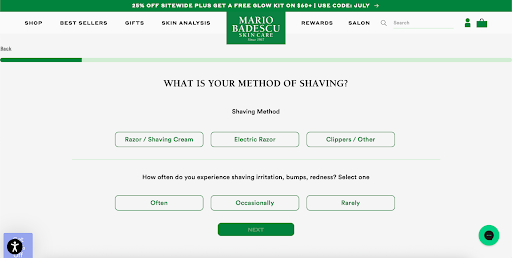
Product recommendation quizzes are highly effective tools that help e-commerce businesses cater to the unique needs of their customers. By asking specific questions about intended use, budget, style preferences, and other factors, these quizzes narrow down choices to ensure customers find exactly what they’re looking for. In categories like skincare or health and wellness, quizzes can address specific customer challenges, such as selecting the right products for a particular skin type or concern. This tailored approach not only streamlines the shopping experience but also builds trust, guiding customers to products that are relevant to their needs and preferences. Educational quizzes further enhance this experience by helping customers understand their options, ultimately fostering informed purchasing decisions.
Other quizzes identify specific customer problems or challenges and then recommend products that provide solutions. This approach works well for categories like skincare, health and wellness, or technical products, where customers may not immediately know which products address their concerns.
Educational quizzes combine learning with product recommendations, building trust while guiding customers toward purchases. These quizzes teach customers about product categories, help them understand their options, and conclude with personalised recommendations based on their learning and preferences.
Best Practices for Maximum Quiz Effectiveness
Creating successful quizzes requires attention to several key design principles that ensure customer engagement and conversion success.
Avoid jargon or overly technical language that might confuse customers. Each question should be easy to understand and answer quickly. Use simple language that speaks to your target audience’s knowledge level and communication style. While thorough questioning can improve recommendation accuracy, lengthy quizzes risk losing customer attention. Most successful e-commerce quizzes contain between 5-10 questions, balancing thoroughness with engagement.
Also Read: WooCommerce Vs Shopify: Which One Is Better For Ecommerce
Design and Implementation Strategies
Visual elements make quizzes more appealing and easier to navigate. Consider using product images, lifestyle photos, or simple graphics that support your questions and maintain visual interest throughout the quiz experience. The recommendation page represents your quiz’s conversion opportunity. Create compelling product presentations that explain why specific items match the customer’s responses, include clear pricing information, and provide obvious paths to purchase.
Regular testing helps identify areas for improvement in question clarity, quiz flow, and conversion performance. A/B testing different versions can reveal which approaches resonate best with your specific customer base.
Monitor completion rates to understand how engaging your quiz content is. Low completion rates might indicate confusing questions, technical issues, or overly long quiz experiences. Conversion rates show how effectively your quizzes drive sales. Track both immediate conversions and longer-term purchase patterns to understand the full impact of quiz interactions.
Also Read: How a Shopify Quiz Builder Can Elevate Your Customer Engagement Strategy
Measuring Success and ROI- Shopify Quiz Builder
Customer feedback provides qualitative insights that complement quantitative data. Consider adding optional feedback collection to understand customer perceptions and identify improvement opportunities. Connect quiz interactions to sales data to calculate direct revenue impact. This information helps justify quiz implementation costs and guides budget allocation for quiz optimisation efforts.
Monitor whether quiz users demonstrate higher lifetime value compared to non-quiz customers. Often, the personalised experience creates stronger customer relationships that extend beyond initial purchases.
Some businesses encounter difficulties connecting quiz platforms with existing Shopify configurations. Address this by choosing quiz providers with strong Shopify partnerships and dedicated support resources. Developing practical quiz questions and recommendation logic requires understanding both your products and customer psychology. Consider starting with simple quizzes and gradually adding complexity as you learn what works best for your audience.
Common Challenges and Solutions
As inventory changes, quiz recommendations must stay current. Choose platforms that automatically sync with your Shopify product catalogue and provide easy updating mechanisms.
Also Read: Email Deployment: Expert Strategies and Best Practices for Seamless Campaigns
Maximising Your Quiz Investment- Shopify Quiz Builder
Interactive quizzes continue evolving with new technologies and customer expectations. Artificial intelligence increasingly powers more sophisticated recommendation engines while integration capabilities expand to include email marketing, social media, and customer service platforms.
Consider how quiz data might enhance other aspects of your customer engagement strategy. Quiz insights can transform multiple business areas:
- Email marketing campaigns with personalised product recommendations
- Social media content creation based on popular quiz responses
- Product development decisions are informed by customer preference patterns
- Targeted advertising campaigns using quiz completion data
- Customer service improvements through a better understanding of common pain points
The insights gained from quiz interactions provide valuable intelligence that extends far beyond immediate sales conversions.
Quiz-based engagement represents a significant opportunity to differentiate your e-commerce business while providing genuine value to customers. By implementing thoughtful, well-designed quizzes, you create interactive experiences that guide customers to products they’ll love while building the foundation for long-term customer relationships.
The key lies in choosing the right tools, designing customer-focused experiences, and continuously optimising based on performance data and customer feedback. With proper implementation, quiz-based engagement can transform casual browsers into confident buyers and satisfied customers.
Interesting Read:
