

If you’ve been thinking about jumping into the auto niche with a car affiliate program website, you’re not alone. More people than ever are searching for car accessories, tech gadgets, DIY tools, maintenance products, EV chargers, and upgrades. And here’s the interesting thing:
People rarely buy these products without reading reviews online.
That gives you a huge opportunity.
Your website can be the place they trust before they buy.
But before you jump in, you probably have a bunch of questions like:
- Do you really need a website?
• How do affiliate links work?
• Why would visitors trust your recommendations?
• What makes WordPress the easiest way to build this?
• Why choose a theme like BuddyX?
• How do BuddyPress and WooCommerce plugins help you grow traffic?
• Can you turn this into a community people keep visiting?
This blog answers all of that in a fully conversational, simple, and practical way.
Let’s start from the beginning.

Why Do You Even Need a Website to Run a Car Affiliate Program?
A website is the core asset of your affiliate business.
Think of it like your digital showroom, your content hub, your trust builder, and your revenue machine all in one place.
Here’s why a website is not optional — it’s necessary.
A website gives you ownership and independence
If you rely only on TikTok, Instagram, or YouTube to promote affiliate links, you don’t own your audience. You’re renting space on someone else’s platform. One policy change and your entire affiliate business disappears.
A website is something you own.
No algorithm can take that away from you.
A website is where people search for detailed information
People looking for:
- “best car polisher machine”
• “cheap tyre inflators”
• “best dash cams for night vision”
• “car detailing accessories Amazon”
• “best GPS trackers for cars”
all end up reading blog posts.
Nobody buys a $150 detailing kit or a $95 dash cam without reading something online.
Your website becomes that “something.”
A website builds SEO power
Search engines rely on websites, not social media posts.
With consistent content, your website can rank for:
- comparison keywords
• product keywords
• review keywords
• problem-solving keywords
• “best of” keywords
• “top 10” keywords
• long-tail car accessory searches
And once your site ranks, you start getting passive traffic and passive sales.
A website builds long-term authority
Car buyers trust long-established websites.
If someone sees you publish helpful content every week, they slowly start trusting your recommendations.
More trust means:
- more clicks
• more conversions
• more commissions
That’s how affiliate sites grow from $0 to a full-time income.
The website makes it easier to monetise later
You may start with affiliate links.
But over time, you can add:
- display ads
• sponsorships
• car brand collaborations
• digital products (car checklists, maintenance guides)
• a community membership
• a paid course
• an affiliate directory
This is only possible with a real website.
A website builds your email list
Every email subscriber is a future buyer.
If a new product launches, you can promote it instantly.
No social media required.
So the simple answer is:
Yes, you absolutely need a website if you want to run a successful car affiliate program.
How Do Affiliate Links Actually Work on a Car Affiliate Website?

New affiliates often feel confused about how affiliate links turn into actual money.
Let’s break it down in the simplest way possible.
What exactly is an affiliate link?
It’s just a special URL.
This URL contains:
- your unique affiliate ID
• a tracking code
• the product page link
When someone clicks it, the system knows:
“This visitor came from YOUR website.”
So if they buy, you get paid.
How do affiliate links track sales?
All affiliate programs use cookies.
Cookies remember the user for a certain number of days — usually 24 hours to 60 days, depending on the program.
For example:
- Amazon gives you 24 hours
• Auto accessory stores often give 30 days
• Insurance programs sometimes give 45 to 60 days
• Tech brands often give 30 to 90 days
If the customer buys within that cookie window, you get the commission.
How do affiliate commissions work?
Let’s say:
- You promote a tyre inflator worth $70
• Commission is 10 percent
• Someone buys it
• You earn $7
Simple.
Now imagine:
- 10 sales a day → $70/day
• 300 sales a month → $2,100/month
• Add more categories → $3k to $10k/month
That’s how affiliate income grows.
How do users interact with affiliate links?
They search for something like:
“Best dash cam for under $100.”
They land on your review or listicle.
They read your recommendations.
They click the affiliate link and go to the merchant site.
They bought the dash cam.
You get paid.
How does the ‘Affiliate for WooCommerce’ plugin help?

This plugin lets you:
- Manage all your links inside WordPress
• track clicks and performance
• create affiliate dashboards
• organise links automatically
• generate reports
• shorten tracking URLs
• manage commissions easily
You don’t have to run affiliate links manually.
Everything becomes streamlined.
We will go deep into this plugin later.
How Do People Search for Products on a Car Affiliate Website?
Understanding search behavior is key.
If you know how people search, you can create content that matches their intent.
Let’s break it down.
People search by need
Example queries:
- “how to remove scratches from a car”
• “best car scratch removers”
• “how to clean car interior easily”
• “best car seat covers for dogs”
These searches have very high buying intent.
People are looking for a solution, not entertainment.
People search by brand
Example:
- “Meguiar’s vs Turtle Wax review”
• “best Michelin wipers”
• “Anker car charger review”
Your blog can target these keywords too.
People search by problems
Example:
- “my car AC smells bad”
• “battery draining fast car why”
• “tire pressure keeps dropping”
You can publish guides with recommended products linked inside.
People search by comparison
Example:
- “best vs worst dash cams”
• “top 10 car vacuum cleaners”
• “best under $50 car accessories”
Comparison content converts extremely well.
People search by upgrade interest
Example:
- “best LED headlights 2025”
• “car interior upgrade ideas”
• “must-have road trip accessories”
Affiliate heaven.
Your entire affiliate strategy becomes simple:
- Find what people search for.
- Write content that answers it.
- Add affiliate links.
- Rank on Google.
- Earn commissions every day.
Is Creating a Car Affiliate Website Really Easy With WordPress?
Yes — and that’s what makes WordPress the number one choice for almost every affiliate marketer.
Here’s why:
WordPress is beginner-friendly
You don’t need to know coding.
You don’t need design knowledge.
You don’t need technical skills.
Everything works with:
- simple settings
• drag-and-drop builders
• user-friendly dashboards
• plugin-based features
You can install plugins for everything
Need to add a shop layout?
Install WooCommerce.
Need a social community?
Install BuddyPress.
Need affiliate link management?
Install Affiliate for WooCommerce.
Need SEO support?
Install RankMath or Yoast.
Need speed?
Install a caching plugin.
WordPress is modular.
You add only what you need.
You own everything
WordPress is open-source.
That means:
- No monthly platform fees like Shopify.
• No restrictions like Wix.
• Full control over data, content, and design.
• Freedom to migrate anytime.
WordPress is easy to scale
You can start with 10 posts.
Then scale to:
- 500 posts
• 5,000 users
• 10,000+ monthly visitors
• full-blown community
• affiliate store
• discussion platform
• auto blog + email list
WordPress doesn’t limit you.
BuddyX theme makes it even easier
This is where your website becomes powerful.
BuddyX is designed for:
- modern affiliate websites
• community-driven platforms
• social engagement
• user profiles
• group discussions
• forums
• membership growth
• WooCommerce integration
• mobile-first design
All the things that help you build a loyal audience.
And trust equals sales.
Should You Use BuddyX for Your Car Affiliate Website?
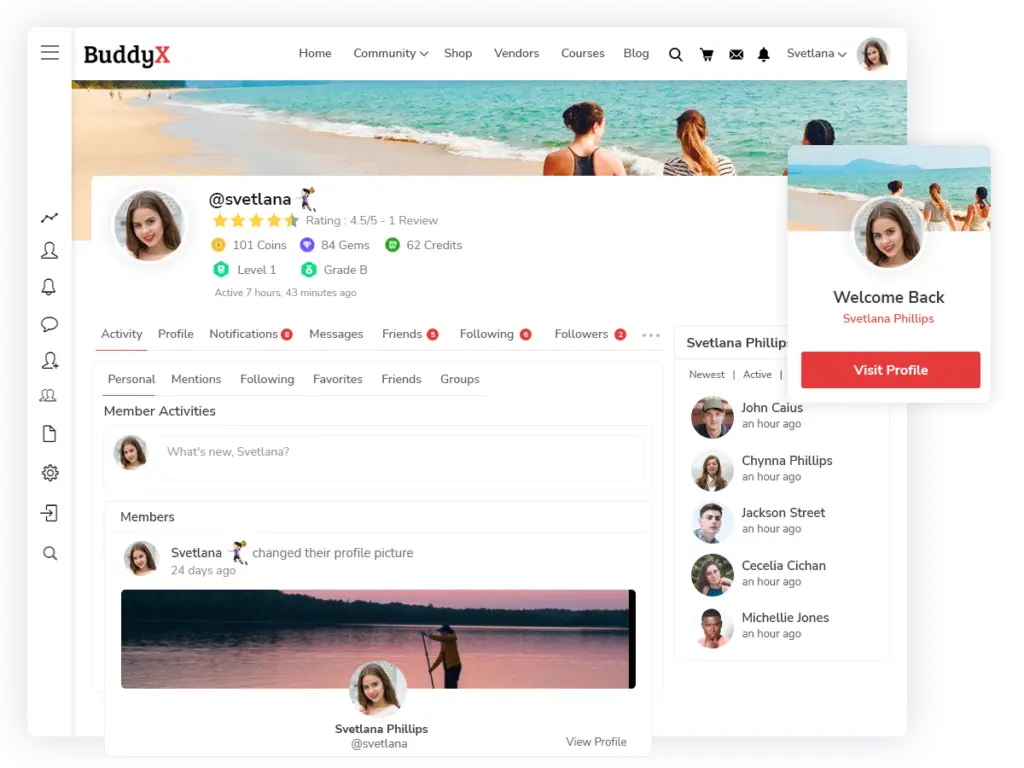
If your goal is to build:
- authority
• trust
• audience engagement
• repeat visitors
• discussions and community growth
Then yes — BuddyX is one of the smartest themes you can choose.
Let’s dig into why.
BuddyX gives your website a modern look
Car enthusiasts love visually appealing websites.
BuddyX offers:
- clean layout
• smooth navigation
• professional design
• mobile-friendly UI
• fast loading performance
People trust websites that look polished.
BuddyX integrates perfectly with BuddyPress
That means your affiliate website can have:
- user profiles
• activity feeds
• discussion groups
• car communities
• review groups
• topic-based forums
• member networking
This makes your site look like a mini social network for car lovers.
A community increases trust (and clicks)
Imagine hosting a discussion group like:
- “Car Detailing Tips & Product Reviews”
• “EV Charging and Home Setup Help”
• “Car Troubleshooting Q&A”
• “Road Trip Accessories Community”
When members discuss products, they end up clicking your affiliate links.
Engagement = traffic
Traffic = trust
Trust = sales
BuddyX is lightweight and built for speed
Google loves fast websites.
BuddyX helps you rank faster because:
- it’s optimized
• it’s fast out of the box
• it works well with caching plugins
• it’s built cleanly
Faster loading = better SEO.
WooCommerce integration is smooth
You can create:
- shop-style affiliate listings
• comparison pages
• product categories
• specs tables
• accessories collections
• featured car tools
All with WooCommerce.
BuddyX supports all of this.
Affiliate for WooCommerce plugin completes the system
Now you can:
- manage affiliate links
• track clicks
• track conversions
• shorten URLs
• organise products
• monitor performance
Everything happens inside WordPress.
No external tools needed.
Also Read: How To Create An Online Car Marketplace?
Why Should You Use BuddyPress to Build a Community on Your Car Affiliate Website?

If you want your car affiliate website to become more than just a blog, then adding BuddyPress gives you a massive advantage. BuddyPress turns your website into a social platform — almost like your own mini Facebook but focused entirely on car lovers.
Let’s break down why this helps your affiliate income.
How Does a Community Increase Trust and Sales?
People trust communities.
People trust discussions.
People trust other real people sharing experiences.
When someone joins your website, creates a profile, and participates in discussions, they slowly become part of your ecosystem. They come back more often, comment more, ask questions, and explore your posts.
Every time they return, they re-engage with:
- your content
• your recommendations
• your affiliate links
A single active user can trigger dozens of link clicks over time because they are always browsing.
A community multiplies everything:
More pageviews
More discussions
More trust
More clicks
More conversions
How Does BuddyPress Make Your Site Feel Like a Real Platform?
BuddyPress adds:
- Member profiles
• Activity feeds
• User-to-user messaging
• Photo uploads
• Comment threads
• Groups
• Friend connections
• Notifications
• Member directories
This transforms your affiliate website from a “read-only” blog into an interactive platform.
Imagine having:
Groups like…
• Car Detailing Central
• EV Owners Hub
• Budget Car Upgrades
• Road Trip Essentials Community
• Car Gadget Geeks
• Car Troubleshooting & DIY Fixes
Each group can generate thousands of views per month.
And your affiliate links fit naturally into discussions:
“Here’s the polisher I use → affiliate link”
“This dash cam works best at night → affiliate link”
“This tire inflator saved me last week → affiliate link”
These aren’t forced promotions — they are genuine recommendations inside discussions.
Why Does Engagement Make Your Website Rank Higher?
Google notices when:
- People stay longer
• browse more pages
• comment
• interact
• return again and again
BuddyPress improves:
- time on site
• user engagement
• lower bounce rate
• internal linking through discussions
All of these make Google view your website as valuable — and ranking improves.
So a community doesn’t just increase trust; it improves SEO and brings more traffic.
Also Read:
Why Should You Add WooCommerce to a Car Affiliate Website If You’re Not Selling Products?
This confuses many beginners.
They think WooCommerce is only for selling your own physical products.
But here’s the magic:
WooCommerce is also perfect for organizing affiliate products.
Let’s break this down.
How Does WooCommerce Turn Your Affiliate Site Into a Store?
With WooCommerce, you can create:
- product listings
• product galleries
• category pages
• shop filters
• search filters
• sorting options
• product comparison layouts
• ratings and reviews
• spec tables
• product tags
Even if every product redirects to Amazon or another merchant, WooCommerce gives your affiliate website a real store feel.
People browse more when they feel like they’re inside a shop.
- More browsing = more link clicks
- More clicks = more commissions
Also Read: 6 Ways to Monetize Your Audience
How Does WooCommerce Let You Organise Hundreds of Products Easily?
Think about all the categories you can create:
Car Accessories
• Dash cams
• Seat covers
• Trunk organizers
• Car vacuum cleaners
Car Care
• Polishing machines
• Scratch removers
• Car shampoos
• Interior cleaners
Car Tech
• GPS trackers
• Bluetooth adapters
• Car chargers
• HUD displays
Tools & Equipment
• Tire inflators
• Jump starters
• OBD2 scanners
• Garage tools
EV Accessories
• Home chargers
• Charging cables
• Cable organizers
• EV cleaning tools
WooCommerce lets you structure everything beautifully.
Visitors can browse like they’re in a real auto-accessories store.
How Do WooCommerce Product Pages Increase Conversions?
Each WooCommerce product page can have:
- product images
• specs
• benefits
• pros and cons
• comparison tables
• FAQ
• affiliate buttons
• video embeds
• related products
This is a higher-converting layout than a regular blog post.
Why Does This Matter for SEO?

WooCommerce automatically generates:
- structured data
• product schema
• category schema
• breadcrumb trails
• product sitemaps
These help Google understand your website’s structure better, improving rankings.
How Does the “Affiliate for WooCommerce” Plugin Complete the Setup?
This plugin is extremely powerful if you want to run a serious affiliate website. WooCommerce alone gives you shop structure, but Affiliate for WooCommerce lets you fully track affiliate activity inside your dashboard.
What Exactly Does This Plugin Do?
It allows you to:
- add affiliate links to WooCommerce products
• track click counts
• track conversions
• track commissions
• assign affiliate types
• manage multiple affiliate programs
• create custom affiliate URLs
• see detailed reports
• manage payouts
• shorten tracking links
• create affiliate dashboards (optional)
Basically, it becomes your behind-the-scenes command center.
How Does It Help When You Have Many Products?
If your car affiliate website has 100+ products, you need a way to:
- organize links
• track performance
• see what’s converting
• remove failing products
• scale top-performing categories
This plugin lets you do exactly that.
You get a real affiliate management system inside WordPress.
How Does It Help You Build More Advanced Features Later?
You can later add:
- multilevel affiliate programs
• product-level commissions
• custom link generator
• partners or reviewers
• user-submitted product reviews
• influencer partners
• publisher networks
This takes your site from “simple blog” to “full affiliate platform.”
How Do You Put Everything Together to Launch the Car Affiliate Website?
Let’s walk through a complete step-by-step roadmap you can follow.
This is the same roadmap used by professional niche site builders.
Step 1: Choose a domain and hosting
Pick a domain that matches the niche:
- CarGearHub.com
• SmartAutoTech.com
• CarCareGuide.com
• MyCarUpgrades.com
Use hosting like:
- Bluehost
• SiteGround
• Hostinger
• WPX
• Cloudways
You need something fast, reliable, and optimized for WordPress.
Step 2: Install WordPress
Most hosts offer a one-click WordPress setup.
After installation, log in to:
yourwebsite.com/wp-admin
Step 3: Install the BuddyX Theme
BuddyX is ideal because:
- modern
• fast
• mobile-friendly
• integrates with BuddyPress
• works perfectly with WooCommerce
• ideal for community-driven sites
Install and activate it.
Step 4: Install BuddyPress
This adds your community features:
- profiles
• activity feeds
• groups
• messaging
• notifications
Enable necessary components.
Step 5: Install WooCommerce
WooCommerce will build:
- your product structure
• shop layout
• categories
• product pages
• affiliate placements
Import demo content if needed.
Step 6: Install Affiliate for WooCommerce
This plugin will become your affiliate engine.
You can start adding:
- affiliate URLs
• product external links
• tracking IDs
• click tracking
• conversion tracking
Step 7: Plan your site structure (very important)
Create categories like:
Main Categories
• Car Accessories
• Car Care
• Car Tech
• Tools & Equipment
• EV Accessories
Community Sections
• Car Troubleshooting
• Car Detailing
• Car Upgrade Ideas
• Road Trip Gear
• EV Charging Tips
Clear site structure = higher SEO + better user experience.
Step 8: Publish your first core blog posts
These should target high-intent search queries.
Examples:
- “Best Dash Cams for Night Driving in 2025”
• “Best Car Scratch Remover Products Tested”
• “Top Budget Car Accessories Under $50”
• “Best Car Vacuum Cleaners for Deep Cleaning”
• “Best EV Home Chargers for 2025”
These attract buyers ready to click.
Step 9: Add WooCommerce product listings
Start with:
- top 20 best-selling products
• trending products
• must-have accessories
• evergreen car tools
Add affiliate links inside product pages.
Step 10: Start promoting your community
Use BuddyPress features:
- create groups
• organize topics
• invite users
• post discussions
• share guides
• publish video tips
Your goal is to build engagement.
More engagement → more return visits → more affiliate clicks.
What Type of Content Should You Create for a Successful Car Affiliate Program Website?
Your content strategy is the backbone of your affiliate business. Even if your website design is beautiful, plugins are installed correctly, and your community is active, without a strong content strategy, your website cannot rank, attract traffic, or generate clicks.
Let’s break down what types of content you must create on a car affiliate site.
What Are “Buyer Intent” Articles and Why Do They Matter?
Buyer intent content targets people ready to purchase.
These visitors are the most profitable because they are only one step away from clicking your affiliate link and buying the product.
Common formats include:
• “Best” Articles
Examples:
• Best dash cams for night driving
• Best tire inflators for SUVs
• Best OBD2 scanners for beginners
• Best car wax products for black cars
These posts rank extremely well and convert like crazy.
• “Top 10” Lists
Examples:
• Top 10 budget car accessories under $50
• Top 10 must-have road trip accessories
• Top 10 EV charging accessories
These posts help you include multiple affiliate products in one article — giving you more potential clicks.
• “Review” Articles
Examples:
• Anker Roav Dash Cam Review
• Chemical Guys Portable Vacuum Review
• Meguiar’s Scratch Remover Review
These attract visitors who already KNOW what they want — they just need confirmation.
Review traffic converts at some of the highest rates.
• “Best vs Best” Comparisons
Examples:
• Turtle Wax vs Meguiar’s
• Anker Dash Cam vs Garmin Dash Cam
• Michelin Wipers vs Bosch Wipers
When someone searches for comparisons, they’re already deep in the buying phase.
This is premium traffic.
• “Buying Guides”
Examples:
• How to choose a dash cam in 2025
• What to look for in a car vacuum cleaner
• A beginner’s guide to car polishing tools
Buying guides build trust and pre-sell affiliate products naturally.
Should You Also Create Informational Content?
Absolutely — informational content supports SEO, builds trust, and keeps your site active.
Examples:
- How to remove scratches from your car
• How to clean car seats properly
• Why is my AC smelling bad?
• How to check tire pressure at home
• How to detail your car like a pro
• How to improve fuel efficiency
These posts attract massive traffic, especially from beginners.
Your affiliate product recommendations fit naturally into these posts.
For example:
“How to detail your car at home”
→ you recommend car shampoo, microfiber towels, interior cleaner, polishing pads, and more.
Should You Add DIY Tutorials?
Yes. Car DIY tutorials generate huge trust because people love hands-on guidance.
Examples:
- How to install a dash cam
• How to replace wipers yourself
• How to install LED headlights
• How to change your cabin air filter
• How to clean car battery terminals
DIY posts keep users coming back.
And every step can include affiliate links:
- tools
• cleaning products
• parts
• accessories
• cables
• tapes
• pads
• gloves
This is one of the easiest ways to increase link clicks.
Should You Create “Beginner” and “Expert” Level Content?
Definitely — this widens your audience.
Beginner topics
- How to choose your first car vacuum
• What is an OBD2 scanner and how does it work?
• How to safely wash your car at home
Advanced topics
- Best products for ceramic coating prep
• How to set up a home EV charging station
• Advanced polishing machine techniques
A mixed content strategy helps your site attract all types of users.
How Should You Structure Your Content for Maximum SEO and Conversions?

Content structure matters more than most people realise.
If your content is messy or difficult to scan, users leave.
Google hates that.
Here’s how to structure articles properly.
Start with a Strong Introduction That Addresses the User’s Problem
Your intro should:
- acknowledge their problem
• show you understand their intent
• promise a clear solution
• highlight your expertise or experience
For example:
“If you’re looking for the best dash cam for night driving, you’re probably worried about glare, low-light visibility, and video quality. I’ve tested multiple models over the past year, and in this guide, I’ll help you choose the right one.”
This builds trust immediately.
Use Short Paragraphs and Subheadings- Car Affiliate Program
People skim articles.
Make it easy with:
- H2 and H3 questions
• short paragraphs
• bullet points
• bolded keywords
• comparison sections
• pros and cons lists
Skimmable content = higher conversions.
Use Table of Contents (TOC)
This helps users jump to the section they want.
It also helps Google understand the article structure.
Use Product Blocks for Affiliate Products
Every affiliate product should have:
- product image
• short description
• pros and cons
• features
• price range
• affiliate button
• alternatives
This format converts extremely well.
Add Comparison Tables
Comparison tables rank well and convert even better.
Example columns:
- Product name
• Rating
• Pros
• Features
• Price range
• “Check on Amazon” button
People love quick comparisons.
Add FAQ Section- Car Affiliate Program
FAQ helps:
- answer user doubts
• reduce bounce rate
• support SEO
• increase long-tail keywords
Example FAQ for “dash cams”:
- Do dash cams record at night?
• How long do dash cam batteries last?
• Where should a dash cam be mounted?
• What SD card size do you need?
Search engines pick up these questions easily.
End With a Strong Conclusion That Encourages Action
Your conclusion should:
- summarize
• reinforce the top 1–2 products
• encourage clicking the affiliate link
Example:
“For most drivers, the Anker Roav Dash Cam offers the best mix of night performance and reliability. But if you want true 4K recording, the Vantrue N4 is unbeatable. Check the latest prices below and pick the model that fits your driving needs.”
This closes the sale naturally.
How Should You Plan Your Content Calendar for Maximum Growth?
Content planning is the key to consistent growth.
Here’s a suggested plan.
Month 1: Build the Foundation (10–15 Posts)
Focus on:
- core categories
• top “best” articles
• high-intent content
• basic informational guides
Example list:
- Best dash cams for night driving
- Best car vacuum cleaners
- Best tire inflators
- Best interior cleaners
- Best OBD2 scanners
- How to remove scratches from a car
- How to clean the car interior
- How to install a dash cam
- How to wash your car safely
- Best road trip accessories
This creates your foundation.
Month 2: Add Depth (10–20 Posts)
Now create:
- comparison posts
• buying guides
• intermediate tutorials
• accessory roundups
Examples:
- Dash cam vs action camera
• Best LED headlights
• Top 10 car gadgets
• Beginner’s guide to car detailing
• EV charging basics
This builds site authority.
Month 3+: Scale and Expand (20–50+ Posts)
Add:
- deeper content
• advanced tutorials
• expert guides
• troubleshooting posts
• seasonal product lists
• community-driven content
• product reviews
Examples:
- Best snow foams for winter washing
• Best tire chains
• How to ceramic coat your car at home
• Best gifts for car enthusiasts
• Best EV accessories
This turns your site into a complete resource.
What Keywords Should You Target First?

The auto niche has millions of keywords, but you shouldn’t target them all at once.
Start with low-competition, high-intent keywords.
Beginner-Friendly Keyword Targets
- best car vacuum under 50
• best dash cam budget
• best car cleaning kit for beginners
• how to remove swirl marks at home
• best jump starter 2025
These keywords are easier to rank.
Medium Competition Keywords
- best tire inflator for SUVs
• best OBD2 scanner for home use
• best car detailing kit
• best LED headlights for cars
• best wipers for winter
These bring strong buyer traffic.
High Competition Keywords (Target Later)
- best dash cam
• best car accessories
• best car shampoo
• best polish machine
These take time but pay well once you gain authority.
How Can You Use the BuddyX + BuddyPress Combo to Drive Traffic?
Your community can generate real traffic — even without SEO.
Let’s see how.
Create Community Groups for Each Car Category- Car Affiliate Program
Example groups:
- Car Detailing Tips & Tricks
• EV Owners Support Group
• Car Troubleshooting & DIY Fixes
• Car Gadgets & Accessories
• Road Trip Gear Fans
Each group generates discussions, which create:
- fresh content
• internal linking
• returning visitors
• social shares
• long-tail keyword opportunities
Encourage Users to Share Product Recommendations
User-generated content is gold.
People love sharing their favourite:
- dash cams
• waxes
• tire inflators
• vacuums
• chargers
• gadgets
Each discussion increases trust in your affiliate recommendations.
Host Q&A Threads
Examples:
- “What’s the best dash cam under $100?”
• “Which scratch remover actually works?”
• “Best EV charging cable?”
You can jump in with affiliate links — naturally and helpfully.
Run Community Challenges
Ideas:
- car detailing challenge
• interior cleaning makeover
• best car gadget setup
• EV charging optimization challenge
User engagement skyrockets.
How Do You Use Advanced SEO to Rank a Car Affiliate Website Faster?
Once your site structure, content, and plugins are set up, the next step is to rank on Google.
Ranking requires SEO — but don’t worry, it’s not as complicated as people make it sound.
Let’s break this into simple, practical steps you can follow.
How Should You Do On-Page SEO for a Car Affiliate Blog?
On-page SEO refers to the optimizations you do inside your website and content.
Here’s what you should focus on.
Should You Focus on Keyword Placement?
Yes — but without stuffing.
Your primary keyword should appear in:
- the title
• first paragraph
• an H2
• image alt text
• URL
• conclusion
For example:
Keyword: best dash cam for night driving
Use it naturally:
Title: Best Dash Cam for Night Driving in 2025
URL: /best-dash-cam-for-night-driving/
First line: If you’re searching for the best dash cam for night driving…
This signals your topic clearly to Google.
Should You Insert Secondary Keywords?
Absolutely.
Secondary keywords help you rank for multiple variations.
Example secondary keywords:
- dash cam night vision
• dash cam low-light performance
• best night dash cam review
• night driving dashcam guide
Add them:
- inside subheadings
• in product descriptions
• within FAQ
• naturally throughout the article
Should You Use Schema Markup?
Schema helps Google understand your content better.
Important schema types for your car affiliate site:
- Product schema
• Review schema
• FAQ schema
• How-To schema
• Article schema
• Breadcrumb schema
• ItemList schema for “Top 10” posts
WordPress plugins like RankMath make schema very easy to apply.
Schema boosts click-through rates and helps you rank for more keywords.
Should You Optimise for Featured Snippets?
Yes — snippets can put you at the very top of search results.
To win snippets:
- answer questions in 30–50 words
• use question-style H2/H3 headings
• use clean paragraphs
• use bulleted lists
• use tables
Example snippet-friendly answer:
Q: What is the best dash cam for night driving?
“The best dash cam for night driving in 2025 is the Vantrue N4 due to its superior low-light sensor, 3-channel recording, and high dynamic range. It captures clear footage even in near-dark conditions and performs reliably under glare.”
This helps Google pick your answer for the snippet.
How Do You Use Off-Page SEO to Boost Website Authority?

Off-page SEO means building backlinks — links pointing to your website from other sites.
- Backlinks = authority
- Authority = higher rankings
Here are methods that work best for auto niche sites.
Should You Do Guest Posts?
Yes. Target websites like:
- auto blogs
• car detailing sites
• EV blogs
• driving tips sites
• DIY automotive sites
Guest posts help you:
- get backlinks
• get referral traffic
• build relationships
• grow authority
Example pitch:
“I’d love to write a detailed guide on car interior detailing for your readers — packed with tips, product insights, and real examples.”
Always keep pitches simple.
Should You Submit to Auto Directories?
There are many:
- automotive resource directories
• car blog directories
• automotive forums
• car enthusiast websites
Directory submissions give starter backlinks.
Should You Join Auto Forums?
Yes — but don’t spam.
Participate in discussions on:
- Reddit (r/cars, r/Cartalk, r/AutoDetailing)
• Automotive forums
• EV communities
• detailing communities
• SUV and truck forums
Use your site as a reference when truly helpful.
Should You Build Topical Authority?
This is the most important SEO strategy today.
Topical authority means focusing your content on specific themes until Google recognises you as an expert.
For example:
If you publish:
- best dash cams
• how to install dash cams
• dash cam comparisons
• dash cam troubleshooting
• dash cam maintenance tips
• dash cam product reviews
Google will view your website as a dash cam authority, boosting your rankings.
Then repeat the same for:
- car detailing
• car interior cleaning
• EV charging
• car tools
• tire care
• car tech
The more deeply you cover a topic, the more Google rewards you.
How Should You Use Internal Linking to Boost Your SEO?
Internal linking is one of the most underrated ranking factors.
It helps:
- distribute authority
• improve crawlability
• keep users on your site longer
• help posts rank faster
Every blog post should link to:
- 2–5 related guides
• category pages
• product reviews
• comparison posts
Example:
In “best car vacuum cleaners”:
Link to:
• How to clean your car interior
• Best detailing accessories
• Best microfiber towels
• Car interior cleaning tutorials
Internal links build your site structure automatically.
How Do You Use Social Media to Accelerate Traffic Early?

You don’t have to wait for Google to rank you.
Social platforms can bring traffic from day one.
Here’s how.
Should You Use YouTube?
Yes — even if you don’t want to show your face.
People love:
- car cleaning videos
• gadget reviews
• EV charging tutorials
• before-after transformations
• car upgrade ideas
You can create:
- hands-only videos
• slideshow videos
• unboxing videos
• voiceover product demos
Place affiliate links in the YouTube description and link to your website.
YouTube + blog = perfect combo.
Should You Use Instagram?
Yes, because car content performs very well visually.
Post:
- detailing results
• product pictures
• quick tips
• car hacks
• car gadget reels
Each post can drive people to your blog.
Should You Use TikTok?
100 percent — TikTok loves car niche videos.
Ideas:
- dash cam footage
• detailing hacks
• product demos
• car cleaning shortcuts
• road trip accessories
Short videos can go viral, driving massive link clicks.
Should You Use Pinterest?
Yes — people search for:
- car organization ideas
• road trip checklists
• car cleaning tips
• gift ideas for car lovers
Create pins linking to your blog posts.
Pinterest traffic is highly engaged and long-lasting.
Also Read: Signal in the Noise: How to Be Seen and Sold in a Crowded Digital World
How Should You Build an Email List to Boost Affiliate Revenue?

Email list = guaranteed traffic
Because you control it.
Here’s how to build and use one.
Should You Offer a Free Lead Magnet?
Yes — offer something valuable.
Examples:
- Free “Car Cleaning Checklist”
• Free “Road Trip Essentials Guide”
• Free “Dash Cam Setup Guide”
• Free “Monthly Car Maintenance Planner”
People love checklists and guides.
How Do You Use Email for Affiliate Sales?
Send:
- product roundups
• discount alerts
• “best of the month” lists
• seasonal accessory guides
• problem-solving tips
Each email contains affiliate links.
Even 1,000 engaged subscribers can produce daily affiliate conversions.
How Do You Use Your Community (BuddyPress + BuddyX) to Drive Returning Traffic?
Your community is a powerful asset — more powerful than SEO alone.
Here’s how to use it.
Create Weekly Discussion Events- Car Affiliate Program
Examples:
- “Share your car cleaning results this week”
• “Best new gadget you tried recently?”
• “Show off your EV setup”
• “Ask one detailing question today”
These increase user activity.
Create Product Spotlight Discussions
Every week highlight:
- one car tool
• one dash cam
• one cleaning product
• one gadget
Members share experiences → more natural affiliate recommendations → more clicks.
Create a VIP Member Area (Later)
This can include:
- exclusive guides
• exclusive deals
• advanced tutorials
• community challenges
• downloadable checklists
Premium areas boost loyalty — and affiliate conversions.
Encourage User Content
User-generated content boosts:
- engagement
• SEO
• trust
• authenticity
Encourage users to share:
- photos
• cleaning results
• product setups
• before-and-after comparisons
• installation tips
This keeps your site alive even when you’re not posting.
Also Read: From WooCommerce to Amazon: Managing Customer Feedback Across Platforms
How Do You Monetise Beyond Affiliate Links?
As your traffic grows, you can expand your earnings.
Here are ways to scale revenue.
Add Display Ads (Once You Reach 10k–20k Visitors/Month)
Networks like:
- Mediavine
• Adsense
• Ezoic
Display ads can bring $300–$800 per month with moderate traffic.
Sell Digital Products
Examples:
- detailing guides
• car maintenance eBooks
• printable checklists
• templates
• mini courses
Digital products = pure profit.
Offer Paid Membership (Using BuddyPress Features)
Offer perks like:
- exclusive Q&A
• product discounts
• VIP groups
• advanced guides
• private community
Memberships scale fast.
Do Brand Collaborations
Brands may pay you for:
- reviews
• placements
• mentions
• sponsored posts
• YouTube integrations
Auto brands love influencer relationships.
How Do You Scale the Website to 100,000+ Monthly Visitors?
Scaling takes:
- consistent content
• deep topical authority
• strong community
• multiple traffic channels
Here’s the roadmap.
Phase 1 — 0 to 10k Visitors
Focus on:
- low-competition keywords
• basic “best” lists
• community setup
• consistent posts
Phase 2 — 10k to 50k Visitors
Focus on:
- comparison content
• advanced how-to guides
• multiple clusters
• Pinterest traffic
• YouTube content
Phase 3 — 50k to 100k+ Visitors
Focus on:
- building topical authority
• expert-level tutorials
• email funnels
• viral social content
• advanced SEO
• collaborations
By this point, your site becomes a serious authority.
How Do You Build Long-Term Authority in the Car Affiliate Niche?
If you want your site to go beyond short-term rankings and become a recognised name in the automotive space, you need to focus on authority building. Authority is what Google rewards long-term — and what keeps your audience loyal.
Let’s break down how to become an authority that outranks competitors and grows every month.
What Is “Authority” in Google’s Eyes and Why Does It Matter?
Google rewards websites that:
- publish consistent content
• cover topics in depth
• demonstrate expertise
• earn backlinks naturally
• satisfy user intent
• keep users engaged
• build communities
Your goal is to show Google (and your readers):
“You can trust me. I know this topic very well.”
Authority makes rankings stable even during algorithm updates.
How Do You Build Topic Clusters That Google Loves?
Topic clusters are groups of related posts covering one subject from every angle.
Clusters tell Google:
“This website deeply understands this topic.”
Here’s how to build them.
Step 1: Pick a Broad Topic
Example:
Dash cams
Step 2: Write the Core “Pillar” Article
Example:
Best Dash Cams for 2025
(or “Ultimate Guide to Dash Cams”)
This article becomes your main ranking page.
Step 3: Create Supporting Cluster Articles
Examples:
- Best dash cam for night driving
• Best dash cam under $50
• Best 4K dash cam
• Dash cam comparison: Vantrue vs Nextbase
• How to install a dash cam
• Dash cam troubleshooting guide
• Dash cam memory card guide
• Dash cam mounting positions
• How long does dash cam footage last?
Each of these articles links back to the pillar page.
The pillar page links to all supporting posts.
This web of links makes your cluster strong and authoritative.
Step 4: Build Sub-Clusters
Example:
Night-driving dash cams
Sub-topics:
- Dash cam low-light sensors
• HDR vs WDR — which is better?
• Night-time video sample comparisons
• Best SD cards for night recording
These pages deepen your authority even more.
Step 5: Repeat for Every Category
Build clusters around:
- car detailing
• car care
• tire care
• car vacuums
• OBD2 scanners
• LED headlights
• EV home chargers
• car organization
• road trip accessories
Each cluster will bring traffic, and together they form a large, authoritative website.
How Can You Expand Beyond Just Cars and Still Stay Relevant?
Once your main car affiliate site grows, you can expand to related categories to increase traffic and diversify income.
Here are natural expansion paths.
1. Car + Lifestyle Niche
Add:
- road trip guides
• car camping accessories
• traveling with pets
• car-friendly family tips
These bring more “lifestyle” affiliate traffic.
2. Car + Tech Niche
Add:
- car gadgets
• smart chargers
• navigation systems
• Bluetooth devices
• car security tech
People love tech — and it converts incredibly well.
3. Car + Home EV Charging Niche
A rapidly growing niche.
Add:
- EV chargers
• adapters
• installation tips
• charging cables
• EV accessories
• solar-powered EV charging
High-ticket products mean higher commissions.
4. Car + Garage Tools Niche
Add:
- jack stands
• tool kits
• power tools
• pressure washers
• tire machines
These bring repeat buyers and high-value purchases.
5. Car + Motorbike Accessories (Optional)
If your audience overlaps, you can expand into:
- helmets
• motorcycle cameras
• tools
• riding gear
• safety accessories
This opens up a huge new traffic segment.
By expanding naturally, your site becomes more than just a car affiliate blog — it becomes a multi-niche authority site.
Also Read: WordPress Security Plugins For Keeping Your Site safe
How Do You Make Your Website Future-Proof?
The auto niche evolves constantly. EVs, gadgets, sensors, detailing tech — everything changes fast.
Here’s how to make your website future-proof.
1. Update Old Content Every 3–6 Months
Google loves fresh content.
Update:
- product prices
• product availability
• product recommendations
• new release models
• better alternatives
• FAQs
• comparisons
Old content updated > new content half the time.
2. Publish More Evergreen Content
Evergreen posts bring traffic forever.
Examples:
- how to wash a car
• how to remove scratches
• how to clean the interior
• how to check tire pressure
• how to change a car battery
These always stay relevant, giving stable search traffic.
3. Avoid Relying on a Single Affiliate Program
Always diversify:
- Amazon Associates
• Walmart
• AutoZone Affiliate
• Advance Auto Parts Affiliate
• AutoAnything
• eBay Partner Network
• TireRack Affiliate
• EV product stores
Relying on only Amazon is risky.
Diversify early.
4. Build an Email List (Critical)
Search traffic can fluctuate.
But your email list is yours forever.
If you have:
- 10,000 subscribers
• 20,000 subscribers
• 50,000 subscribers
You can send traffic to any page you want — instantly.
This keeps your website alive during slow months or SEO dips.
5. Build a Community (BuddyX + BuddyPress)
Google can’t take away your:
- users
• groups
• community interactions
• returning members
• organic engagement
A community is algorithm-proof.
Even if traffic drops, your users stay.
How Do You Make Your Car Affiliate Site “Brandable”?
To stand out in the car niche, you need to make your site feel like a real brand.
Here’s how.
1. Create a Unique Brand Name- Car Affiliate Program
Avoid generic names like:
- CarReviews
• AutoBlog
Go for something fresh:
- GearPilot
• AutoHive Hub
• DriveSharper
• CarVibe Garage
• AutoMind Tools
Brandable names stick in memory.
2. Build a Visual Brand Identity
Use:
- consistent logo
• color scheme
• fonts
• layout style
• button styles
BuddyX gives you full customization so your site feels unique.
3. Create a Signature Writing Style- Car Affiliate Program
Your tone can be:
- conversational
• friendly
• technical
• expert
• humorous
• casual
Consistency builds personality and trust.
4. Show Real Experience
Add:
- real photos
• personal testing notes
• hands-on results
• pros and cons from experience
• video demonstrations
This instantly increases conversions.
How Do You Position Your Website as a Trusted Car Resource?
Trust equals conversions.
The more people trust you, the more they click and buy.
Here’s how to build trust.
Give Honest Pros and Cons
Not every product is perfect.
Show real drawbacks.
Users appreciate honesty — and trust you more.
Explain Who Each Product Is For
Examples:
“This vacuum is great for beginners but not powerful enough for heavy detailing.”
“This tire inflator works well for sedans, not recommended for trucks.”
Clear recommendations build credibility.
Use Real-Life Scenarios
Example:
“I tested this dash cam during a 4-hour night drive. The low-light performance was excellent, and there was minimal glare.”
Users connect better to personal experiences.
Add Comparison Tables Transparently
Show:
- best for budget
• best for performance
• best for families
• best for durability
Transparency builds authority.
Also Read: How to Use Your WordPress Website to Inform and Grow Your PPC Campaign
How Do You Create Viral, Shareable Car Content?
Some content goes viral naturally.
Here are formats that perform extremely well on social media.
1. Before–After Results
People love transformations.
Examples:
- scratch removal
• interior deep cleaning
• engine bay cleaning
• headlight restoration
Pair with affiliate product links.
2. “Top 5 Gadgets You Didn’t Know You Needed”
Car gadget videos go viral very easily.
3. Reaction-Style Content
Examples:
- watching dash cam footage
• testing weird car gadgets
• reacting to trending car hacks
• comparing cheap vs expensive products
These go viral on TikTok and Instagram.
4. Quick Car Hacks
People love fast tips.
Examples:
- remove foggy headlight
• eliminate interior odour
• fix scratches at home
• easy tyre pressure check
• improve fuel economy
Fast content → fast shares → fast growth.
5. Funny Car Memes or Relatable Scenarios
Humour travels far, especially in car groups.
Attach your blog links subtly.
How Do You Turn Your Car Affiliate Website Into a Real Business (Not Just a Blog)?
There’s a big difference between:
A blog that makes a few affiliate sales
and
A business that consistently generates income across multiple channels.
If you want to build something stable, scalable, and profitable — something that can eventually make thousands per month — you need to treat your website like a real business.
Let’s go step by step.
What Are the Core Business Components of a Successful Car Affiliate Site?
Most beginners think:
“I just need to write articles and hope people click.”
That’s not enough.
A real affiliate business has:
- content system
• traffic system
• email system
• brand identity
• monetisation strategy
• community ecosystem
• expansion plan
Your website is the engine.
The systems around it are the fuel.
How Do You Set Up a Content Production System?
This is where you automate content building and make it consistent.
You need three things:
1. A Content Plan (SEO-driven)
This includes:
- pillar content
• supporting articles
• product comparisons
• reviews
• how-to guides
• troubleshooting posts
Plan it by topic clusters, not random keywords.
2. A Publishing Schedule
Consistency beats perfection.
You can do:
- 1 post per week (slow but steady)
• 2–3 posts per week (ideal)
• 1 post per day (aggressive growth mode)
Google rewards consistent sites.
3. A Content Workflow
Your workflow might look like this:
Keyword research → Outline → Draft → Add images → Insert affiliate links → SEO optimization → Publish → Internal linking → Update later
Turn this into a repeatable system.
How Do You Build a Traffic System (Beyond SEO)?
Your traffic must come from multiple places.
Here are the best ones for car niches.
1. SEO (Search Traffic)
This is your foundation.
We covered on-page and off-page SEO in earlier parts.
2. Social Media Channels
-
TikTok
Short car tips, hacks, reactions, and product demos.
-
Instagram
Car detailing reels, gadgets, before–and–after results.
-
Pinterest
Car organisation, cleaning, and accessories.
- YouTube
Product reviews, installation guides, and cleaning tutorials.
These platforms can drive massive early traffic before SEO kicks in.
3. Community Traffic (BuddyPress + BuddyX)
Your community is your own private traffic source.
Members come back repeatedly for:
- discussions
• product recommendations
• group posts
• tutorials
• Q&A sessions
This creates engagement your competitors can’t match.
4. Email Traffic
One email can send hundreds of people to a new post or review.
Your list becomes your traffic insurance.
How Do You Build an Email System That Converts?
Once someone joins your email list, you control the relationship.
Here’s the best approach for a car affiliate site.
1. Create a Lead Magnet Related to Your Niche
Examples:
- “Complete Car Cleaning Checklist”
• “Road Trip Essentials PDF Guide”
• “Beginner’s Guide to Car Detailing”
• “Dash Cam Setup Cheat Sheet”
These convert extremely well.
2. Create a Welcome Email Series
A 4-email series can warm up new readers:
- Email 1: Welcome + free download
- Email 2: Best beginner guides on your site
- Email 3: Product recommendations
- Email 4: Join the community (BuddyPress)
This builds trust and increases affiliate clicks naturally.
3. Send Weekly Emails
Your weekly emails can include:
- “Top 5 gadgets this week”
• “New blog posts”
• “Seasonal product guide”
• “Community highlights”
• “Deals and discounts”
Consistency = long-term revenue.
How Do You Build a Monetization System (Multiple Income Streams)?
Once your content ranks and your audience grows, it’s time to build more revenue streams.
Here are the best ones.
1. Affiliate Links (Primary Revenue)
This is your main income source.
Promote:
- Amazon
• AutoZone
• Walmart
• TireRack
• AutoAnything
• Car cleaning brands
• EV accessory shops
• eBay
• Tool stores
Higher variety = higher income.
2. Display Ads (Passive Income)
Once your website hits:
- 10k monthly visitors → Ezoic
• 50k+ monthly visitors → Mediavine
Ads can add $500–$3,000 per month, depending on traffic.
Car niche RPM is strong.
3. Digital Products (High Profit)
Digital products = 100 per cent profit.
Examples:
- car cleaning eBook
• road trip guide
• product comparison sheets
• tire maintenance checklist
• detailing beginners course
Even a $9 PDF can generate solid passive earnings.
4. Sponsored Posts
Brands will eventually contact you for:
- reviews
• placements
• shoutouts
• gifting products
Charge:
- $150 for small websites
• $500–$1,500 for mid-tier sites
• $3,000+ for authority sites
Auto brands have good budgets.
5. Community Memberships
Using BuddyPress + BuddyX, you can create:
Free Community:
Public discussions and groups
Paid Community:
Exclusive:
- deep tutorials
• advanced tips
• product breakdowns
• private Q&A
• member-only groups
Charge $4.99–$19.99/month.
This becomes recurring income.
How Do You Use Advanced Affiliate Strategies for Higher Income?
After basic affiliate links, here’s how to maximize revenue.
1. Promote High-Ticket Car Products
Examples:
- EV chargers ($300–$1,200)
• polishing machines ($120–$400)
• car stereos ($250–$800)
• dash cams ($100–$400)
• power stations ($200–$800)
High-ticket items = bigger commissions.
2. Create Comparison Pages
Example:
“Best EV Chargers vs. Cheapest Options (2025 Comparison)”
Comparison content performs extremely well because buyers want to choose between similar products.
3. Create Seasonal Product Guides
Seasonal products convert like crazy.
Winter
- tire chains
• snow brushes
• battery boosters
• winter car covers
Summer
- sunshades
• fans
• coolers
• cleaning tools
Holiday
- car gifts
• travel accessories
• gadgets
People buy heavily during seasons.
4. Include Affiliate Links in Community Discussions
Using BuddyPress groups:
- gadget recommendations
• cleaning kit discussions
• dash cam experiences
• EV charger suggestions
Every conversation is a conversion opportunity when done naturally.
How Do You Build Long-Term Trust and Authority With Readers?
Trust = higher conversion rate.
Here’s what works best.
1. Share Real Testing and Personal Experiences
People trust someone who actually tested products.
Even small notes help:
“I used this polisher on a 2015 Honda Civic — works great for beginners but a bit heavy.”
Honesty beats hype.
2. Show Real Photos and Videos
Real images build authenticity.
Examples:
- before–after cleaning
• installing a dash cam
• testing a vacuum
• showing headlights at night
Readers want proof.
3. Update Old Content Regularly- Car Affiliate Program
Refresh:
- product availability
• new models
• discontinued items
• updated recommendations
Fresh content ranks better.
How Do You Build a Loyal Audience With Your BuddyPress Community?
Your BuddyX + BuddyPress community is a secret weapon.
Let’s see how to use it effectively.
1. Create Niche-Specific Groups
Examples:
- Car Detailing Addicts
• EV Charging & Accessories
• SUV Care and Cleaning
• Road Trip Gear Lovers
• Car Gadget Fans
• Car Troubleshooting Help
Groups = engagement hubs.
2. Post Daily Discussion Prompts
Examples:
- “What gadget did you buy this week?”
• “Share your car cleaning progress today.”
• “Best product you used this month?”
• “What problem does your car have today?”
These create active users.
3. Spotlight Member Posts
Feature good posts to motivate participation.
Engagement grows fast.
4. Use Groups to Discover Content Ideas
Users ask questions like:
- “Which dash cam should I buy?”
• “What product removes haze from headlights?”
• “How do I clean leather seats?”
These become blog posts.
Your community gives you unlimited content ideas.
How Do You Automate and Scale Your Car Affiliate Business?
Eventually, you want your site to run on autopilot.
Here’s the path.
1. Outsource Content Writing
Hire writers for:
- reviews
• guides
• comparison posts
• tutorials
Train them to match your voice.
2. Automate Social Media Posting
Use tools to schedule:
- reels
• TikToks
• pins
• Instagram posts
Stay active without manual work.
3. Allow Community Moderators
Let trusted members help moderate:
- posts
• groups
• discussions
This reduces your workload.
4. Use Email Automation- Car Affiliate Program
Set up:
- weekly newsletter
• monthly product roundup
• new post alerts
• seasonal emails
Automation = consistent engagement.
5. Keep Updating Evergreen Content
Assign your editor or writer to update posts every few months.
Updates maintain rankings.
How Do You Know When You’re Becoming an “Authority Site”?
You’ll start seeing signs:
- other sites link to you naturally
• brands reach out to collaborate
• community members rely on your advice
• Google ranks your posts quickly
• your email list grows fast
• people search your brand name
• traffic becomes stable
• seasonal spikes increase year after year
This is when your site goes from “project” to “real business.”
How Do You Stack Authority and Dominate the Car Affiliate Niche Long-Term?
Once your website is getting traffic, earning affiliate income, building a community, and publishing consistent content, the next phase is authority stacking.
Authority stacking means turning your website from “just another niche site” into a recognised, respected, trusted resource in the automotive industry.
Let’s go step by step.
What Is Authority Stacking and Why Does It Matter?
Authority stacking is the process of adding multiple layers of trust, credibility, and visibility — so competitors can’t catch up easily.
When you stack authority, you gain:
- better ranking stability
• faster indexing
• easier ranking for tough keywords
• more conversions
• higher email engagement
• stronger brand loyalty
• collaboration opportunities
• bigger revenue sources
• long-term growth
Authority stacking is your “moat.”
It keeps your business strong and growing even in competitive niches.
How Do You Use Multiple Content Formats to Boost Authority?
Most affiliate sites use only blogs.
That’s why they fail long-term.
To build real authority, you must expand into multiple content formats.
1. Written Blog Content (Core)

This is your bread and butter:
- reviews
• comparisons
• “best” lists
• how-to guides
• troubleshooting guides
• buying guides
These will always be the backbone of your site.
2. Video Content (Huge Authority Booster)
You don’t need to show your face.
Hands-only videos work perfectly.
Examples:
- installing a dash cam
• testing a vacuum
• before-and-after cleaning results
• comparing two products
• showing night video footage
• quick car hacks
Upload to:
- YouTube
• TikTok
• Instagram
• Pinterest Idea Pins
Video content builds trust far deeper than written content.
3. Infographics and Visual Guides
Example infographics:
- tire care cheat sheet
• cleaning process flowchart
• dash cam installation map
• EV charger level comparison
Visual content is highly shareable and creates backlinks naturally.
4. Community Discussions (BuddyPress)
Your community content becomes:
- user-generated
• engagement-driven
• SEO-rich
• naturally long-tail keyword-rich
Examples:
- “What’s the best dash cam under $150?”
• “Show your car interior cleanups!”
• “Which EV charger do you use at home?”
Google crawls discussions too — more content = more keywords.
How Do You Use Strategic Partnerships to Build Authority?
Partnering with others in the industry accelerates growth massively.
Here’s how.
1. Partner With Car Detailing Influencers- Car Affiliate Program
Detailers love trying products.
You can offer:
- product samples
• feature their tips
• share their videos
• collaborate on guides
This builds credibility.
2. Partner With Car Gadget Reviewers
Gadget reviewers create videos you can embed in your posts.
This boosts:
- trust
• time on page
• conversions
Simple partnerships make your site stronger.
3. Partner With Auto Communities
Communities like:
- r/Cartalk
• r/AutoDetailing
• car Facebook groups
• SUV communities
• EV owner groups
Share helpful content and become a known resource.
4. Partner With Local Mechanics or Car Shops
Mechanics have:
- expertise
• trust
• experience
You can quote them or collaborate on guides.
This adds authentic authority search engines love.
How Do You Create a Recognised Brand in the Automotive Industry?
Being a “brand” means people know you, remember you, and trust you.
Here’s how to get there.
1. Create a Memorable Logo + Visual Style
Your website should have:
- unique branding
• consistent color palette
• recognizable logo
• clean layout
BuddyX theme gives full customization options.
2. Create Deep Pillar Pages That Become Resources
Examples:
- “The Ultimate Car Cleaning Guide (Full Process for 2025)”
• “The Complete Dash Cam Installation Guide”
• “The Ultimate Beginner’s Guide to Car Detailing”
• “EV Chargers 101 — What Every New Owner Should Know”
These become industry references.
3. Create Signature Annual Content
Every year publish:
- “Best Dash Cams of 2025”
• “Best Car Gadgets of the Year”
• “Top Car Cleaning Products of 2025”
• “Best EV Chargers 2025”
People start EXPECTING these posts from you.
This is how brands are born.
4. Build a Community Identity
Your BuddyX/BuddyPress community should feel like a “club,” not just a forum.
You can give it a name like:
- AutoCare Society
• GearHeads Community
• CarDetailing Club
• EV Owners Hub
• DriveSmarter Community
Branding your community makes people proud to be part of it.
How Do You Expand Into “Micro-Niches” Inside the Car Niche?
Micro-niches are small categories with lower competition but high buying intent.
These include:
- car fragrances
• seat covers
• car organizers
• pet travel accessories
• battery chargers
• budget gadgets
• car safety tools
• maintenance tools
• OBD scanners
Each micro-niche can become a 50–100 article cluster.
This builds massive authority.
How Do You Build a Multi-Site Network (When You’re Ready)?
Once your main site becomes profitable, you can expand into:
- motorcycles
- RVs
- EV-only accessories
- truck accessories
- car detailing only
- car camping gear
- tools and workshop equipment
You can create a mini “automotive empire.”
Each site links to your main site, boosting your ecosystem.
How Do You Make Your Website Sellable for 6 Figures?
Most affiliate sites can be sold for 35x–45x monthly profit on platforms like:
- Empire Flippers
• FE International
• Flippa
• Motion Invest
If your site earns:
- $2,000/month → sell for $70k–$90k
• $5,000/month → sell for $175k–$225k
• $10,000/month → sell for $350k–$450k
To maximize value:
- keep clean branding
• diversify income streams
• document content processes
• grow email list
• maintain consistent traffic
• build a solid community
Buyers LOVE sites that have communities (BuddyPress).
It increases valuation dramatically.
Also Read: How LearnPress BuddyPress Integration Builds a Social Learning Community
How Do You Future-Proof Your Car Affiliate Business Against Google Updates?
SEO can change, but your business shouldn’t collapse.
Here’s how to stay safe.
1. Use Multiple Traffic Sources
Don’t rely on Google alone.
Use:
- YouTube
• Pinterest
• TikTok
• Instagram
• email list
• community traffic (BuddyPress)
If one source drops, others support you.
2. Build a Strong Brand- Car Affiliate Program
Google updates usually target low-value sites.
Brand-driven websites with:
- community
• authority content
• original research
• personal insights
…rarely get hit.
3. Publish Real Expertise
Include:
- personal experiences
• product testing notes
• your photos
• your videos
• your results
Authentic content wins long-term.
4. Update Content Regularly
Google prefers fresh content, especially in product niches.
Update:
- product lists
• price changes
• new models
• outdated reviews
• new comparisons
Updated content = better rankings.
How Do You Maintain Motivation for a Large Affiliate Project?
A 20,000-word guide like this shows you want to build something massive — but maintaining momentum is key.
Here’s what helps.
1. Track Progress Weekly
Track:
- traffic
• keywords
• conversions
• email signups
• community growth
Seeing progress keeps you motivated.
2. Celebrate Small Milestones
Examples:
- first 100 pageviews
• first affiliate sale
• first email subscriber
• first 1,000-page month
• first 50 community members
• first $100 revenue
These milestones matter.
3. Avoid Perfection
Perfect slows you down.
Consistent wins.
4. Use Templates for Speed
Have templates ready for:
- “best” articles
• product reviews
• comparisons
• how-to guides
• email newsletters
• community posts
Templates = faster workflow.
5. Remember Why You Started
A profitable affiliate site can:
- give financial freedom
• earn passive income
• become a sellable asset
• support multiple websites
• become a long-term brand
Always keep the big vision in mind.
How Do You Build a Complete Monetisation Blueprint for a Car Affiliate Website?
A successful car affiliate site shouldn’t rely on just one source of income.
To build a strong, stable, and scalable business, you need a monetisation stack.
A monetisation stack is a combination of:
- affiliate income
• ads
• digital products
• memberships
• sponsored posts
• partnerships
• email funnels
• community-driven monetisation
Let’s break these down properly.
What Does a Fully Optimised Affiliate Setup Look Like?
Your main income will come from affiliate links — but not from just one source.
Here’s how your affiliate ecosystem should ideally look.
1. Amazon Associates (Foundation Affiliate Program)
Pros:
- huge product variety
• easy approvals
• trusted by users
• high conversion rates
Cons:
- lower commission for some categories
• 24-hour cookie window
Use Amazon for:
- car cleaning products
• vacuums
• dash cams
• wipers
• interior accessories
These items convert well on Amazon.
2. High-Ticket Affiliate Programs (Big Commissions)
These programs offer higher payouts:
- EV chargers ($300–$1,200)
• Headlight kits ($150–$600)
• Power stations ($200–$1,000)
• Car stereos ($250–$1,500)
• Polishing machines ($120–$400)
You can earn $20 to $200 per sale.
Focus on these whenever possible.
3. Direct Car Accessory Stores
Many auto stores have affiliate programs:
- TireRack
• AutoZone
• Advance Auto Parts
• O’Reilly Auto
• AutoAnything
• CarID
These offer:
- longer cookie windows
• higher commission rates
• better payouts for expensive gear
This diversifies your income.
4. EV Niche Affiliate Programs (Growing Fast)
EV accessories are booming.
Affiliate product types:
- home chargers
• portable chargers
• adapters
• cable organizers
• charging accessories
• wall mounts
Higher commissions + growing interest = future-proof income.
5. Tool and Workshop Affiliate Programs
Tools convert extremely well — especially during Black Friday & the holiday season.
Examples:
- torque wrenches
• jacks
• pressure washers
• drill kits
• detailing machines
These categories bring consistent sales.
How Do You Monetise Your WooCommerce Shop Layout (Even If Products Are Affiliate-Based)?
WooCommerce lets you create a full shop with affiliate products only.
Each product page should include:
- product images
• features
• pros & cons
• who it’s for
• affiliate buttons
• comparisons
• related products
Users browse your shop like a real store.
The more they browse → the more affiliate links they click.
BuddyX theme + WooCommerce gives you a professional eCommerce look while still being 100 per cent affiliate-based.
How Do You Build Digital Products for Extra Income?
Digital products = passive income.
You create once → sell forever.
Examples for the car niche:
1. Car Cleaning eBook- Car Affiliate Program
Teach readers:
- tools
• techniques
• beginner tips
• mistakes to avoid
• product recommendations
Price: $7–$19
2. Road Trip Essentials Guide- Car Affiliate Program
Include:
- packing list
• safety checklist
• gear recommendations
Perfect for Pinterest traffic.
3. Monthly Car Maintenance Planner
Printable PDF:
- monthly tasks
• reminders
• quick checks
• simple repairs
Price: $5–$9
4. Dash Cam Installation Guide
Offer:
- step-by-step installation
• wiring diagrams
• troubleshooting tips
Great upsell for dash cam reviews.
5. Video Mini-Courses (Optional)- Car Affiliate Program
Examples:
- beginner detailing course
• interior cleaning basics
• ceramic coating tutorial
• dash cam installation basics
Price: $15–$59
Profit margin: 100 percent.
Digital products help you escape algorithm problems because users buy even when traffic drops.
How Do Memberships Add Recurring Revenue?
Memberships = monthly recurring income.
Using BuddyPress and BuddyX, you can create:
Free Community (public)
Groups, discussions, photos, product talk.
Premium Community (paid)
Private areas for:
- advanced guides
• pro detailing tips
• monthly product recommendations
• direct Q&A
• exclusive deals
• downloads
• watch-along product tests
You can charge:
- $4.99/month
• $7.99/month
• $14.99/month (premium)
Even 200 members at $7.99 = $1,598/month recurring.
How Do You Scale Traffic Beyond Google?
SEO is powerful, but to hit 200k+ monthly visitors, you need multi-channel traffic.
Here’s the complete breakdown.
1. YouTube (Massive Authority + High Intent)

Start with simple, no-face videos:
- testing car vacuums
• installing dash cams
• showing before–and–after cleaning
• reviewing gadgets
• unboxing car accessories
• EV charger demos
Link to your blog + affiliate links.
YouTube builds insane trust.
2. TikTok (Viral Potential)
Post:
- quick tips
• car hacks
• night dash cam footage
• cleaning transformations
• testing weird car gadgets
You can easily go viral.
3. Instagram Reels
People love:
- before/after cleaning
• product demos
• tools in action
• interior makeover
• lighting upgrades
Link to your website and community.
4. Pinterest (Long-lasting Traffic)- Car Affiliate Program
Create pins for:
- cleaning checklists
• accessory guides
• product lists
• EV charging tips
• car organization
Pinterest traffic lasts for months or years.
5. Car Forums & Groups
Join:
- r/AutoDetailing
• r/Cars
• r/MechanicAdvice
• r/Cartalk
• Facebook car groups
• EV owner groups
Be helpful.
Share expertise.
Link only when appropriate.
This builds your reputation — and traffic.
How Do You Automate Your Social Posting?
Use tools like:
- Buffer
• SocialBee
• Metricool
• Later
Schedule:
- weekly reels
• monthly videos
• daily community posts
• 5–10 TikToks per week
• Pinterest pins
Automation keeps your brand active without manual work.
How Do You Build an Editorial Calendar That Works Long-Term?
Plan your content by:
- month
• category
• search intent
• cluster
• season
Example monthly calendar:
Week 1:
- Best dash cams for 2025
• How to install a dash cam
• Product comparison: Vantrue vs Garmin
Week 2:
- Best car vacuums
• Deep interior cleaning guide
• Product review: Chemical Guys cordless vacuum
Week 3:
- Best EV home chargers
• Home installation guide
• EV charging accessories
Week 4:
- Best car waxes
• How to remove swirl marks
• Polisher machine comparison
This content matrix builds strong clusters fast.
How Do You Build a Long-Term Roadmap (12–24 Months)?
Here’s the blueprint.
Months 1–3: Foundation
- 20–40 blog posts
• 10–20 WooCommerce listings
• 3–5 clusters started
• community setup
• basic email automation
• social media setup
Months 4–6: Growth
- 40–80 total posts
• expand 3 clusters
• launch your lead magnet
• start posting YouTube videos
• monetize with ads
• add EV content
• increase community engagement
Months 7–12: Authority Building
- 100–200 posts
• add advanced tutorials
• create digital products
• run email campaigns
• collaborate with influencers
• host community events
• add premium memberships
Traffic grows significantly here.
Months 12–24: Scaling Up
- 200–400 posts
• multiple high-ticket categories
• more EV content
• expand social channels
• grow email list
• heavy internal linking
• annual content refresh
• explore new niches (motorbikes, RVs, tools)
Income becomes stable and scalable.
How Do You Turn Your Car Affiliate Website Into a “Daily Destination”?
Daily destination = users visit your site every day.
This is powerful.
Here’s how to achieve it.
1. Post Daily Prompts in Community Groups
Examples:
- “What product did you use today?”
• “Show your weekend detailing results!”
• “What tool do you recommend?”
• “Dash cam footage review day!”
Members become addicted.
2. Weekly Product Spotlights
Highlight:
- vacuum of the week
• gadget of the week
• tool of the week
• EV charger of the month
These create recurring engagement.
3. Monthly Challenges
Examples:
- Clean your car interior challenge
• Road trip gear preparation challenge
• Headlight restoration challenge
• Best car organisation setup
Challenges drive activity and user-generated content.
4. Monthly Newsletter Highlighting Community Posts
This makes members feel special and valued.
Also Read: How Reducing HTTP Requests Can Make Your WordPress Site 3x Faster
How Do You Extract Maximum Value From Every Visitor?
You must maximise every visitor’s value.
Here’s how.
1. Add Exit-Intent Popups- Car Affiliate Program
Offer:
- freebies
• checklists
• guides
Convert them into email subscribers.
2. Use Sticky CTAs (Call-To-Action)- Car Affiliate Program
Sticky:
- “Check Price” buttons
• “Best Deal Today” buttons
• “View Product” CTAs
These significantly increase click-through rates.
3. Show Related Products
WooCommerce “related products” increases browsing time.
4. Add Links Inside FAQ Sections
People who read FAQs click more links.
5. Add Comparison Tables at the Top of Articles
Top-of-page tables increase conversions drastically.

How Do You Build a Business Asset Worth $100k–$500k?
Your site becomes a valuable asset when it has:
- evergreen content
• community engagement
• email list
• stable traffic
• diverse monetisation
• clean site structure
• strong branding
Buyers value:
- communities
• returning visitors
• steady income
• authority content
• multi-channel traffic
With consistent effort, your site can realistically become a six-figure asset.
Interesting Reads:
10 Best Websites That Support RSS Podcast Feeds
Reign Theme vs BuddyX Theme: Best WordPress Theme for Online Communities
How LearnPress BuddyPress Integration Builds a Social Learning Community
