

Online communities thrive on participation, shared experiences, and meaningful discussions. However, for someone joining for the first time, the environment can feel unfamiliar or overwhelming. Some individuals engage immediately, while others take time to observe from the sidelines before making a contribution.
This is where polls and community questions make a significant difference. These simple interaction tools provide an easy and low-pressure way for new users to participate and become familiar with the community atmosphere.

Why New Users Need Gentle Ways to Join In
Entering a new online community can be intimidating. New members may hesitate to speak up, unsure of the norms or concerned about fitting in. While experienced members actively participate, newcomers often prefer to “lurk” and observe before engaging.
Polls and community questions act as accessible entry points. They allow new users to interact without the pressure of writing lengthy posts or navigating complex discussions. They offer a simple way to express opinions quickly, helping users feel included from the very beginning. These small interactions also reduce anxiety about saying the wrong thing and build confidence over time. As members see their participation reflected in community activity, they become more comfortable engaging in deeper conversations.
Understanding how communication spaces are structured, such as in online discussion forums, can also help new users feel more comfortable navigating a community.
Understanding Polls and Community Questions in Online Communities
Before exploring their impact, it’s helpful to define these tools clearly.
Polls
Polls are structured, multiple-choice prompts that allow members to share opinions quickly and easily. They provide clear options, making participation straightforward even for hesitant users.
Community Questions
Community questions are guided prompts designed to initiate discussion. They can range from simple icebreakers to thoughtful, open-ended prompts.
Both tools guide conversation and reduce the effort required for new users to join in, making them ideal for early engagement.
Why New Users Often Hesitate to Participate
Several factors contribute to a new user’s reluctance to engage:
- Fear of judgment or sharing the “wrong” perspective
- Uncertainty about rules or posting etiquette
- Lack of familiarity with the community’s communication style
- Overwhelm from lengthy threads or expert-level discussions
Polls and community questions help alleviate these concerns by offering a clear, low-risk way to participate. They simplify the process of joining a conversation and ease users into the community flow.
The Power of Low-Stakes Interaction for Building Confidence
Small actions often build confidence over time. Voting in a poll or responding to a simple question feels safe and manageable, particularly for beginners.
Content such as:
- “What’s your favourite…?”
- “Which option would you choose…?”
- “How do you feel about…?”
gives users a chance to engage without overthinking. These micro-interactions gradually make members more comfortable contributing, leading to deeper participation later on.
How Polls Create Instant Engagement Without Pressure
Polls are especially effective for new users because they remove ambiguity and provide a clear, structured way to participate. Instead of having to think about what to write or how to phrase a response, users can simply choose from predefined options, making the process quick and effortless.
This ease of participation encourages even hesitant members to take part, as voting in a poll requires only a few seconds and carries very little social risk. Another advantage is the immediacy of results. Users can see how others have voted right away, which helps create a sense of inclusion, especially for those who may not yet feel comfortable commenting openly.
These visual results also reinforce shared viewpoints, helping newcomers realise they are not alone in their opinions or experiences. Altogether, polls serve as a smooth transition from passive observation to active engagement, making them an effective tool for welcoming new members into a community.
How Community Questions Spark Conversation and Reduce Intimidation
Community questions encourage discussion in a guided manner. New users do not need to craft long or complex responses; they simply answer the question presented.
Common use cases include:
- Icebreaker questions
- Opinion prompts
- Short community challenges
- Multiple-choice questions
These questions help establish a welcoming conversational rhythm and invite participation from users at every comfort level.
Building a Sense of Belonging Through Shared Opinions
A key outcome of using polls and community questions is the increased sense of belonging they create for new users. When individuals participate in a poll and see that others share their viewpoint, it immediately validates their perspective and helps them feel more aligned with the group.
Community questions have a similar effect by revealing shared interests, experiences, or challenges among members. This alignment builds confidence and reassures newcomers that they fit into the community.
As users begin to feel visible and included, they develop a stronger emotional connection to the space. These subtle but important psychological benefits encourage new members to stay active, deepen their participation, and gradually become more engaged over time.
Encouraging New Users to Participate Consistently
Consistent engagement is essential for community retention. When polls and questions are posted regularly, they help establish participation habits.
New members often progress naturally through stages such as:
Poll votes → Question responses → Short comments → Full discussions
This gradual progression transforms newcomers into active, long-term contributors.
Encouraging consistent participation is essential for community growth. Understanding broader strategies to increase engagement in an online community can further support this goal and help create a more active member base.
Community Management Benefits: Understanding What New Users Want
Polls and community questions do more than spark conversation; they also provide valuable insights.
- Polls reveal preferences, challenges, and interests
- Questions highlight common concerns or knowledge gaps
- Community managers can tailor content, activities, or sub-groups accordingly
- New users feel acknowledged when their input shapes decisions
These tools create a feedback loop that strengthens the community.
Types of Polls and Questions That Work Best for Beginners
To support newcomers effectively, it helps to use question formats that reduce hesitation.
a. Icebreaker Polls
- “Which describes you best?”
- “How did you join our community?”
b. Quick Reaction Polls
- Simple Yes/No/Maybe formats
- “Do you agree with this idea?”
c. Opinion-Based Questions
Opinion-based questions encourage new users to share their thoughts in a simple, low-pressure way. Prompts like “What is one tip you wish you had known earlier?” are easy to answer and help surface useful insights. They also encourage light discussion and help newcomers feel their contributions are valued.
d. Interest-Mapping Polls
Interest-mapping polls help new members quickly identify topics or groups that match their interests. By showing what others are engaging with, these polls guide users toward relevant spaces and encourage them to participate more confidently.
e. Skill-Level Questions
Helpful in educational or technical communities to understand user proficiency. Each of these formats removes complexity and encourages participation from those who may otherwise remain quiet.
Designing Friendly, Non-Intimidating Interaction Spaces
A welcoming tone significantly increases user participation. Effective steps include:
- Using clear, approachable language
- Avoiding technical jargon
- Offering neutral, non-judgmental phrasing
- Including simple or fun prompts
- Ensuring answers are easy to choose or type
Examples of beginner-friendly poll wording:
- “Which option fits you most?”
- “What would you prefer?”
- “Quick vote, your thoughts?”
Inclusivity and clarity help new members feel comfortable engaging early.
The Role of Community Moderators in Supporting New Users
Moderators play a crucial role in shaping the onboarding experience for new users. By acknowledging poll results, participating in question threads, and encouraging follow-up discussions, they help create an environment where members feel comfortable engaging.
Positive reinforcement from moderators can boost user confidence, while their commitment to maintaining a respectful and safe space ensures that newcomers feel supported. When moderators are visible and active, new users are more likely to feel that their contributions are valued and that they have a meaningful place within the community.
How Poll Results Can Trigger Deeper Conversations
Polls often serve as conversation starters rather than endpoints.
Examples of natural follow-up prompts include:
- “Why do you think most people selected this option?”
- “Were you surprised by the results?”
- “What would you change about these choices?”
These discussions feel organic and help new users transition from simple engagement to more meaningful contributions.
Interactive Tools That Support Polls and Community Questions
Effective engagement depends not only on the questions asked but also on the tools used to present them. Communities benefit from platforms that offer built-in poll creation and question features that are intuitive and visually accessible.
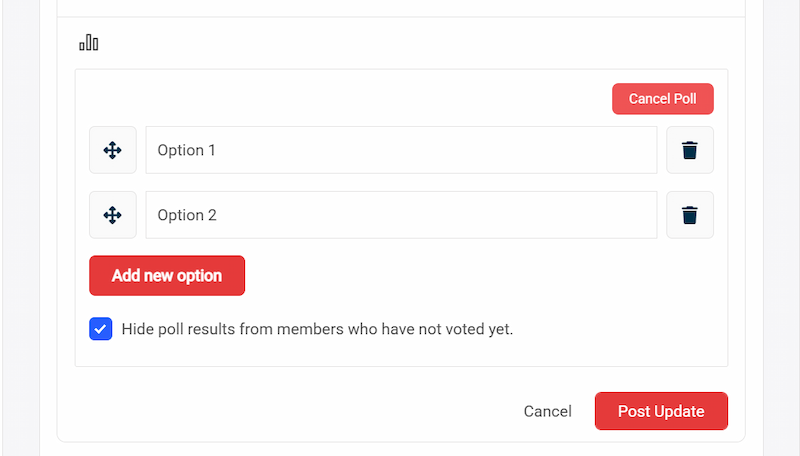
Ideal tools should provide:
- Simple poll creation
- Customizable voting options
- Mobile responsiveness
- A clear, user-friendly design
- Integration within activity feeds
- Easy visibility of results
Some systems allow polls to be created directly within the activity stream, enabling members to add polls to their updates, set voting deadlines, and view final results clearly once the poll closes. These tools can work as standalone features inside WordPress or alongside community platforms, making them versatile for engagement and feedback collection.
Such solutions typically provide:
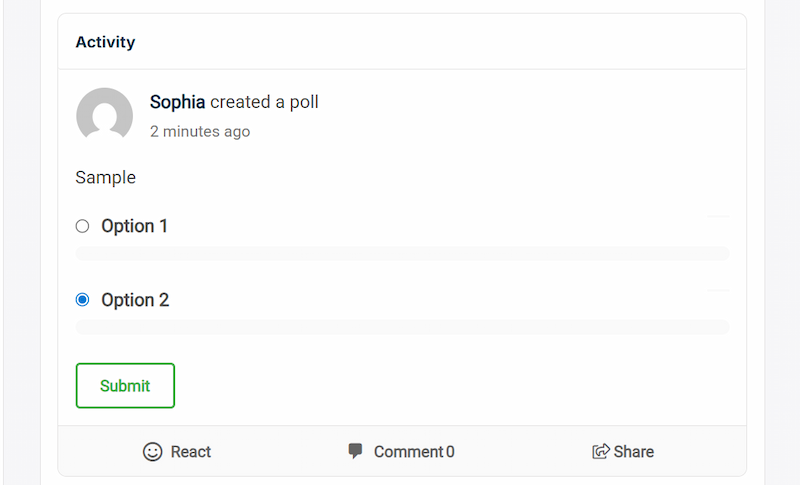
- A “Submit Vote” button
- Percentage of votes for each option
- Total vote counts once the poll ends
These features help collect meaningful feedback, spark conversation, and support decision-making within the community. If you’re running a BuddyPress community on WordPress, you can enhance engagement with a dedicated poll feature.
Best Practices for Using Polls and Community Questions Effectively
To maximise the impact of these tools:
- Keep questions short and focused
- Use approachable language
- Limit answer options
- Maintain a consistent posting schedule
- Encourage members to elaborate in comments
- Mix polls with open questions
- Use visual cues or emojis where appropriate
Consistency and clarity ensure strong participation from new and existing members.
Mistakes to Avoid When Engaging New Users
Avoid practices that may discourage participation, such as:
- Posting overly complex or niche questions
- Publishing too many polls at once
- Ignoring poll outcomes
- Using overly formal or intimidating language
- Making participation seem compulsory
A thoughtful approach helps maintain a positive, inclusive environment.
Real Examples: How Polls and Community Questions Transform New User Experience
Example 1: Encouraging the Silent Observer
A new member who rarely interacts votes in a simple poll. They receive a welcoming comment, which encourages future participation. Over time, they transition from observer to active contributor.
Example 2: Helping Members Find Their Interests
An interest-mapping poll guides users toward specific sub-communities. New members quickly discover groups aligned with their goals and become engaged members.
Example 3: Community Decision-Making
A poll used to determine the next community event topic gives members a sense of ownership. New users feel their voices matter, leading to increased participation.
Example 4: Boosting Activity with Daily Prompts
A community posts a daily question. Engagement grows consistently as users find the prompts simple and approachable.
How Polls and Questions Support Long-Term Community Growth
Over time, polls and community questions contribute significantly to the long-term strength and stability of an online community. By offering regular, approachable touchpoints for participation, they help improve user retention and keep members returning to engage with new content. These interactions also increase overall activity levels, as users who begin with simple actions like voting or answering a short question often progress into deeper discussions.
As participation grows, these tools play an important role in shaping the community’s culture by encouraging openness, shared learning, and collective decision-making. They also build trust and transparency, allowing members to see how opinions align and how their input influences the direction of the community.
Furthermore, when users feel included and empowered, they are more likely to recommend the community to others, strengthening organic growth. What begins as a simple poll vote or a short response often evolves into long-term loyalty, forming the foundation of an active and engaged member base.

A Small Question Can Open Big Doors
Although polls and community questions may seem minor, their impact on new users is substantial. They reduce intimidation, build confidence, and foster connection. By giving newcomers simple ways to participate, communities create an environment where every member feels welcome and valued.
When communities prioritise accessibility and thoughtful interaction, they grow stronger, more vibrant, and more inclusive, one question at a time.
Interesting Reads
7 Effective Loyalty and Rewards Strategy Ideas for Ecommerce Brands
The Biggest Social Media Trends Set to Dominate 2026
How Do You Create a Product Management Roadmap in WordPress?
