

The rise of community-led platforms is reshaping the way people connect, learn, and share online. Instead of relying on mainstream social networks where posts compete for attention in noisy feeds, individuals and organizations are turning to digital spaces built around shared values and deeper engagement. These platforms emphasize authenticity and belonging, making them powerful tools for brands, creators, and changemakers who want to cultivate lasting relationships rather than fleeting interactions.
At the center of today’s discussion is Disciple, a platform that has steadily gained recognition as a reliable solution for building thriving online communities. More than just a social hub, Disciple provides the infrastructure to host conversations, deliver content, and offer unique member experiences—all within a space you control. Its flexibility allows it to serve a range of needs: from wellness coaches running exclusive memberships to nonprofits mobilizing supporters to businesses creating customer advocacy networks. What sets it apart is its focus on customization and ownership, enabling community leaders to design experiences that reflect their identity without dependence on third-party algorithms.
This review will walk you through Disciple’s core features, pricing options, and overall user experience. You’ll learn how it stacks up against other platforms in 2025, what types of organizations benefit most from it, and where it may fall short. By the end, you’ll have a clearer sense of whether Disciple aligns with your vision—whether that means scaling an audience, deepening engagement with existing members, or creating a digital home where your community can truly thrive.

What Is the Disciple Platform?
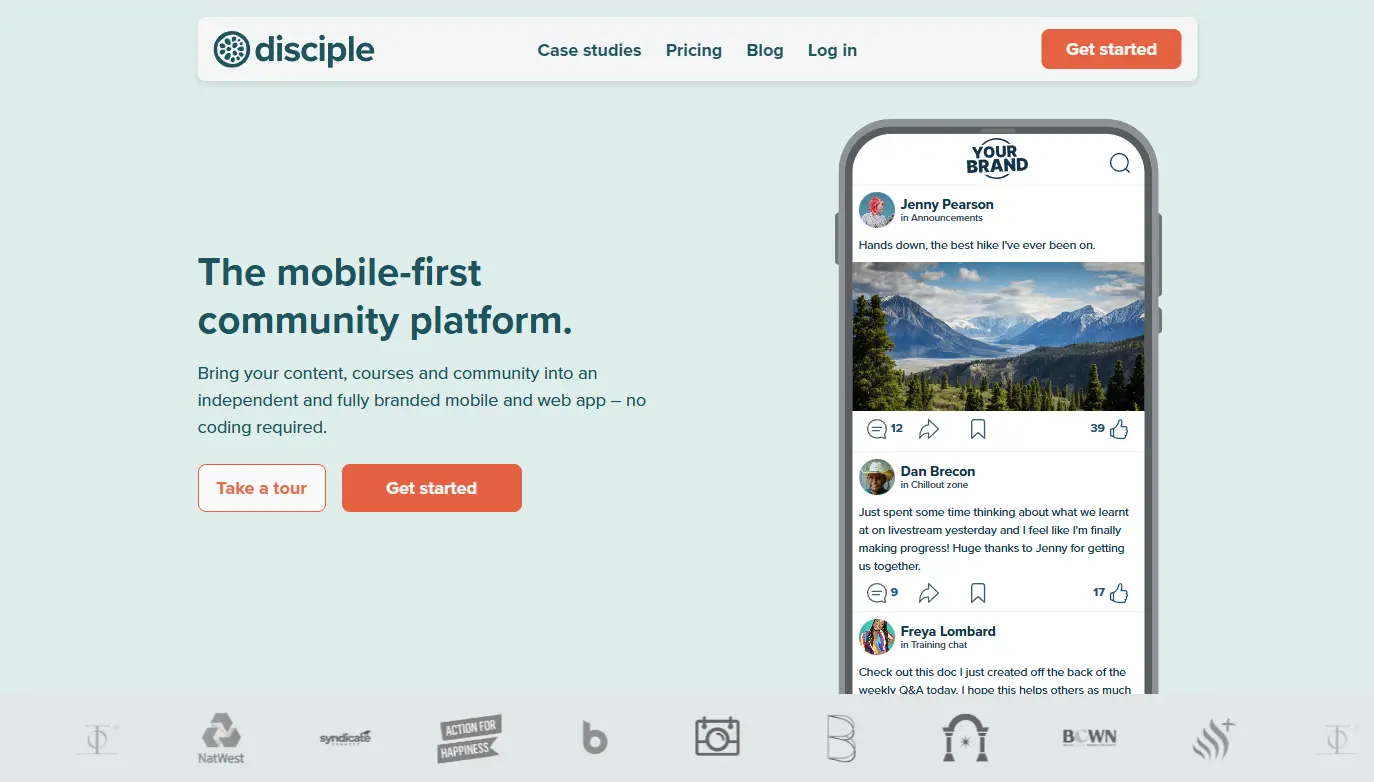
Disciple is a community-building platform that helps creators, organizations, and businesses create private digital spaces. These spaces allow members to connect, learn, and engage. Unlike mainstream social networks, Disciple gives community leaders full control over their content, branding, and member experience. The platform works on both web and mobile, which means communities can interact anywhere and anytime.
A Brief History
Disciple was founded in 2015 by British entrepreneur Benji Vaughan. At first, it was built for musicians who wanted a direct link to their fans. Traditional social media limited how artists could interact with their followers, so Disciple offered a focused alternative.
Over time, the platform expanded. Coaches, nonprofits, educators, and businesses began to use it. They wanted the same direct and distraction-free connections with their people. Today, Disciple is known as a leading community platform. It stands out for its flexibility, strong branding tools, and focus on meaningful engagement.
Purpose and Core Features
The main purpose of Disciple is to empower leaders to build sustainable digital communities. It provides a wide range of tools to support this goal.
- Custom Branding: Hosts can design their space to match their identity. This is different from social media, where branding is restricted.
- Content Hosting: Communities can share articles, videos, live streams, and courses. All resources stay in one accessible place.
- Engagement Tools: Features such as feeds, groups, messaging, and push notifications keep people connected.
- Monetization: Creators can sell courses, offer subscriptions, or provide exclusive content. This makes it easier to turn a community into a revenue stream.
- Mobile-first Design: Members can join through a branded app. This makes the experience smooth and accessible.
- Analytics: Dashboards provide data on member activity and growth. Leaders can adjust their strategy based on real insights.
Together, these tools make Disciple more than a communication hub. It becomes a digital home where both leaders and members benefit.
Disciple vs. Social Networks
Disciple differs from popular platforms such as Facebook or Instagram in several ways.
- Control vs. Algorithms: Social networks rely on algorithms that decide what content people see. This often favors ads or trending topics. Disciple ensures that members see what leaders share, without outside noise.
- Ownership vs. Dependency: On social media, the platform owns the data. With Disciple, the host owns the community data and controls the rules. This independence creates trust and stability.
- Depth vs. Reach: Social networks push for broad reach and viral growth. Disciple focuses on deep engagement within smaller, loyal groups. As a result, connections feel more authentic.
- Revenue Models: Social media monetization often depends on ads or sponsorships. Disciple supports direct monetization through memberships, subscriptions, and content sales.
In short, social media works well for discovery and exposure. However, Disciple is better for long-term community building. It reduces distractions, increases engagement, and gives leaders the ownership they need.
Why Communities Are Moving Toward Disciple in 2025
Digital communities are changing. For years, organizations and creators relied on big social networks such as Facebook, Instagram, or LinkedIn. These platforms offered reach but also created limits. Content was filtered through algorithms. Posts competed with ads, trending topics, and constant noise. In 2025, more communities are realizing that growth on these networks often comes at the cost of control and connection. This shift is why many are turning to Disciple.
Moving Beyond Algorithm-Driven Platforms
Algorithms are designed to maximize engagement for the platform itself, not for community leaders. As a result, members rarely see all the content shared in a group. Leaders lose visibility, while members feel disconnected. For example, a nonprofit might post an urgent fundraising update on Facebook, but only a fraction of supporters ever see it. This frustration is pushing organizations to seek alternatives.
Disciple offers a clear answer. Posts appear directly in the community feed without algorithmic interference. Members know they will see relevant content, and leaders know their message will reach everyone. This transparency makes communication smoother and trust stronger.
The Benefits of Control
Control is one of the biggest reasons communities are shifting to Disciple. On mainstream networks, branding is limited to logos and cover images. In contrast, Disciple allows full customization of design, layout, and features.
Consider a fitness coach who runs online programs. On Instagram, their courses are buried between memes and ads. On Disciple, the coach builds a branded app with a dedicated feed, video library, and member groups. The experience feels professional and focused, which increases loyalty.
Ownership and Data Security
Ownership is another major factor. Social networks keep control of user data. This means organizations cannot fully understand their members or reach them outside the platform. If policies change or accounts are suspended, years of community-building can disappear.
Disciple changes this dynamic. Community leaders own the data, set the rules, and manage access. A nonprofit, for example, can segment donors, track engagement, and send targeted updates. This level of ownership gives leaders peace of mind and long-term stability.
Monetization Opportunities
Monetization is also driving the move. Traditional networks rely on ads for revenue, leaving creators dependent on likes, shares, and brand deals. Disciple provides direct ways to generate income. Leaders can offer subscriptions, sell courses, or provide premium content within their communities.
Take the case of an independent educator. On YouTube, they may earn small ad revenue that depends on views. On Disciple, they can create a membership model where learners pay monthly for exclusive lessons and discussion groups. This shift turns passion into a sustainable business.
Case Examples from Disciple Review
Real-world examples highlight these benefits. One community built on Disciple is a wellness group that offers live yoga classes and guided meditations. Instead of competing for attention on Instagram, the group uses its branded app to host sessions, share resources, and collect feedback. Members appreciate the dedicated space, while the leader benefits from recurring subscription revenue.
Another case is a nonprofit using Disciple to grow donor relationships. On Facebook, their posts were often lost in the feed. With Disciple, updates reach all members instantly. The nonprofit also uses the platform’s analytics to identify engaged donors and personalize outreach. This leads to higher retention and stronger fundraising results.
A Clear Direction for 2025
In 2025, communities are seeking platforms that value depth over reach, connection over algorithms, and ownership over dependency. Disciple provides all three. Its features give leaders control over branding, ensure ownership of data, and open pathways for monetization. Case examples show how creators, nonprofits, and educators are using Disciple to build thriving ecosystems.
As social media grows more crowded and less reliable, this shift will likely accelerate. Communities that want stability and sustainability are choosing Disciple not just as a tool, but as their digital home.
Key Features of Disciple Platform: A Closer Look
Disciple is designed as more than a messaging tool. It is a full-service community platform where leaders can create branded spaces, host content, and generate revenue. Below is a closer look at its most important features.
Mobile-First Branded Apps
Disciple takes a mobile-first approach, which matches how most people engage online today. Leaders can launch branded apps on iOS and Android, offering a professional and exclusive experience.
Key advantages include:
- Custom branding: Adjust logos, colors, and layout to reflect your identity.
- App store access: Members can download the community app directly.
- Unique design: Each community feels distinct, unlike Facebook groups that look the same.
- Professional presence: Leaders appear more established with their own app.
This feature makes a major difference for coaches, educators, and businesses that want their communities to feel like independent digital homes.
Engagement Tools for Connection
Keeping members active requires strong interaction tools, and Disciple offers plenty of them. Instead of relying on cluttered feeds or algorithms, engagement happens in a focused space.
Options include:
- Posts and updates: Share regular news, announcements, or prompts.
- Polls: Collect instant feedback or let members vote on decisions.
- Live streaming: Host real-time events where participants can comment and ask questions.
- Direct messaging: Enable private or group chats for personal connections.
- Discussion groups: Build smaller spaces for niche interests or projects.
These tools encourage members to interact not only with leaders but also with each other, building stronger bonds.
Content Hosting and Organization
Disciple goes beyond conversation by supporting structured content hosting. Communities can store and organize materials in a way that makes learning and engagement simple.
Features include:
- Video hosting: Upload tutorials, recorded sessions, or training modules.
- Course creation: Build step-by-step programs with lessons and resources.
- Articles and posts: Share text-based content in an easy-to-read format.
- File sharing: Provide PDFs, guides, and supporting documents.
- Organized layout: Keep all resources in one hub, easy to access at any time.
This makes Disciple especially useful for educators, coaches, and professional groups that want a central place for structured learning and resources.
Analytics, Data, and Revenue Options
What sets Disciple apart from social networks is its focus on ownership and sustainability. Leaders get access to both insights and income opportunities.
Analytics include:
- Active user tracking: Monitor how many members log in and participate.
- Engagement metrics: See likes, comments, and poll responses.
- Growth data: Track new sign-ups and retention rates.
- Content performance: Learn which types of posts or videos perform best.
Revenue tools give leaders control over how they monetize:
- Membership tiers: Offer free, standard, or premium plans.
- Subscriptions: Charge for access to exclusive content or services.
- Course sales: Sell structured programs directly inside the platform.
- Exclusive content: Create paid groups or premium video libraries.
By combining analytics with revenue features, Disciple supports long-term community growth. Leaders understand what works, while members feel their investment is rewarded.
Bringing It All Together
Disciple’s features work together to create sustainable, branded communities.
- Mobile apps provide accessibility and professionalism.
- Engagement tools keep members connected.
- Content hosting ensures resources are organized and easy to access.
- Analytics and monetization give leaders data-driven strategies and financial independence.
In short, Disciple is more than a platform. It is a customizable ecosystem where leaders control the experience, members feel valued, and communities thrive without the limits of algorithm-driven networks.
How Easy Is It to Use Disciple?
Ease of use is one of the most important factors when choosing a community platform. If setup feels complicated, leaders may struggle to launch. If navigation feels clunky, members may lose interest. Disciple aims to solve both sides of the equation. Its onboarding flow, admin dashboard, and customization tools are designed to make the experience simple yet professional.
Onboarding Flow
Getting started with Disciple is straightforward. The platform walks new community leaders through the key steps, reducing overwhelm.
- Step-by-step setup: Disciple provides prompts to help you create your first groups, add content, and invite members.
- Support materials: Tutorials, guides, and customer success resources are available to answer questions.
- Guided launch: Community managers can test features before opening the space to members.
This onboarding flow helps new users go live quickly. For example, a coach can upload an introductory video, set up a discussion group, and invite their first ten members—all within the first day.
Admin Tools vs. Member Experience
Disciple balances the needs of community leaders and members. The admin dashboard is powerful, yet the member interface remains clean and intuitive.
For administrators:
- Content scheduling: Plan and publish posts in advance.
- Analytics dashboard: View activity levels, engagement stats, and growth patterns.
- Member management: Approve requests, assign roles, or moderate discussions.
- Notifications: Send push alerts to highlight events or announcements.
For members:
- Simple navigation: The mobile-first design keeps menus clear.
- Engagement options: Members can comment, message, or join groups without confusion.
- Content access: All videos, posts, and resources are organized in easy-to-find categories.
- Personal interaction: Messaging and group discussions feel familiar, similar to popular social apps.
The result is a platform where leaders feel in control without overwhelming their community with complex tools.
Branding and Customization Process
Customization is another area where Disciple makes the process accessible. Leaders can create communities that feel unique without needing technical expertise.
- Visual branding: Upload logos, adjust color schemes, and apply fonts that match your brand.
- Layout options: Organize feeds, groups, and menus to fit your audience’s needs.
- Feature selection: Choose whether to include polls, courses, or messaging to tailor the experience.
- Mobile apps: Launch iOS and Android apps under your brand name, offering a professional touch.
This process gives leaders ownership without requiring coding or design skills. For example, a nonprofit can reflect its mission with branded colors and icons, while a business consultant can highlight professionalism with a sleek app interface.
Overall Usability
Disciple strikes a balance between flexibility and simplicity.
- The onboarding flow lowers barriers for new leaders.
- The admin dashboard offers depth without being overwhelming.
- The member interface feels natural, encouraging interaction.
- The branding process ensures every community feels distinct.
In practice, this means Disciple is accessible even to non-technical users. Leaders can focus on building connections rather than troubleshooting software. Members, in turn, enjoy a seamless experience that feels professional yet easy to navigate.
Pros and Cons of Using Disciple
Like any platform, Disciple comes with both advantages and challenges. Community leaders often highlight the platform’s strengths in reviews, while also noting areas where it may not be the perfect fit for everyone. Below is a balanced breakdown based on insights from the latest Disciple Review feedback.
Pros of Using Disciple
- Full control over branding
Leaders can design a community that feels like their own. From logos to color schemes, Disciple allows customization that mainstream social networks cannot match. For many reviewers, this branding control makes the platform feel professional and trustworthy. - Mobile-first experience
Disciple’s mobile apps for iOS and Android make it easy for members to stay engaged on the go. This is especially valuable for coaches, educators, and nonprofits whose audiences rely on smartphones. In Disciple Review case studies, mobile accessibility consistently stands out as a major benefit. - Strong engagement tools
Posts, polls, live streaming, and direct messaging give members multiple ways to connect. Leaders can keep conversations active and create interactive events. This variety of tools helps communities feel alive, rather than static. - Integrated content hosting
Videos, courses, and documents can all live inside the platform. Members do not have to juggle multiple apps or links. This all-in-one approach saves time for leaders and keeps members focused. - Monetization opportunities
Subscription plans, premium groups, and course sales are built into Disciple. Unlike relying on ads or sponsorships, leaders can earn directly from their community. Many Disciple Reviews praise this feature for helping turn passion projects into sustainable ventures. - Data ownership and insights
Leaders own their data and can access analytics on engagement, member activity, and growth trends. This ownership not only increases trust but also allows data-driven decisions for long-term strategy.
Cons of Using Disciple
While Disciple offers many benefits, it is not without its challenges. Realistic feedback from Disciple Reviews reveals several limitations that leaders should consider.
- Learning curve for customization
Although branding tools are user-friendly, setting up a fully customized community can take time. Leaders without design experience may find it tricky to balance features, layout, and style. Some reviewers mention needing support during the setup phase. - Pricing concerns
Disciple is a premium platform, and its pricing reflects that. For small businesses or early-stage creators, the cost may feel high compared to free social media groups. While the investment pays off in ownership and control, it can still be a barrier for those with limited budgets. - Member adoption hurdles
Convincing people to join a new platform can be challenging. Members are already active on Facebook, Instagram, or WhatsApp, so asking them to download a new app may take extra effort. Some leaders report needing strong onboarding strategies to drive participation. - Limited discovery features
Unlike social media networks, Disciple does not have built-in discoverability. Communities grow through direct invitations, marketing, or word of mouth. This makes sense for private, focused groups, but it also means leaders cannot rely on algorithms to attract new members.
A Balanced View
Overall, Disciple’s pros outweigh its cons for leaders who want control, branding, and long-term sustainability. The platform excels at creating private, engaged spaces and offers monetization paths that mainstream networks lack. At the same time, Disciple Reviews remind us that setup, pricing, and adoption require thoughtful planning.
For those serious about building meaningful communities in 2025, Disciple remains a strong option—but success depends on balancing its powerful tools with realistic expectations.
How Disciple Supports Monetization and Growth
Building a thriving community requires more than engagement—it also requires sustainability. In 2025, leaders are increasingly looking for platforms that not only host conversations but also generate revenue. Disciple addresses this need directly by offering multiple monetization options and growth tools. From subscriptions to in-app purchases, the platform is designed to help leaders turn passion into long-term success.
Subscriptions and Membership Tiers
One of Disciple’s strongest monetization features is the ability to create subscription plans. Leaders can design tiered memberships, offering different levels of access.
- Basic memberships might include general community access.
- Premium tiers can unlock exclusive videos, resources, or private groups.
- VIP packages may feature live sessions, direct messaging, or one-on-one coaching.
This model works well because it gives members a choice. They decide how deeply they want to engage and support the community. For leaders, subscriptions provide a predictable monthly income—a foundation for growth.
In-App Purchases and Paid Content
Disciple also supports in-app purchases, allowing communities to sell individual products or services. These might include:
- One-time access to a masterclass.
- Downloadable guides or resources.
- Tickets to virtual events or workshops.
This flexibility allows leaders to test different offers without overcommitting. For example, a yoga instructor might sell a 30-day challenge pack alongside ongoing memberships. Members who are not ready for subscriptions can still contribute through smaller purchases.
Success Stories in Disciple Review
Recent Disciple Reviews highlight real-world examples of monetization success.
- Fitness communities use subscriptions to provide tiered access to workout libraries, nutrition plans, and live classes. Members appreciate the structured options, while coaches gain a steady income.
- Educators sell online courses directly inside their community apps. Instead of relying on platforms like Udemy or YouTube, they keep ownership and control over pricing.
- Nonprofits run donor membership programs. Supporters receive exclusive updates, behind-the-scenes content, and direct communication—all while funding ongoing projects.
These stories show that monetization is not limited to one type of community. Disciple adapts to different goals, whether they are business-driven or mission-driven.
Why Monetization Matters in 2025
Monetization is more than revenue—it is the backbone of sustainable community building. In 2025, leaders face rising costs for content creation, marketing, and digital tools. Free social networks often fail to provide a return on that investment. Ads and sponsorships can help, but they also come with instability and dependency.
Disciple provides a different path. Supporting direct payments allows communities to fund themselves. This creates:
- Independence: Leaders are not tied to ad networks or brand deals.
- Stability: Subscriptions ensure recurring income.
- Value exchange: Members pay for content and experiences they truly value.
In today’s crowded digital landscape, this approach makes communities more resilient. Monetization is not just about profit—it is about ensuring that leaders can continue serving their audiences for the long term.
A Platform for Growth
Disciple’s monetization tools do more than generate revenue. They also fuel growth. Income from subscriptions and purchases can be reinvested into better content, improved events, or community expansion. Analytics help leaders understand what members respond to, while branded apps increase visibility and trust.
Together, these features create a cycle: strong engagement drives revenue, revenue funds growth, and growth strengthens the community.
For creators, nonprofits, and organizations in 2025, this cycle is essential.
Disciple vs. Competitors in 2025: Mighty Networks, Circle, and Kajabi
Disciple
- Community-first experience: Focuses on branded spaces where creators control layout, user experience, and community rules, unlike social media platforms.
- Mobile-first and branded apps: Creators can launch fully branded iOS and Android apps, offering a professional look and higher engagement than competitors’ standard apps.
- Flexible monetization: Supports subscriptions, events, paid content, and in-app purchases without third-party platforms, providing multiple revenue options.
- Ownership of data: Full access to member data allows personalized marketing and insights, whereas competitors often restrict data access.
- Complex setup and pricing: Higher cost and setup complexity can challenge beginners or smaller creators.
- Feature maturity: Core community features are strong, but advanced analytics, gamification, and integrations are still developing compared to competitors.
Mighty Networks
- Integrated community and courses: Hosts interactive communities alongside online courses, suitable for educators or thought leaders.
- Ease of use: Simple interface and setup enable creators to start quickly.
- Network effects: Members can discover other communities within the platform, encouraging engagement and growth.
- Limited branding: Apps and web interfaces are standardized, restricting customization and brand identity.
- Monetization limitations: Offers subscriptions and some paid content, but revenue-sharing structures may reduce profits for larger creators.
Circle
- Clean, intuitive interface: Provides professional communities with threaded discussions, member tagging, and easy navigation.
- Strong integrations: Connects with Stripe, Zapier, and Kajabi, allowing creators to use multiple tools seamlessly.
- Flexible membership models: Supports multiple tiers and pricing options, giving creators monetization flexibility.
- Web-first experience: Mobile apps exist but are less engaging than Disciple’s fully branded apps.
- Limited all-in-one functionality: Excels at community building but lacks integrated e-learning, marketing, and app-building tools.
Kajabi
- Comprehensive business tools: Provides course creation, email marketing, landing pages, sales funnels, and analytics in one platform.
- Strong for e-learning: Designed for educators, coaches, or creators focused on knowledge products rather than community engagement.
- Community features are basic: support comments and discussion boards, but lack deep, interactive tools.
- Higher pricing and learning curve: Cost and complexity may challenge beginners or creators seeking a simple solution.
Feature Comparison Table (2025)
| Feature / Platform | Disciple | Mighty Networks | Circle | Kajabi |
|---|---|---|---|---|
| Community Focus | High – fully branded communities | Medium – interactive communities | Medium – professional communities | Low – comments/discussion boards |
| Mobile Apps | Fully branded iOS & Android apps | Standard apps | Mobile app exists, web-first | Mobile app exists, limited branding |
| Branding Options | Full customization | Limited branding | Limited branding | Limited branding |
| Monetization Options | Subscriptions, events, paid content | Subscriptions, paid content | Membership tiers | Courses, subscriptions, digital products |
| Ease of Use | Moderate – setup complexity | Easy – beginner-friendly | Easy – clean interface | Moderate – learning curve |
| Integrations | Moderate | Limited | Strong – Zapier, Stripe, Kajabi | Strong – marketing tools integrated |
| Data Ownership | Full access | Limited | Limited | Limited |
| Pricing (entry-level) | High | Moderate | Moderate | High |
| Analytics & Insights | Moderate | Basic | Strong | Strong |
| Course/E-learning Support | Basic | Medium | Basic | Advanced |
| Ideal for | Branded mobile-first communities | Course + community creators | Professional, niche communities | E-learning and monetization-focused creators |
Who Should Use Disciple
Coaches
- Engage clients with branded communities: Coaches can create fully branded spaces to deliver content, programs, and personalized interactions without relying on social media groups.
- Multiple programs in one platform: Separate communities for different programs—such as fitness, nutrition, or wellness—can coexist under one app.
- Monetization flexibility: Subscriptions, one-off payments, and event tickets give coaches control over revenue streams.
- Data ownership: Full access to member data enables targeted communication, personalized coaching, and tracking client progress.
Educators
- Centralized learning environment: Ideal for delivering courses, workshops, or ongoing learning within a branded, mobile-first space.
- Community interaction: Discussion threads, content libraries, and event hosting encourage peer engagement and collaborative learning.
- Long-term engagement: Supports alumni networks, niche topics, and ongoing education, rather than just course completion.
- Mobile accessibility: Students can engage on the go through iOS and Android apps, enhancing participation.
Creators
- Direct audience relationships: Fully branded apps allow creators to bypass social media algorithms and build stronger fan loyalty.
- Monetization options: Support for subscriptions, exclusive content, live events, and merchandise integrations.
- Best for established audiences: Creators with an existing loyal following benefit most, as setup and pricing can be challenging for beginners.
- Content ownership and control: Creators maintain control over content distribution, analytics, and audience data.
Large Organizations
- Enterprise-level community management: Can run multiple sub-communities, manage tiered memberships, and gather detailed analytics.
- Professional engagement: Suitable for employee networks, professional associations, or customer engagement communities.
- Scalable solution: Handles large groups and complex structures more effectively than most social platforms or basic community tools.
Small Communities
- Consider setup and cost: Entry-level pricing and platform complexity may not justify use for casual or hobbyist groups.
- Long-term growth potential: Offers brand control, mobile apps, and monetization tools that can support future expansion, even for smaller creators.
- Alternative options: Smaller communities with limited budgets may prefer Circle or Mighty Networks for lower-cost, simpler solutions.
Situational Recommendations
- Coaches and educators: Best for delivering ongoing programs with structured content and community interaction.
- Creators with established audiences: Ideal for monetizing content while maintaining brand independence.
- Organizations: Useful for managing multiple professional networks, events, or membership tiers.
- Small or casual communities: Less suited for groups prioritizing low cost and minimal setup; better if long-term brand growth is a goal.
Key Strengths Across Situations
- Full brand control and customization.
- Mobile-first engagement through branded apps.
- Data ownership for targeted communication and insights.
- Flexible monetization options beyond subscriptions, including events and paid content.
Cost Breakdown: Is Disciple Worth the Investment?
Disciple is positioned as a premium platform for building independent, branded communities. Its 2025 pricing reflects its focus on mobile-first experiences, data ownership, and flexible monetization options. Understanding the cost structure, potential returns, and scenarios in which it makes financial sense helps creators, educators, coaches, and organizations make informed decisions.
Pricing Tiers in 2025
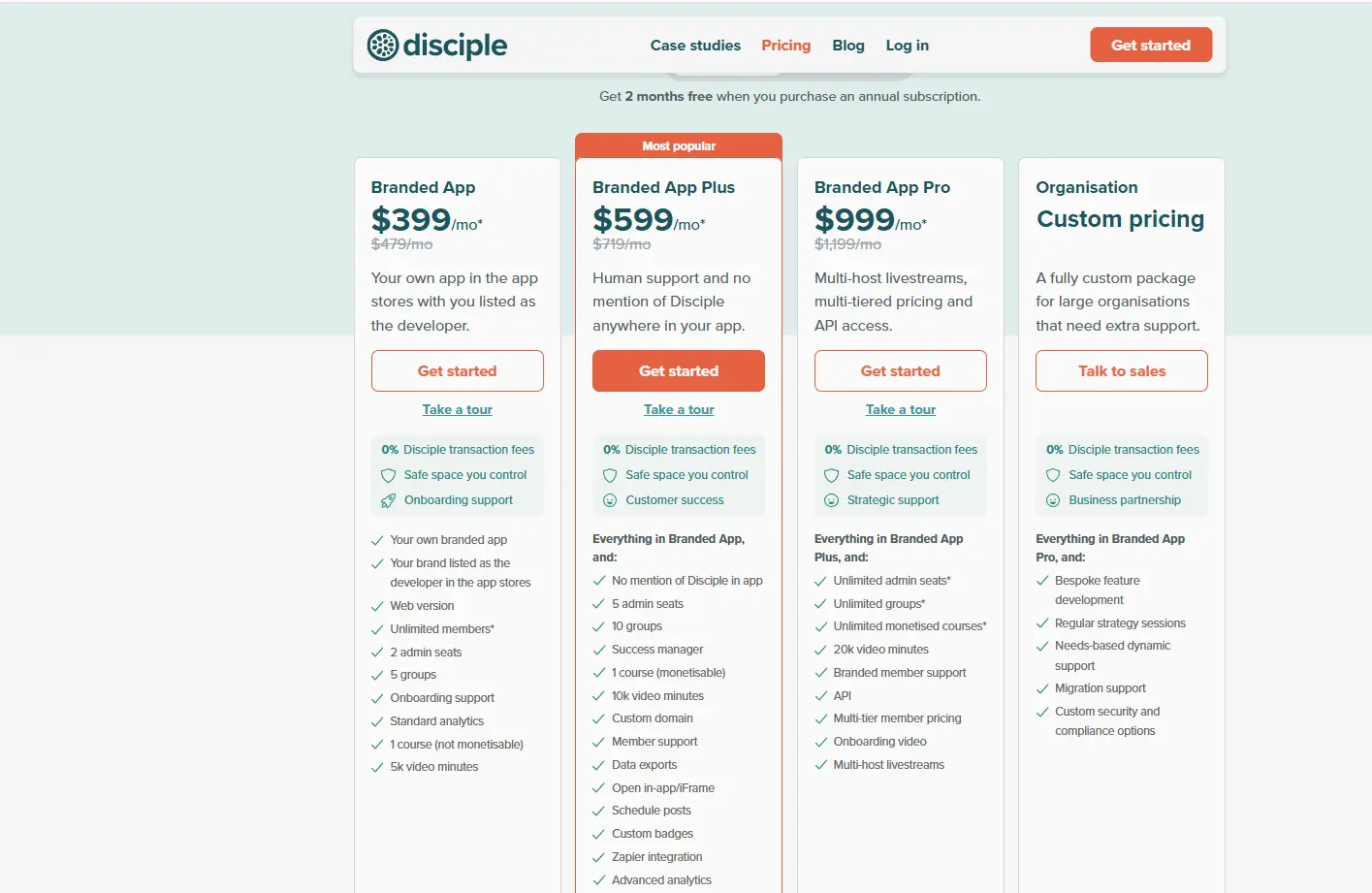
Disciple offers multiple pricing tiers, catering to different sizes of communities and feature needs. While exact pricing may vary based on custom app requirements and add-ons, the typical 2025 structure includes:
-
Starter Plan:
-
Designed for smaller communities or creators testing the platform.
-
Offers basic community tools, web and mobile app access, and standard analytics.
-
Monthly costs typically range from $299–$399 per month.
-
Ideal for testing audience engagement and basic monetization features.
-
-
Growth Plan:
-
Targets growing communities or small-to-medium businesses.
-
Includes advanced monetization options, tiered membership capabilities, push notifications, and integration support.
-
Monthly costs typically range from $499–$699 per month.
-
Suitable for creators with a stable audience looking to scale membership revenue and engagement.
-
-
Pro / Enterprise Plan:
-
Designed for large organizations, high-volume communities, or creators launching fully branded iOS and Android apps.
-
Offers white-label branding, dedicated account support, advanced analytics, and multiple sub-communities.
-
Monthly costs can exceed $999, depending on app complexity and community size.
-
Targeted at creators or organizations with established revenue streams that justify investment.
-
ROI Considerations
The value of Disciple depends on monetization strategy, audience size, and engagement level. Key factors to consider include:
- Revenue Potential: Subscriptions, events, paid content, and in-app purchases allow creators to generate recurring revenue. Communities with 500–1,000 active members paying $10–$30/month can quickly cover platform costs. Larger audiences amplify ROI, particularly when multiple membership tiers or exclusive offerings are implemented.
- Audience Retention: Disciple’s mobile-first, branded apps and push notifications drive engagement, which can increase retention and lifetime value. Higher retention translates directly into revenue sustainability.
- Brand Independence: Owning your platform reduces dependency on social media algorithms and third-party marketplaces, minimizing revenue leakage and risk of sudden platform changes.
- Time and Effort: Setup complexity requires initial investment in time and content creation. The ROI is higher when creators can dedicate resources to community management and marketing.
When It Makes Financial Sense
Disciple is generally a good investment when the expected revenue exceeds subscription costs and the creator values brand control and data ownership:
- Established Creators and Coaches: Those with loyal audiences who can sustain recurring membership fees or paid events. Disciple allows direct monetization, often generating revenue multiple times higher than the monthly platform cost.
- Educators with Ongoing Programs: Platforms for workshops, courses, and alumni networks benefit from long-term engagement tools that justify the subscription investment.
- Organizations or Enterprises: When managing large, segmented communities, the cost is offset by the ability to scale, analyze engagement, and maintain professional, branded experiences.
- Situations to Avoid: Small hobbyist communities or creators with minimal engagement may struggle to justify the cost. Lower-cost alternatives like Circle or Mighty Networks may be better until the audience and revenue potential grow.
Disciple’s investment is most worthwhile when audience size, engagement, and monetization opportunities align with pricing. Its premium nature is justified for users seeking a mobile-first, branded, monetizable community with data ownership and long-term scalability, rather than a low-cost, plug-and-play solution.
Real Community Stories: Disciple in Action
Disciple has become a go-to platform for creators, educators, and organizations aiming to build independent, branded communities. By 2025, a growing number of users will share how Disciple has transformed their engagement, monetization, and audience relationships. Case studies across wellness, education, and the creator economy illustrate the platform’s versatility and impact.
Wellness and Fitness Communities
One of Disciple’s most visible success stories comes from the wellness industry. CoreWell, a holistic fitness brand, used Disciple to migrate its global audience from fragmented social media groups into a centralized mobile app. With a branded iOS and Android app, CoreWell offered exclusive workout plans, nutrition guides, and live classes, while engaging members with push notifications and community challenges.
- Impact: Within six months, CoreWell reported a 35% increase in subscription revenue, driven by recurring memberships and paid virtual events.
- Community Engagement: Active participation rose by 50% compared to prior social media groups, thanks to discussion threads and gamified wellness challenges.
- Takeaway: Wellness brands benefit from Disciple’s mobile-first design, monetization flexibility, and branded app experience, which encourages regular engagement and program adherence.
Education and Professional Learning
Educators and learning organizations have also found value in Disciple’s community-first approach. FutureEd Academy, an online professional development provider, transitioned its alumni network to a Disciple-powered platform. Students could access course materials, participate in live Q&A sessions, and network with peers—all within a branded app rather than scattered on multiple platforms.
- Impact: Alumni retention increased by 40%, with repeat course enrollment growing steadily.
- Community Insights: Educators could track engagement and content popularity using analytics, allowing them to tailor courses and workshops to audience preferences.
- Takeaway: For education providers, Disciple facilitates long-term engagement and community-driven learning, turning students into active, ongoing participants rather than one-time course attendees.
Creator Economy
Creators—including podcasters, artists, and writers—have leveraged Disciple to cultivate loyal, paying audiences. The Storyteller Club, a global community of indie authors and audiobook creators, used Disciple to launch a membership-based community offering exclusive content, live events, and direct feedback sessions.
- Impact: The club generated revenue exceeding six figures within the first year, primarily from subscriptions and event tickets.
- Audience Engagement: Members contributed reviews, story ideas, and collaborative projects, increasing overall platform activity by 60%.
- Takeaway: Independent creators benefit from Disciple’s ownership of data, customizable apps, and monetization tools, which allow them to build sustainable revenue models and bypass algorithm-driven platforms like Instagram or YouTube.
Cross-Industry Lessons
Several common themes emerge from these case studies:
- Branded, Mobile-First Experience: Across wellness, education, and creator communities, fully branded apps drive higher engagement and stronger member loyalty.
- Monetization Flexibility: Subscription tiers, paid content, and event tickets provide multiple revenue streams, making the platform financially sustainable.
- Data Ownership and Insights: Access to analytics allows community managers to understand member behavior and tailor content, improving retention and satisfaction.
- Community Engagement Tools: Discussion threads, sub-groups, push notifications, and gamification foster active participation beyond passive content consumption.
Testimonials from Users
- “Disciple has transformed how we interact with our wellness clients. The app feels like our own, and engagement has never been higher.” — CoreWell Founder
- “Our alumni are more connected than ever. The platform allows us to provide ongoing value and keep students coming back for new courses.” — FutureEd Academy Director
- “As a creator, having my own app gives me independence from social media algorithms, and the community is incredibly active and supportive.” — The Storyteller Club Lead
These real-world examples illustrate that Disciple’s value extends beyond generic community tools. Its combination of brand control, monetization options, and mobile-first design makes it suitable for a wide range of industries, including wellness, education, and the creator economy.
How to Maximize Disciple for Your Community
Engagement Tactics
- Discussion Threads and Sub-Groups: Organize conversations by topic to encourage focused interaction. Members are more likely to participate when discussions are relevant to their interests.
- Push Notifications: Send timely alerts about new content, events, or member activity. Personalizing notifications for specific segments increases response rates.
- Exclusive Content and Experiences: Offer early access, premium resources, or live sessions to create a sense of exclusivity and encourage regular engagement.
- Gamification: Implement challenges, badges, or rewards to incentivize participation. Recognition motivates contributions and strengthens community culture.
- Interactive Events: Host webinars, Q&A sessions, or live workshops within the platform to drive real-time engagement and strengthen relationships.
Analytics for Growth
- Member Activity Tracking: Monitor logins, content views, and discussion participation. Identify active and dormant members to target engagement campaigns effectively.
- Content Performance Analysis: Track which posts, videos, or resources generate the most interaction to focus on content that resonates with the audience.
- Revenue Insights: Analyze subscription trends, event ticket sales, and other monetization metrics to prioritize offerings that drive revenue.
- Segmentation and Personalization: Use analytics to group members by behavior, interests, or subscription level. Tailor content and communication for each segment to increase engagement.
Strategies for Retention
- Regular Engagement Cadence: Consistently post content, organize events, and interact with members to maintain activity and create habit-forming behavior.
- Member Recognition: Highlight contributions, celebrate milestones, or feature member stories to reinforce positive behavior and loyalty.
- Feedback Loops: Collect opinions through polls, surveys, or discussion threads. Incorporating member input increases satisfaction and relevance.
- Tiered Membership Benefits: Offer different levels of access or perks for loyal members to incentivize long-term commitment.
- Re-engagement Campaigns: Use push notifications, emails, or exclusive content to re-engage dormant members, targeting campaigns based on activity data.
Platform Features to Leverage
- Fully branded mobile apps for a consistent member experience.
- Monetization options include subscriptions, paid content, and events.
- Advanced analytics for tracking engagement and revenue.
- Customizable community structures, including sub-groups and discussion threads.
Future of Disciple Platform Beyond 2025
The community-building landscape is evolving rapidly, and platforms like Disciple are at the forefront of this shift. Beyond 2025, trends in digital engagement, creator monetization, and mobile-first experiences are likely to shape the platform’s development, influencing both features and strategic positioning.
Trends in Community Building
- Independent Communities: As creators, educators, and organizations seek control over their audiences, independent, branded communities will continue to grow. Users are moving away from algorithm-driven social media toward platforms that allow direct engagement and data ownership.
- Mobile-First Engagement: Increasing smartphone usage means mobile-first platforms, including branded apps, will dominate community interaction. Push notifications, in-app events, and mobile-exclusive content are becoming standard for sustaining engagement.
- Monetization Beyond Subscriptions: Communities are exploring diverse revenue streams, from microtransactions and pay-per-event access to tiered memberships. Platforms that support these flexible models will attract more creators looking for sustainable income.
- Hybrid Content and Social Experiences: Future communities will blend educational content, entertainment, and social interaction. Engagement will no longer be limited to forums or posts, but will include immersive experiences such as live streaming, collaborative projects, and integrated learning modules.
Where Disciple May Innovate
- Advanced Analytics and AI Integration: Beyond basic engagement tracking, Disciple is likely to enhance analytics using AI-driven insights. Predictive tools could help creators understand which content drives retention, optimize monetization strategies, and identify potential community leaders.
- Gamification and Interactive Features: While current gamification is basic, Disciple may expand to dynamic challenges, leaderboards, and AI-powered personalized experiences, increasing member activity and long-term retention.
- Expanded Integrations: As ecosystems of tools grow, Disciple could offer deeper integration with e-commerce, CRM, and learning management systems, allowing creators to manage communities, revenue, and content seamlessly in one environment.
- Global Scalability and Localization: To attract international creators, Disciple may focus on multi-language support, regional payment systems, and culturally relevant engagement features. Global scalability could open doors for creators targeting diverse markets.
- Enhanced App Customization: Fully branded apps will evolve with more interactive designs, augmented reality experiences, and personalized dashboards, allowing communities to feel unique and highly engaging.
Predictions for Platform Longevity
- Sustained Relevance in the Creator Economy: Disciple’s focus on branded, mobile-first, monetizable communities positions it to remain a strong choice for creators who want independence from social media platforms. Its ability to adapt to evolving engagement and monetization trends will be key to long-term adoption.
- Competition and Differentiation: While platforms like Circle, Mighty Networks, and Kajabi continue to evolve, Disciple’s full app ownership, data control, and brand-centric approach create differentiation that is likely to protect its niche in the market.
- Expansion into Enterprises and Professional Networks: Beyond creators and educators, Disciple may increasingly appeal to organizations, professional associations, and corporate networks seeking scalable, branded community solutions.
- Integration of AI and Emerging Technologies: Incorporating AI, machine learning, and immersive technologies may help Disciple stay ahead, providing advanced tools for engagement, retention, and monetization that competitors may not offer.
Disciple’s future beyond 2025 will be defined by its ability to adapt to shifting community trends, enhance engagement through technology, and offer creators full control over their audiences and revenue streams. Its emphasis on mobile-first, branded experiences, combined with potential innovation in analytics, gamification, and integrations, positions it as a platform capable of sustained relevance in the rapidly evolving digital community ecosystem.

Final Verdict: Is Disciple Platform Worth It in 2025?
Disciple has established itself as a premium platform for creators, educators, coaches, and organizations aiming to build branded, independent communities. In 2025, it continues to differentiate itself through mobile-first apps, monetization flexibility, and full data ownership, offering a distinct alternative to platforms like Circle, Mighty Networks, and Kajabi.
Pros
- Full Brand Control: Creators can launch fully branded iOS and Android apps, giving communities a professional look and feel.
- Monetization Flexibility: Supports subscriptions, events, paid content, and in-app purchases without relying on third-party platforms.
- Data Ownership: Access to member data enables personalized engagement, analytics, and marketing strategies.
- Community Engagement Tools: Discussion threads, sub-groups, push notifications, and gamification increase activity and retention.
- Scalable Solutions: Works for creators with small to large communities, as well as enterprises and professional networks.
Cons
- Higher Cost: Monthly pricing starts around $299–$399 for small communities and can exceed $999 for enterprise-level apps, which may be prohibitive for small or casual groups.
- Learning Curve and Setup: Setup can be complex, particularly for first-time community builders, requiring time and planning to maximize value.
- Feature Maturity: While core features are strong, advanced analytics, gamification, and integrations are still developing compared to some competitors.
- Best for Established Audiences: Smaller creators without a loyal following may struggle to justify the investment.
Who Will Benefit Most
- Coaches and Educators: Those delivering ongoing programs, workshops, or courses with recurring membership models will find Disciple particularly valuable for long-term engagement and revenue.
- Creators with Loyal Audiences: Artists, podcasters, and writers with an existing following benefit from branded mobile apps and direct monetization opportunities.
- Organizations and Enterprises: Professional networks, associations, or businesses managing multiple sub-groups can leverage Disciple’s scalability, tiered memberships, and analytics for structured community management.
Verdict and Recommendation
Disciple is worth the investment for creators and organizations prioritizing brand control, mobile-first engagement, and sustainable monetization. Its premium pricing is justified when communities have sufficient membership or revenue potential to offset costs, particularly for users who want independence from social media platforms.
It is less suitable for casual hobbyist groups, micro-communities, or creators just starting without a loyal audience, as lower-cost alternatives like Circle or Mighty Networks may provide a more practical entry point.
For those seeking a professional, monetizable, and scalable community platform in 2025, Disciple offers a comprehensive solution that combines engagement tools, analytics, and mobile app ownership—making it a strong choice for long-term community growth.
Interesting Reads:
Mighty Networks Review: Features, Pricing, Pros & Cons
